 Save
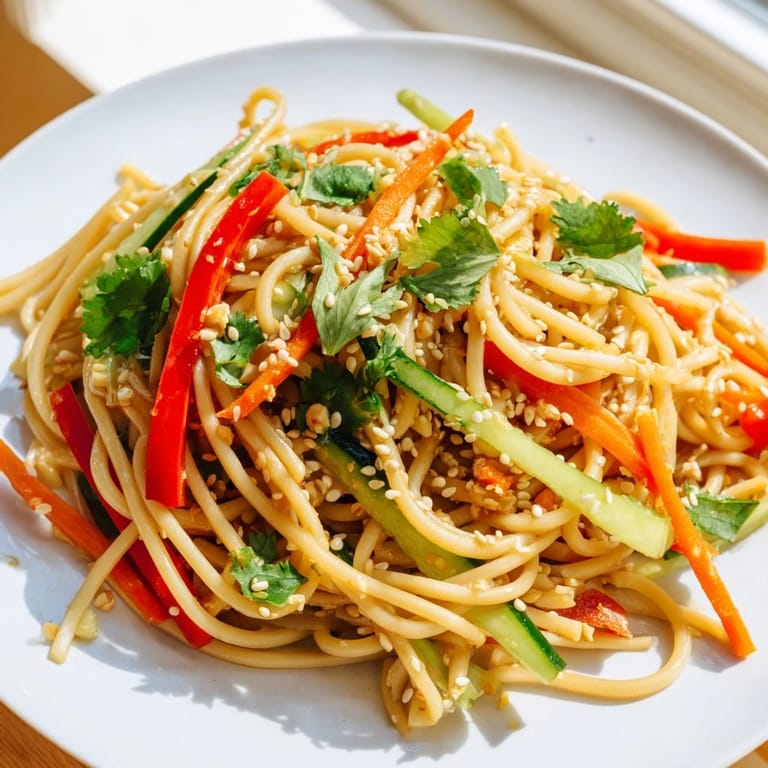
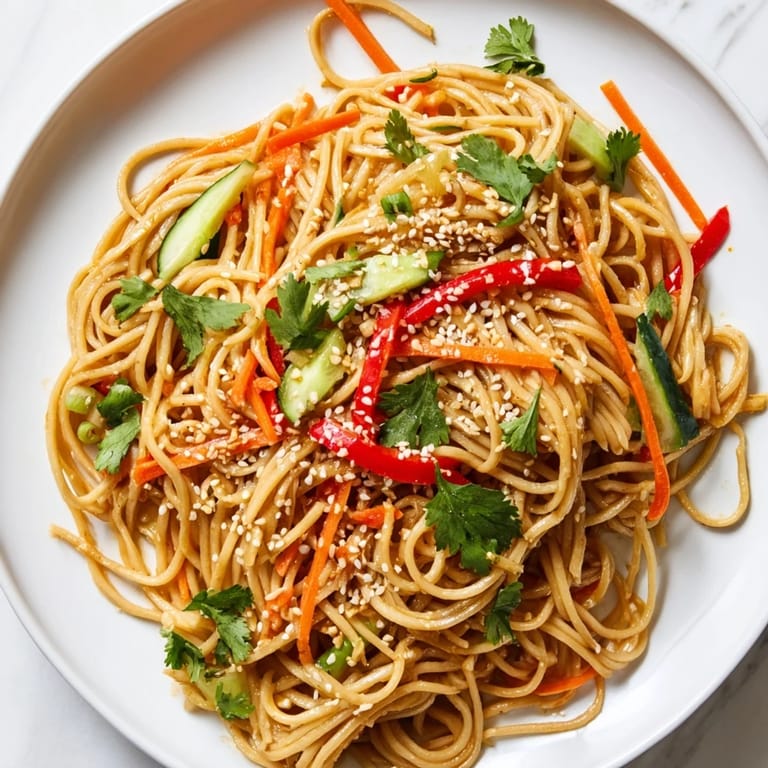
Save I discovered this garlic noodle salad on a sweltering afternoon when my air conditioning failed and I couldn't face the idea of turning on the stove. A friend suggested cold noodles, and within minutes I was tossing warm spaghetti in a golden garlic oil that filled my kitchen with the most incredible aroma. That simple gesture—tossing together what I had on hand—became my go-to recipe whenever I need something that feels both comforting and refreshingly light. The magic is in the balance: fragrant garlic oil meets bright vegetables and a whisper of heat, all clinging to each strand of noodle.
I made this for a potluck once and watched someone go back for thirds—not because they were being polite, but because they genuinely couldn't stop eating it. That moment taught me that simple food, when made with intention, often speaks louder than elaborate dishes. Now whenever friends ask what to bring to my place, I ask them to bring this, because I know it'll disappear and people will actually thank me for the recipe.
Ingredients
- Dried wheat noodles (250 g): Lo mein, spaghetti, or soba all work beautifully—I reach for whatever's in my cupboard, though soba adds a slightly earthier note if you're feeling adventurous.
- Neutral oil (3 tbsp): Grapeseed or vegetable oil stays mild and lets the garlic shine; don't skimp on quality here since the oil is the star.
- Garlic cloves (5 large), finely minced: This is where patience pays off—the finer you mince them, the faster they infuse and the more evenly they coat every noodle.
- Toasted sesame oil (1 tsp): A small amount goes a long way and adds that unmistakable nutty depth that makes people ask what your secret ingredient is.
- Carrot (1 cup), julienned: The sweetness balances the savory soy sauce, and the golden color makes the whole dish feel vibrant.
- Red bell pepper (1 cup), thinly sliced: Any color works, but red feels most celebratory and adds a natural sweetness.
- Cucumber (1 cup), deseeded and julienned: Deseeding prevents the salad from becoming watery—a lesson I learned after a few soggy batches.
- Spring onions (2), thinly sliced: They add a fresh bite that wakes up your palate with every bite.
- Fresh cilantro (1/2 cup), roughly chopped: If cilantro isn't your thing, mint or basil work wonderfully too.
- Soy sauce (3 tbsp): Low sodium versions let you control the salt level and taste cleaner, in my opinion.
- Rice vinegar (1 tbsp): It's gentler and more rounded than regular vinegar, softening the salty notes.
- Honey or maple syrup (1 tsp): This tiny amount dissolves into the dressing and adds a subtle sweetness that ties everything together.
- Chili flakes (1/2 tsp, optional): Start with less if you're heat-sensitive—you can always sprinkle more on individual servings.
- Freshly ground black pepper: Grinding it fresh makes a noticeable difference in both flavor and aroma.
- Toasted sesame seeds (2 tbsp): Toast them yourself if you can; the difference between store-bought and freshly toasted is honestly striking.
- Lime wedges (optional): A squeeze of lime at the end brightens everything and feels like a professional finishing touch.
Tired of Takeout? 🥡
Get 10 meals you can make faster than delivery arrives. Seriously.
One email. No spam. Unsubscribe anytime.
Instructions
- Boil and cool the noodles:
- Cook your noodles according to the package timing, then drain and rinse under cold running water until they're completely cool—this stops the cooking process and prevents them from clumping. Toss them with a tiny splash of oil if you have time to let them sit while you prepare everything else.
- Infuse the oil with garlic:
- In a small saucepan over medium-low heat, warm the neutral oil until it shimmers slightly, then add your minced garlic and listen for that gentle sizzle. After 2 to 3 minutes, when the garlic turns golden and fragrant (not brown—that's where bitterness lives), remove it from the heat and stir in the sesame oil to let it cool slightly.
- Build the dressing:
- In a small bowl, whisk together your soy sauce, rice vinegar, honey, chili flakes if you're using them, and a few grinds of black pepper until the honey dissolves and everything feels cohesive.
- Bring it together:
- Pour both the cooled garlic oil and the dressing over your noodles and toss thoroughly, making sure every strand gets coated in that golden, aromatic oil.
- Add the vegetables:
- Fold in your carrots, bell pepper, cucumber, spring onions, and cilantro with a gentle hand—you want them to stay crisp and distinct, not bruised into submission.
- Plate and garnish:
- Transfer to a serving platter or individual bowls, then scatter sesame seeds across the top and serve with lime wedges on the side for anyone who wants that final bright squeeze.
 Save
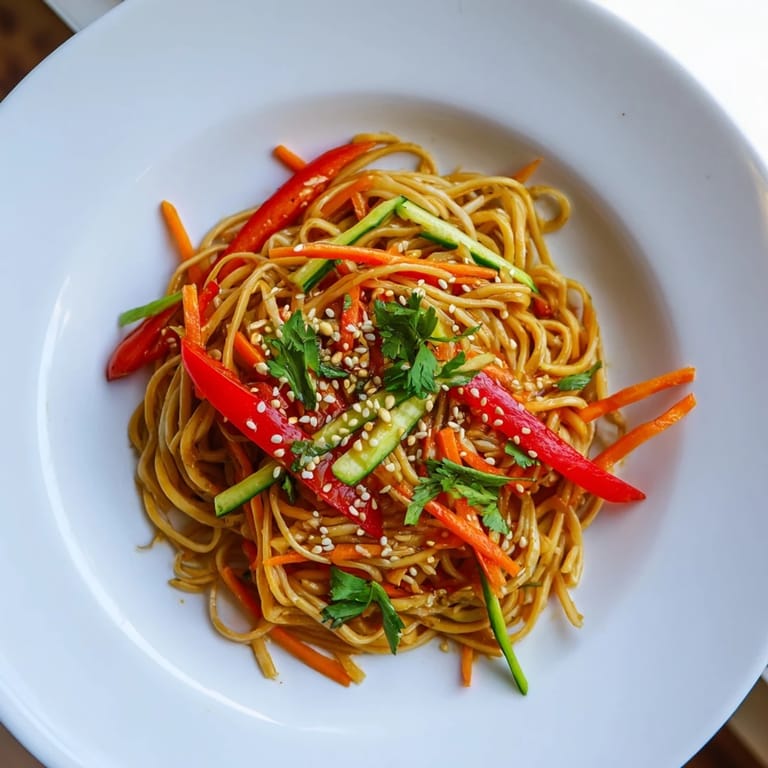
Save There's something almost meditative about standing in your kitchen, slicing vegetables into perfectly thin strips, knowing that in a few minutes you'll have something both nourishing and genuinely delicious. This salad transformed the way I think about cold noodles—no longer a sad leftover solution, but something I actually crave.
Variations to Make It Your Own
This recipe is beautifully adaptable depending on what's in your fridge and what your body's craving that day. I've made it with snap peas instead of cucumber on spring mornings, swapped in shredded cabbage for crunch when carrots weren't around, and even tossed in thin radish slices for a peppery bite. The skeleton stays the same—garlic oil, soy dressing, crisp vegetables—but the details shift with the season and whatever I feel like eating.
Adding Protein if You Want Something Heartier
On days when I need more sustenance, I'll shred some cooked chicken and scatter it over the top, or crumble in some crispy tofu that's been pan-fried until the edges turn golden and nutty. Edamame works beautifully too—their buttery texture and slight earthiness play really well against the bright, garlicky dressing. The noodles provide the base, but the protein makes it feel like an actual meal rather than just a side dish.
Making It Work for Different Diets
If gluten-free is important to you or someone you're cooking for, soba noodles or rice noodles swap in seamlessly, and tamari replaces soy sauce without losing any of that savory depth. I've also made this with chickpea pasta for extra protein and a slightly nuttier flavor that honestly pairs really well with the garlic and sesame. The beauty of this recipe is that it's already dairy-free by nature, so if you need to avoid common allergens, you're mostly just swapping one or two ingredients.
- Check your sesame seeds and soy sauce bottles for hidden allergens, since cross-contamination can happen in manufacturing.
- Taste everything as you build the dressing, because different brands of soy sauce vary wildly in saltiness.
- Make extra garlic oil and keep it in the fridge for drizzling over other vegetables or rice throughout the week.
 Save
Save This salad has become my answer to so many kitchen questions: what to make when it's hot outside, what to bring when I need a crowd-pleaser, what to eat when I want something that tastes restaurant-quality but didn't require anything fancy. Once you make it once, you'll understand why it keeps coming back to my table.
Recipe FAQs
- → What type of noodles work best?
Dried wheat noodles like lo mein, spaghetti, or soba work well. For gluten-free options, substitute with rice or gluten-free noodles.
- → How is the garlic oil prepared?
Neutral oil is gently heated, garlic is sautéed until golden and fragrant, then toasted sesame oil is stirred in to enhance the aroma.
- → Can this dish be served warm?
It's designed to be enjoyed cold or at room temperature to highlight the fresh, crisp vegetables and delicate garlic flavor.
- → What vegetables are included?
Carrots, red bell pepper, cucumber, spring onions, and fresh cilantro add color and crunch to the dish.
- → Are there suggestions for extra protein?
Adding shredded cooked chicken, tofu, or edamame boosts protein without altering the dish’s fresh character.
- → How long can leftovers be stored?
Stored in the refrigerator, leftovers keep well for up to two days while maintaining flavor and texture.