 Save
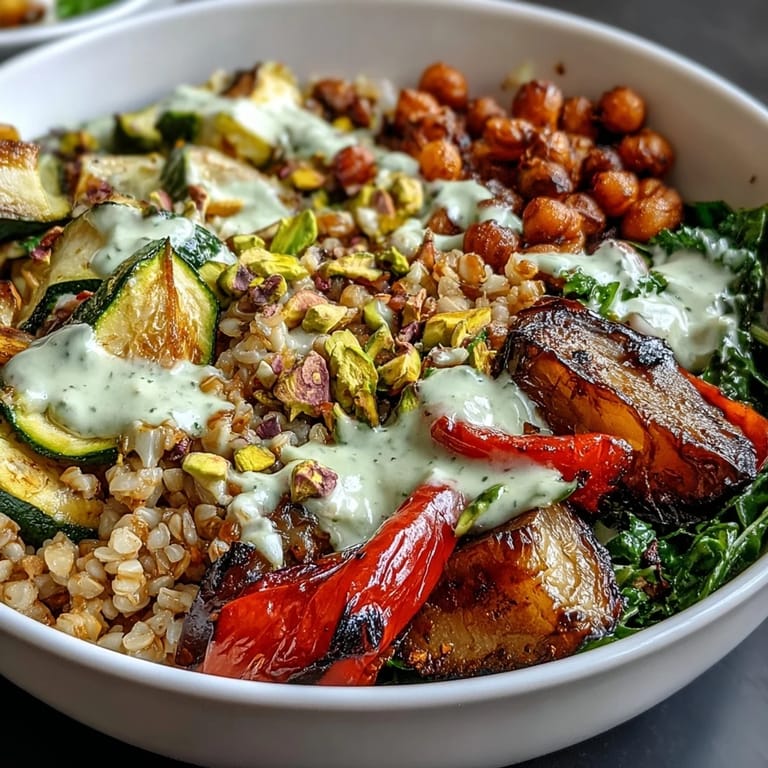
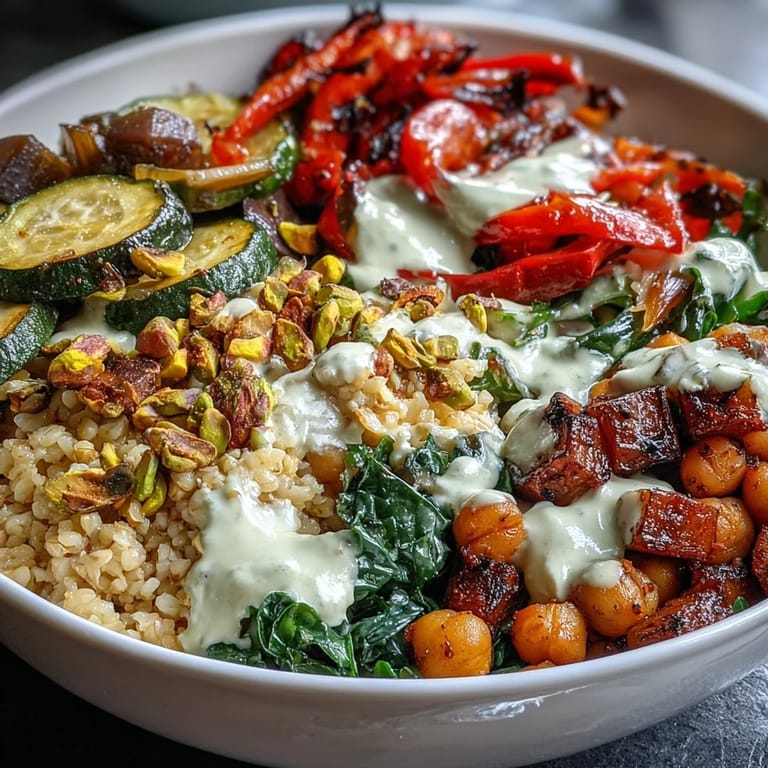
Save There's something about assembling a Mediterranean Buddha bowl that feels less like cooking and more like painting with vegetables. I discovered this particular combination on a Tuesday afternoon when my farmer's market haul was getting out of hand, and I needed something that would stretch through the week without boring me by Wednesday. The tahini dressing was the real revelation—that creamy, garlicky pour over warm bulgur and roasted eggplant transformed what could have been a sad desk lunch into something I actually looked forward to eating.
I made this for my sister during one of those spring weekends when everyone shows up hungry and you're running on coffee fumes. Watching her pile roasted eggplant onto the bulgur, drizzle it with tahini, and genuinely pause mid-bite to say it was good—that's when I knew this wasn't just functional food. She now texts me photos of her versions with extra roasted chickpeas and sometimes avocado, and somehow that feels like the highest compliment.
Ingredients
- Bulgur wheat: This grain cooks fast and has a pleasant chew that holds up beautifully in meal prep containers without turning mushy like some grains do.
- Pistachios: They add a buttery crunch that survives storage, plus they're pretty to look at, which matters more than you'd think when you're eating from a container.
- Eggplant: Roasted until the edges caramelize, it becomes almost meaty and far less watery than if you tried to steam it.
- Kale: Lightly wilted rather than raw means it won't dominate the texture and becomes tender enough to actually enjoy eating.
- Chickpeas: I warm them gently because cold chickpeas from the fridge taste a bit sad, but heating them brings back their personality.
- Tahini dressing: The maple syrup or honey isn't just sweetness—it balances the tahini's earthiness and keeps the dressing from tasting too heavy or one-dimensional.
Tired of Takeout? 🥡
Get 10 meals you can make faster than delivery arrives. Seriously.
One email. No spam. Unsubscribe anytime.
Instructions
- Fire up the oven and prep your vegetables:
- Set your oven to 425°F and while it's heating, cut your eggplant into 1-inch cubes, slice the zucchini into half-moons, and cut the bell pepper into strips. Toss everything with olive oil, smoked paprika, salt, and pepper, then spread it out on a baking sheet in a single layer—this spacing is crucial because crowded vegetables steam instead of roast.
- Build the bulgur with intention:
- Heat olive oil in a saucepan and sauté your finely chopped shallot until it's translucent and smells sweet. Add the bulgur and cumin, toast for about a minute until it's fragrant, then pour in your vegetable broth, bring it to a boil, cover it, and let it sit on low heat for 12 to 15 minutes. When the liquid disappears, fluff it with a fork, stir in the pistachios, and taste for seasoning—this is your base, so it should taste good on its own.
- Handle the vegetables while they're happening:
- About 25 to 30 minutes on the clock, your vegetables should be golden at the edges and tender inside. Turn them halfway through so they cook evenly. If your eggplant still looks pale and the zucchini isn't slightly caramelized, give them another few minutes.
- Soften the kale gently:
- Either steam it for 2 to 3 minutes until it's just starting to wilt, or sauté it in a skillet with a tablespoon of olive oil and a pinch of salt for about 3 to 4 minutes. It should still have some structure and color, not look like it's given up.
- Warm the chickpeas through:
- In a small skillet, add your drained chickpeas with a drizzle of olive oil and a pinch of salt, warming them for 2 to 3 minutes just until they're no longer cold. This small step makes a real difference in how the bowl tastes when you eat it.
- Whisk the tahini dressing until silky:
- In a bowl, whisk together tahini, fresh lemon juice, minced garlic, maple syrup or honey, and salt. Add water gradually, whisking between additions, until the dressing is smooth and pourable like a thick yogurt. Taste it—it should be balanced between creamy, garlicky, and bright.
- Assemble with care:
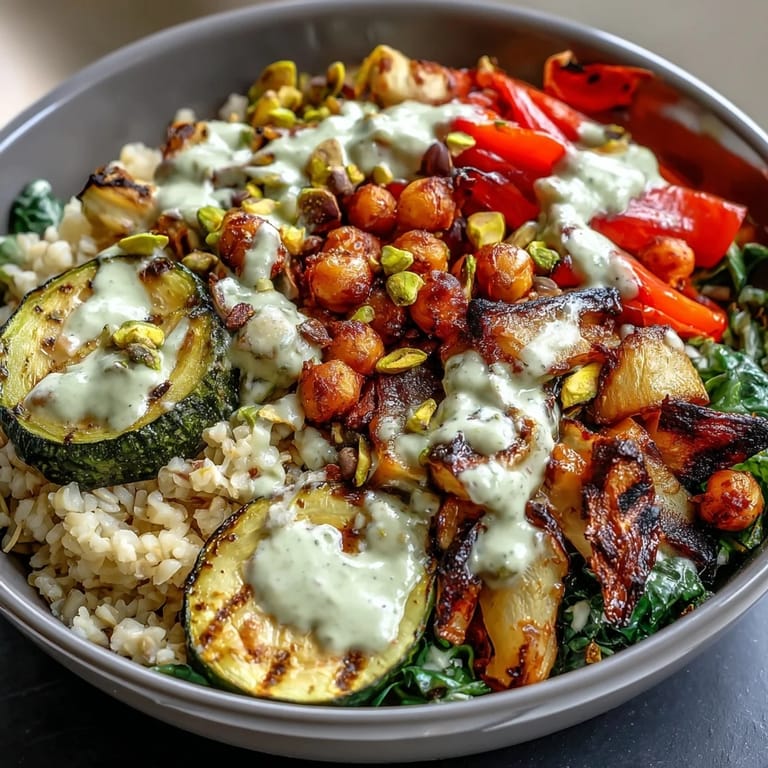
- Divide your warm bulgur pilaf among meal prep containers or bowls. Arrange the roasted vegetables, kale, and chickpeas on top in sections so everything stays distinct and pretty. Drizzle generously with tahini dressing—don't be shy, it's the thing that makes all these components sing together.
 Save
Save There's a moment on day three of eating these bowls when you realize you never got bored, never felt like you were eating the same thing twice. That's when this recipe stops being meal prep and becomes something you actually choose to make for yourself, not just out of obligation. That shift from duty to desire is everything.
Why This Bowl Works for the Week
The magic here is that every component has a different texture and temperature profile, even when it's been sitting together for a few days. The bulgur stays fluffy, the roasted vegetables hold their gentle char, the kale doesn't wilt into something unrecognizable, and that tahini dressing somehow becomes more integrated and flavorful by day two. Nothing is fighting for dominance, which is honestly the mark of a well-balanced meal prep situation.
The Tahini Dressing as Your Secret Weapon
I've learned that a good dressing can redeem almost any collection of leftovers, and this tahini one is forgiving in the best way. You can stretch it with extra water if you need more to coat multiple servings, you can add a pinch more garlic if it tastes flat, and the lemon juice keeps it from oxidizing or tasting stale. Make it fresh on Sunday and it lasts all week, transforming what could be boring roasted vegetables into something that tastes intentional and cared for.
Storage, Scaling, and Small Adjustments
These bowls keep beautifully in glass containers for four to five days, though I usually pack the dressing separately and pour it just before eating if I'm stretching to day five. Scaling up is straightforward—just double or triple the quantities and you've got lunch sorted for a crowd or for yourself with extra insurance against takeout temptation. If you want to add grilled tofu, tempeh, or feta for extra protein, the bowl welcomes it; if you're vegan, everything here already is except possibly your choice of sweetener in the dressing.
- Roasted sweet potatoes or carrots make wonderful additions if you want to stretch the vegetables further or add more natural sweetness.
- Substitute the bulgur with quinoa or brown rice if you need gluten-free, though the texture will shift slightly and cooking times may vary.
- The pistachios can be swapped for sunflower seeds or pumpkin seeds if you're navigating nut allergies, and you'll lose almost nothing in terms of satisfaction.
 Save
Save This bowl became one of those recipes I return to again and again because it proves that food for the week doesn't have to be joyless or repetitive. It's nourishing, it keeps, and somehow it tastes better as the days go on.
Recipe FAQs
- → How long do these bowls keep in the refrigerator?
These bowls stay fresh for 4-5 days when stored in airtight containers. For best results, keep the tahini dressing separate and drizzle just before serving to maintain the vegetables' texture.
- → Can I freeze the assembled bowls?
Freezing isn't recommended as the roasted vegetables and kale can become watery upon thawing. However, you can freeze the bulgur pilaf and roasted vegetables separately for up to 3 months, then reheat and add fresh kale and dressing.
- → What's the best way to reheat these bowls?
Microwave for 2-3 minutes, stirring halfway through, or warm in a 350°F oven for 10-15 minutes. The roasted vegetables develop even sweeter flavors when reheated in the oven.
- → How can I add more protein to this bowl?
Grilled tofu, tempeh, or pan-seared chicken work beautifully. For vegetarians, crumbled feta or dollops of Greek yogurt add protein and creaminess. The chickpeas already provide 14 grams per serving.
- → Can I use other grains instead of bulgur?
Quinoa, brown rice, farro, or couscous all make excellent substitutes. Adjust cooking time according to package instructions. For gluten-free options, choose certified gluten-free grains.