 Save
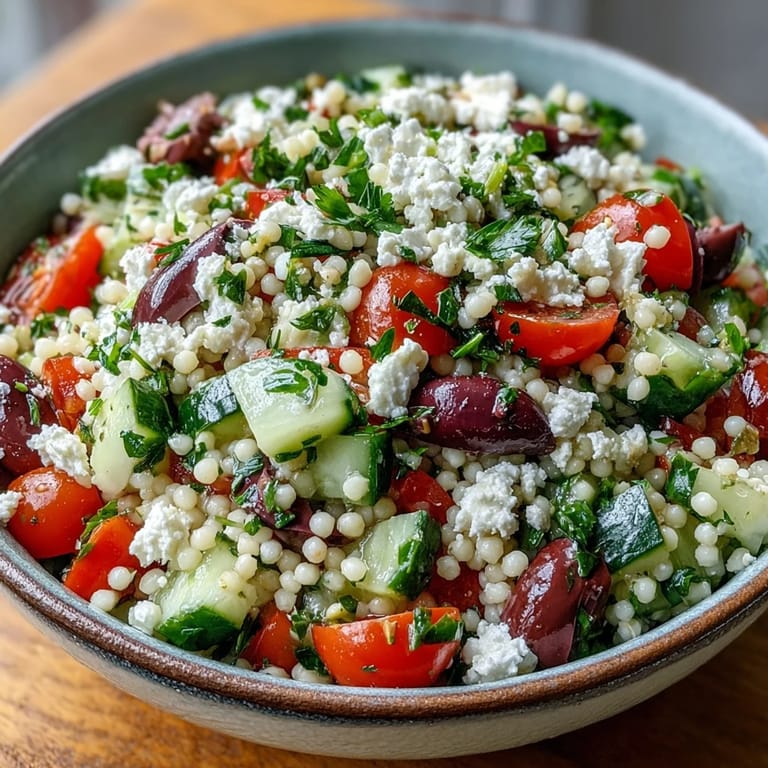
Save I used to think couscous was couscous until a colleague brought pearl couscous to a potluck and I realized I'd been missing out on something entirely different. Those little golden spheres had a chew and presence that regular couscous never did. I went home that night and ordered a bag online, and by the weekend I was tossing it with everything I could find in my crisper drawer. This salad came together on one of those warm evenings when turning on the oven felt like a punishment, and it's been my go-to ever since.
The first time I brought this to a backyard gathering, someone asked if I'd ordered it from a deli. I laughed because I'd thrown it together in under an hour while listening to a podcast. It sat on the table next to grilled chicken and flatbreads, and by the end of the night, the bowl was scraped clean. A friend texted me the next day asking for the recipe, which is always the highest compliment.
Ingredients
- Pearl couscous: Also called Israeli couscous, these little orbs toast up beautifully and have a satisfying chew that regular couscous lacks, making them the star of the dish.
- Vegetable broth: Cooking the couscous in broth instead of water adds a subtle savory backbone that plain water just can't deliver.
- Red bell pepper: Sweet, crunchy, and vibrant, it adds both color and a mild sweetness that balances the briny olives.
- Cucumber: Provides a refreshing crunch and a cool contrast to the heartier grains, plus it never wilts even after a day in the fridge.
- Cherry tomatoes: Halved so their juices mingle with the dressing, they bring bursts of bright acidity to every bite.
- Red onion: Finely chopped so it doesn't overpower, it adds a sharp bite that wakes up the whole bowl.
- Kalamata olives: Their briny, fruity flavor is essential for that Mediterranean vibe, and chopping them helps distribute the taste evenly.
- Feta cheese: Creamy, salty, and tangy, it melts slightly into the warm couscous and ties everything together.
- Fresh parsley: Adds a pop of green and a fresh, grassy note that keeps the dish from feeling too heavy.
- Olive oil: The base of the dressing, it coats each grain and vegetable with richness.
- Red wine vinegar: Provides the tang that makes the flavors sing and keeps the salad from tasting flat.
- Dried oregano: A classic Mediterranean herb that adds warmth and a hint of earthiness to the dressing.
Tired of Takeout? 🥡
Get 10 meals you can make faster than delivery arrives. Seriously.
One email. No spam. Unsubscribe anytime.
Instructions
- Boil the broth:
- Bring the vegetable broth to a rolling boil in a medium saucepan over medium-high heat, then stir in the pearl couscous. The broth will infuse the grains with flavor as they cook.
- Simmer until tender:
- Lower the heat, cover the pan, and let it simmer gently for about 10 minutes, stirring now and then to prevent sticking. The couscous is ready when it's tender and has absorbed all the liquid.
- Cool it down:
- Spread the cooked couscous onto a baking sheet in an even layer so it cools quickly and stops cooking. This step prevents mushy grains and keeps them perfectly chewy.
- Prep the vegetables:
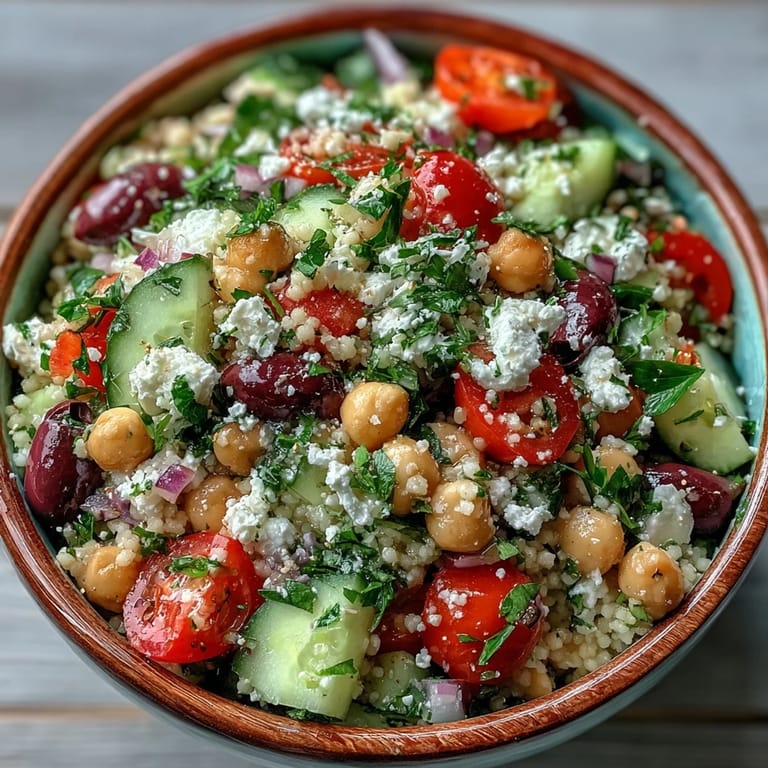
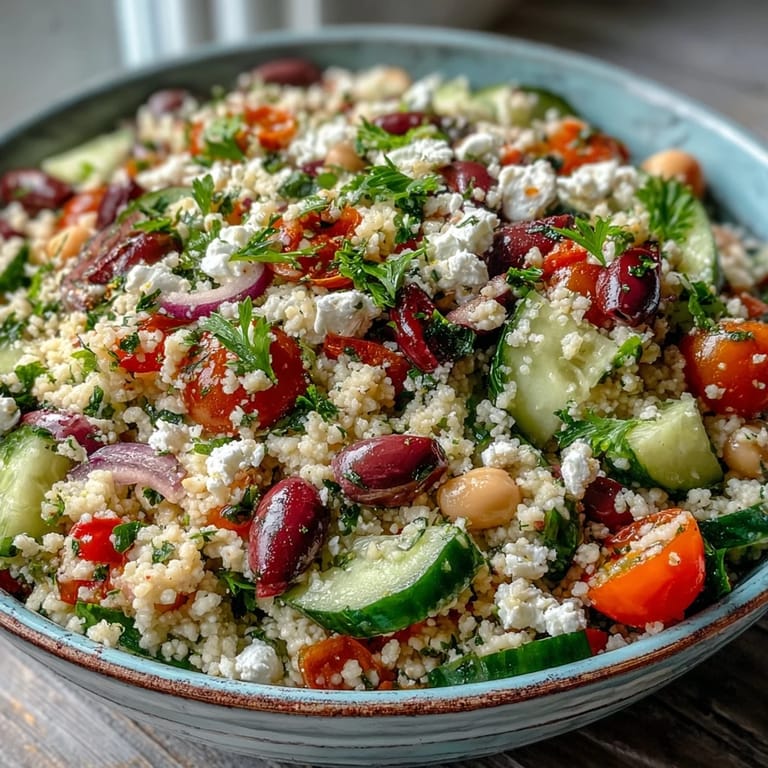
- While the couscous cools, toss the diced bell pepper, cucumber, tomatoes, red onion, olives, and feta into a large mixing bowl. The colors alone will make you hungry.
- Whisk the dressing:
- In a small bowl, whisk together the olive oil, red wine vinegar, oregano, salt, and pepper until it's smooth and emulsified. Taste it and adjust the seasoning to your liking.
- Combine everything:
- Add the cooled couscous to the bowl of vegetables, then pour the dressing over top and toss gently until everything is evenly coated. Be gentle so the feta doesn't turn to mush.
- Finish and rest:
- Fold in the chopped parsley, taste again, and add more salt or pepper if needed. Serve it right away or let it chill in the fridge for 30 minutes so the flavors can get to know each other.
 Save
Save There's something about this salad that makes people linger at the table a little longer. Maybe it's the way the feta gets creamy against the warm couscous, or how the cucumber stays crisp even the next day. I've served it at picnics, packed it for lunch, and eaten it straight from the bowl while standing at the counter. It never feels like leftovers, just a dish that gets better as it sits.
Serving Suggestions
This salad shines on its own, but it's also fantastic alongside grilled chicken, lamb kebabs, or a simple piece of seared fish. I've piled it onto pita with hummus for a quick lunch, and I've served it as a side at dinner parties where it held its own next to fancier dishes. It's versatile enough to dress up or down depending on the occasion.
Storage and Make Ahead
The beauty of this recipe is that it actually improves after a few hours in the fridge as the flavors meld together. Store it in an airtight container for up to three days, and don't worry if it looks a little dry when you pull it out, a quick drizzle of olive oil brings it back to life. If you're meal prepping, make a big batch on Sunday and you'll have lunches sorted for half the week.
Customization Ideas
I've added chickpeas when I wanted more protein, swapped in artichoke hearts for extra tang, and even stirred in some roasted red peppers when I had a jar open in the fridge. Quinoa works if you need it gluten-free, and regular couscous will do in a pinch, though you'll lose that satisfying chew. If you're going vegan, skip the feta or use a plant-based version, and the dish still tastes just as bright and satisfying.
- Add a handful of toasted pine nuts or slivered almonds for crunch and richness.
- Stir in a spoonful of lemon zest if you want extra brightness.
- Toss in some baby spinach or arugula right before serving for a peppery green note.
 Save
Save This is the kind of recipe that doesn't demand much but gives back generously, and I think that's why I keep coming back to it. Whether you're feeding a crowd or just yourself on a Tuesday night, it feels like a little trip to the Mediterranean without leaving your kitchen.
Recipe FAQs
- → Can I make this dish ahead of time?
Yes, this dish actually improves when made ahead. Refrigerate for up to 3 days in an airtight container. The flavors meld beautifully overnight, making it perfect for meal prep.
- → What's the difference between pearl couscous and regular couscous?
Pearl couscous, also known as Israeli couscous, consists of larger, spherical pasta-like granules that are toasted. Regular couscous is much smaller and steamed rather than boiled. Pearl couscous has a chewier texture and nuttier flavor.
- → How do I make this vegan?
Simply omit the feta cheese or substitute with a vegan alternative. Use vegetable broth instead of chicken broth. The dish remains delicious and satisfying without the dairy component.
- → Can I serve this warm or cold?
Both options work beautifully. Serve immediately after preparation while slightly warm for comfort, or refrigerate for at least 30 minutes for a refreshing chilled salad. The texture remains pleasant either way.
- → What can I add to enhance this dish?
Consider adding artichoke hearts, roasted red peppers, chickpeas for extra protein, fresh mint instead of parsley, or pine nuts for crunch. Grilled chicken or shrimp also work well for non-vegetarian versions.
- → Is this gluten-free?
No, pearl couscous contains wheat. For a gluten-free version, substitute with quinoa following package cooking instructions. The cooking method and remaining ingredients work perfectly with quinoa.