 Save
Save My kitchen smelled like vinegar and possibility the first time I attempted salmon sushi bake—a dish I'd stumbled upon during a late-night scroll through someone's dinner party photos. Instead of rolling tiny cylinders for hours like traditional sushi demands, this deconstructed version promised all the flavors I loved in a single baking dish, ready to feed a crowd. I remember thinking how smart it felt, how it stripped away the intimidation while keeping everything that makes sushi sing. That evening turned into a regular Thursday ritual, and now my friends text asking when I'm making it again.
I'll never forget the moment my neighbor peered over the fence while I was carrying the baking dish inside, steam rising from the top, and asked if I was making something fancy for a special occasion. When I told her it was just Thursday dinner, she asked for the recipe on the spot. Watching her face when she tasted it—that little pause before the smile—reminded me that the best meals aren't always the complicated ones, they're the ones that feel like someone actually cares enough to do something thoughtful.
Ingredients
- Sushi Rice (2 cups uncooked): Use short-grain sushi rice specifically, as it has the starch content that makes it sticky and holds together when baked; regular rice will turn mushy.
- Rice Vinegar (2 tbsp): This adds the signature tang that makes sushi sushi—don't skip it or substitute with regular vinegar, which tastes harsh and acidic.
- White Sugar (1 tbsp) and Salt (½ tsp): These balance the vinegar's sharpness and season the entire rice base, so dissolve them completely before mixing.
- Salmon Fillet (8 oz, about 2 cups cooked and shredded): Fresh salmon cooks faster and tastes cleaner than frozen, but frozen works fine if you thaw it properly; the shredding is forgiving, so don't stress about perfect flakes.
- Imitation Crab Sticks (10 oz): These add sweetness and texture that real crab would overshadow in a casserole; shred them by hand for a better texture than chopping.
- Cream Cheese (4 oz, softened): This is what makes the mixture creamy instead of dry, so let it sit on the counter for thirty minutes before mixing to avoid lumps.
- Sriracha Mayo (⅓ cup): Make this yourself rather than buying pre-made versions, which taste flat and overly sweet; the homemade version stays vibrant and spicy.
- Furikake Seasoning: This Japanese seasoning mixture brings umami and a subtle nori flavor; it's worth hunting down at an Asian market because it transforms the whole dish.
- Sesame Seeds and Green Onion: These add crunch and freshness at the end, cutting through the richness so each bite stays balanced.
- Seaweed Snack Sheets: These are the secret to eating it like sushi—wrap each scoop in nori before biting to get that crispy-soft contrast that makes people reach for more.
Tired of Takeout? 🥡
Get 10 meals you can make faster than delivery arrives. Seriously.
One email. No spam. Unsubscribe anytime.
Instructions
- Cook your rice with intention:
- Use a rice cooker if you have one, as it keeps the rice fluffy rather than dense. If using a saucepan, bring water to a boil, add rice, reduce heat to low, cover, and simmer for about 18 minutes until the liquid absorbs completely.
- Season while warm:
- Microwave the vinegar, sugar, and salt mixture for 30 seconds until the sugar dissolves, then pour it over the hot rice and fold gently with a spatula rather than stirring aggressively, which breaks the grains. Let it cool for 5 minutes before using so the rice firms up slightly.
- Get your salmon ready:
- Pat the salmon dry with paper towels, season generously with salt and pepper, then bake at 375°F for 15 to 17 minutes or air fry at 400°F for 10 to 12 minutes until it flakes easily with a fork. Let it cool enough to handle, then shred it with two forks, pulling in opposite directions for natural flakes rather than pounding it into submission.
- Combine the filling:
- In a large bowl, add the shredded imitation crab, cooked salmon, softened cream cheese, and Sriracha mayo, then fold everything together gently until no streaks of cream cheese remain. Taste and adjust the spice level here—you can always add more Sriracha, but you can't take it out.
- Build your base layer:
- Spread the seasoned rice evenly into your greased baking dish and press it down gently with the back of a spatula to create a compact, even layer. Sprinkle generously with furikake so every bite has seasoning throughout, not just on top.
- Top with the filling:
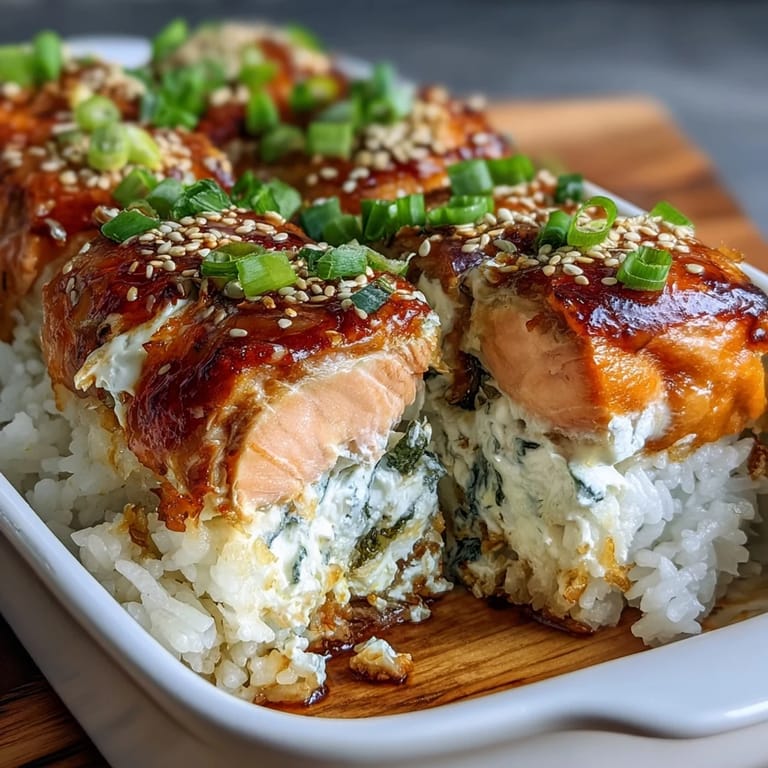
- Spread the salmon and crab mixture evenly over the rice in a smooth layer, pressing gently so it doesn't separate during baking. Don't worry about perfection—it's going to soften and meld together anyway.
- Bake until golden:
- Pop the dish into a 400°F oven for 10 to 15 minutes, watching for the edges to turn a light golden color and the top to warm through completely. You'll know it's done when you can smell the furikake getting toasty and the cream cheese starts bubbling slightly at the edges.
- Finish with fresh flourishes:
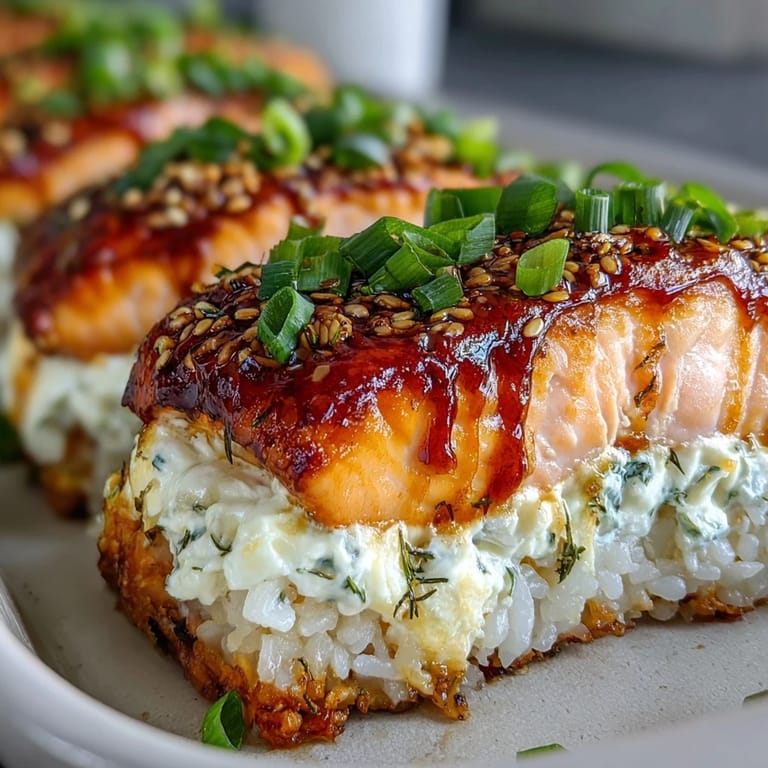
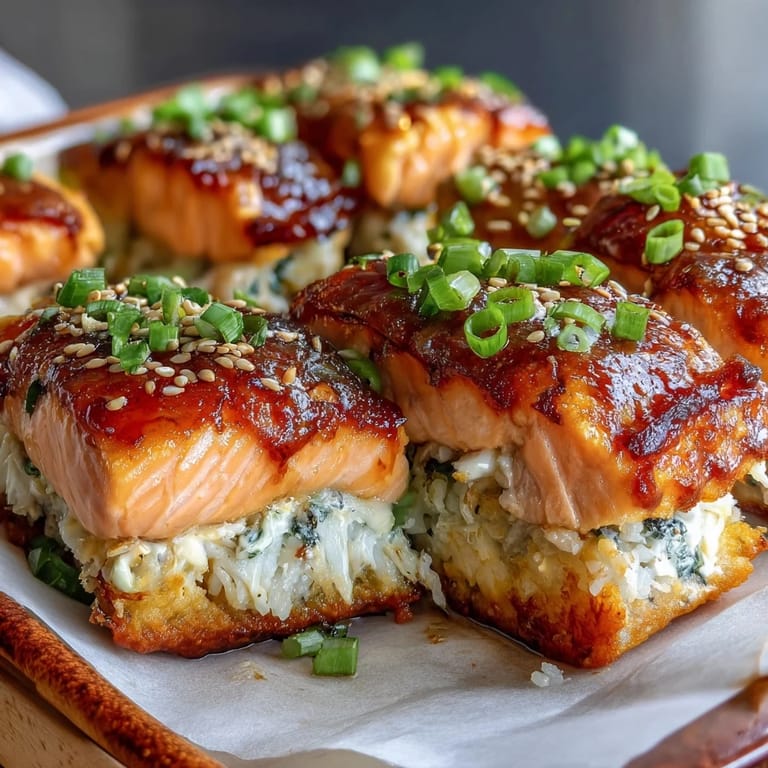
- Remove from the oven and immediately drizzle with extra Sriracha mayo, then sprinkle sesame seeds and chopped green onion over the top while it's still hot so they soften slightly into the creamy layer. This last step is where it stops being casserole and becomes something special.
- Serve with seaweed sheets:
- Scoop portions directly from the baking dish and wrap each spoonful in a sheet of seaweed, which adds crunch and nori flavor that ties everything back to traditional sushi.
 Save
Save The real magic happened one night when my teenage daughter, who usually picks at family dinners, came home from school and asked if there was any salmon sushi bake left over. She ate three scoops standing at the counter, and we didn't talk, just existed in that comfortable silence that means food has done its job. It wasn't fancy, it wasn't on a beautiful plate, but it meant everything.
Why This Works as a Bake Instead of Rolled Sushi
Traditional sushi demands precision and practice—your rolls need to be tight enough to hold together but loose enough not to squish the fillings, and the technique takes years to master without mangling your ingredients. This baked version respects those constraints by simplifying the assembly while preserving every flavor note that makes sushi craveable. The heat gently warms the cream cheese into the rice, the salmon stays moist against the vinegared base, and the furikake seasons everything evenly rather than sitting only on top where you can taste it inconsistently. Most importantly, it scales beautifully—whether you're feeding four people or eight, you're not rolling dozens of cylinders while your dinner guests get cold.
Customizing for Your Cravings
The first time I made this recipe, I followed it exactly because I respect the architecture of dishes I haven't mastered yet. By the third time, I started experimenting—swapping imitation crab for real crab when I splurged at the seafood counter, adding cucumber slices between the rice and filling for crunch, layering in avocado slices after baking so they stay creamy rather than oxidizing. Someone once asked if I could add tuna, and honestly, yes—you could layer thin sashimi-grade tuna slices on top before baking, though the timing gets tricky because fish cooks fast. The framework is solid enough to hold your preferences without falling apart.
Storage and Reheating Without Regrets
Leftovers keep in the refrigerator for two days, though I've pushed them to three when no one was watching and they were still fine. The cream cheese hardens when cold, which sounds bad but actually creates a firmer texture that makes wrapping in seaweed easier and prevents the mixture from falling apart. To reheat, cover the dish loosely with foil and warm it gently at 350°F for about 10 minutes until the cream cheese softens again and the rice steams back to life—don't skip the cover, or the top will dry out and separate. Microwave reheating works in a pinch, but the texture suffers and becomes slightly grainy, so avoid it if you care about the experience you're creating.
- Let cold sushi bake sit at room temperature for fifteen minutes before reheating: This prevents thermal shock and helps it warm evenly instead of having cold pockets surrounded by hot rice.
- Add fresh toppings after reheating: The sesame seeds and green onions lose their brightness when warmed, so scatter them fresh on top once the dish is hot, which only takes thirty seconds and transforms the whole thing.
- Freeze it carefully if you must: Cool it completely, wrap it tightly in plastic wrap and then foil, and it'll keep for up to a month, though the texture becomes noticeably softer when thawed.
 Save
Save This sushi bake has become the meal I make when I want to impress without stress, when I want to feed people something that tastes like I care but doesn't require me to perform precision sushi-rolling in front of an audience. It's honest food that happens to be delicious.
Recipe FAQs
- → What type of rice is best for this dish?
Sushi rice is ideal as it's sticky and holds the layers together well, creating the perfect texture.
- → Can I use fresh crab instead of imitation crab?
Yes, fresh crab enhances flavor authenticity and can be substituted in the seafood layer.
- → How can I make this dish spicier?
Adding extra Sriracha or chili flakes to the mayo mixture will increase the heat to your preference.
- → What is the best way to cook the salmon?
Cooking the salmon in an air fryer or oven until fully cooked then shredding ensures tender, flaky texture.
- → How should leftovers be stored?
Store leftovers refrigerated for up to two days and reheat gently to maintain texture and flavor.
- → What toppings finish the dish?
Furikake seasoning, sesame seeds, and chopped green onions add crunch and flavor on top before serving.