 Save
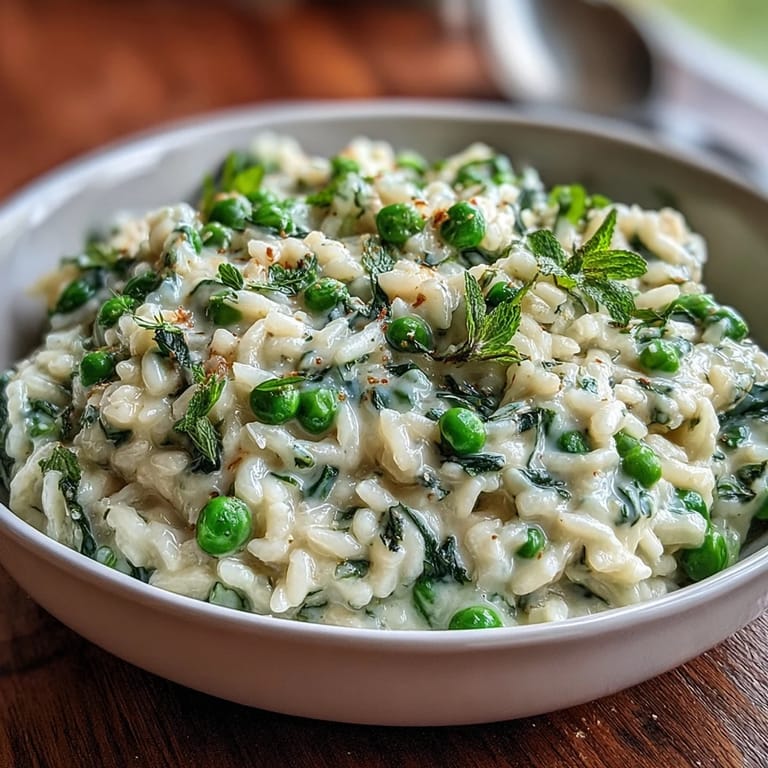
Save There's something about the first warm day of spring that makes you want to cook something green and creamy all at once. My neighbor knocked on my door with a basket of fresh peas from her garden, and I had that moment where you know exactly what needs to happen—risotto, the kind that tastes like spring itself. The mint came from my kitchen windowsill, slightly overgrown and begging to be used, and suddenly this dish was happening whether I'd planned it or not.
I made this for my book club last April, and someone actually asked for the recipe before dessert was even served—which never happens. We paired it with a cold Sauvignon Blanc, and the whole evening felt less like a regular Tuesday and more like we'd accidentally stumbled into an Italian countryside kitchen.
Ingredients
- Fresh or frozen spring peas (1 cup): The heart of this dish; frozen peas work beautifully and are often picked at peak ripeness, so don't hesitate to use them if fresh aren't available.
- Arborio rice (1 1/2 cups): This short-grain rice releases starch as it cooks, creating that signature creamy texture without cream; it's the backbone of risotto and worth buying specifically for this.
- Vegetable broth (4 cups): Keep it warm in a separate pot the entire time; adding cold broth will shock the rice and ruin the creamy consistency you're working toward.
- Dry white wine (1/2 cup): This adds acidity and depth; a Pinot Grigio or Sauvignon Blanc works perfectly, and yes, drink the same wine you're cooking with.
- Unsalted butter (3 tablespoons, divided): Butter is non-negotiable here; it creates the luxurious finish that makes people think you spent hours on this.
- Parmesan cheese (1/2 cup, grated): Freshly grated makes an enormous difference; pre-grated cheese has anti-caking agents that prevent it from melting smoothly into the risotto.
- Fresh mint (2 tablespoons, finely chopped): Add this at the very end so it stays bright and doesn't lose its essential oils to the heat.
- Extra-virgin olive oil (2 tablespoons): This starts the base; it keeps the onions from sticking and adds a subtle fruity note to the background.
- Onion and garlic: These are your aromatic foundation; the onion should be soft and almost sweet before you add the rice.
- Lemon zest (optional but encouraged): A single microplane pass adds a whisper of brightness that ties everything together.
- Salt and freshly ground black pepper: Taste as you go; you'll need more seasoning than you think, especially at the end.
Tired of Takeout? 🥡
Get 10 meals you can make faster than delivery arrives. Seriously.
One email. No spam. Unsubscribe anytime.
Instructions
- Keep your broth warm and ready:
- Pour your vegetable broth into a separate saucepan and let it simmer gently on a back burner the entire time you're cooking risotto. Cold broth will interrupt the cooking process and create an uneven texture, so this step is the invisible backbone of success.
- Build your flavor base:
- Heat olive oil and 2 tablespoons of butter together over medium heat, then add your finely chopped onion. Let it cook slowly for about 4 minutes until it's translucent and soft, almost melting into itself. This is where patience pays off—rushing this step means you'll taste raw onion instead of sweet, caramelized flavor.
- Wake up the garlic:
- Add your minced garlic and cook for just 1 minute until the kitchen smells irresistible. You're looking for fragrant, not browned; burned garlic tastes bitter and will haunt your risotto.
- Toast the rice:
- Stir in your Arborio rice and keep stirring constantly for about 2 minutes. You'll notice the grains start to look slightly translucent at the edges and feel toasted between your spoon and the pan—this step coats each grain and prevents mushiness later.
- Add the wine:
- Pour in your white wine and stir until it's almost completely absorbed, which takes about 2 minutes. The rice will drink it up and sizzle slightly; this is the moment the dish starts to transform.
- Begin the gentle broth dance:
- Using a ladle, add your warm broth one ladleful at a time, stirring frequently. Wait until most of each addition has been absorbed before adding more—this takes about 18 to 20 minutes total. You're not being fussy; you're coaxing creaminess out of the rice grain by grain.
- Introduce the peas:
- When you have about 5 minutes of cooking left, stir in your fresh or frozen peas. They'll warm through gently and turn a brilliant bright green that signals spring has arrived on your plate.
- Finish with butter, cheese, and joy:
- Remove from heat and immediately stir in your remaining butter, freshly grated Parmesan, heavy cream if using, chopped mint, and lemon zest. Taste and season generously with salt and pepper—risotto needs more salt than you'd expect because the butter and cheese haven't fully blended yet.
- Rest and serve:
- Let the risotto sit for 2 minutes before serving; this allows everything to settle into a silky, cohesive whole. Serve immediately while it's still hot and creamy, with extra mint and Parmesan scattered on top.
 Save
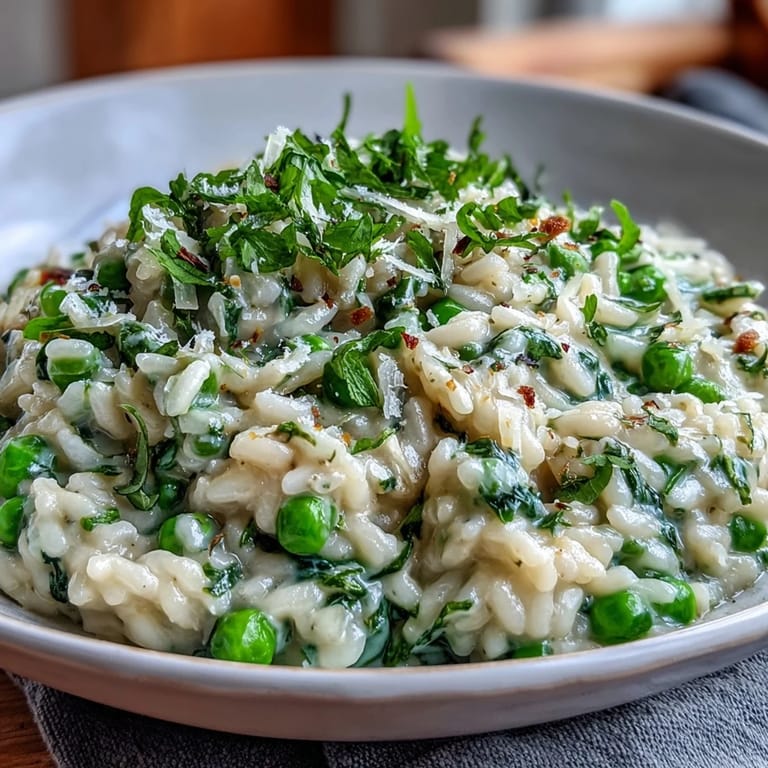
Save My daughter, who usually picks at dinner, ate this risotto three times in one week and asked me to teach her how to make it. Watching her stir the broth in slowly, concentrating like the rice was going to escape if she blinked, made me realize that cooking together matters more than cooking for people.
The Magic of Fresh Mint in Spring Cooking
Mint is one of those herbs that transforms from interesting to essential the moment warm weather arrives. In risotto, it's not meant to dominate; it should feel like a gentle green whisper that wakes up your palate and reminds you why you're excited to cook again after a long winter. The key is adding it at the very end, after the pan leaves the heat, so the volatile oils stay bright and don't cook away into nothing.
Risotto's Reputation for Difficulty Is Completely Overblown
People talk about risotto like it's some intimidating French technique that requires years of training. The truth is simpler: it's just rice, broth, and patience—the kind of meal that rewards you for showing up and paying attention. The method is forgiving once you understand that you're basically teaching rice to release its starch slowly, creating creaminess from the inside out rather than stirring in cream.
Variations and Seasonal Thinking
This recipe is a template more than a rule book. Come summer, you can add fresh corn and summer herbs; in fall, swap the peas for roasted mushrooms and sage. The point isn't to follow instructions perfectly; it's to build seasonal meals that taste like the time of year you're eating them.
- Add a handful of tender baby spinach or arugula for extra greens without changing the balance of the dish.
- Toasted pine nuts or crispy breadcrumbs scattered on top add textural contrast to the creamy rice.
- For a vegan version, use vegan butter and Parmesan alternatives; the technique stays exactly the same and works beautifully.
 Save
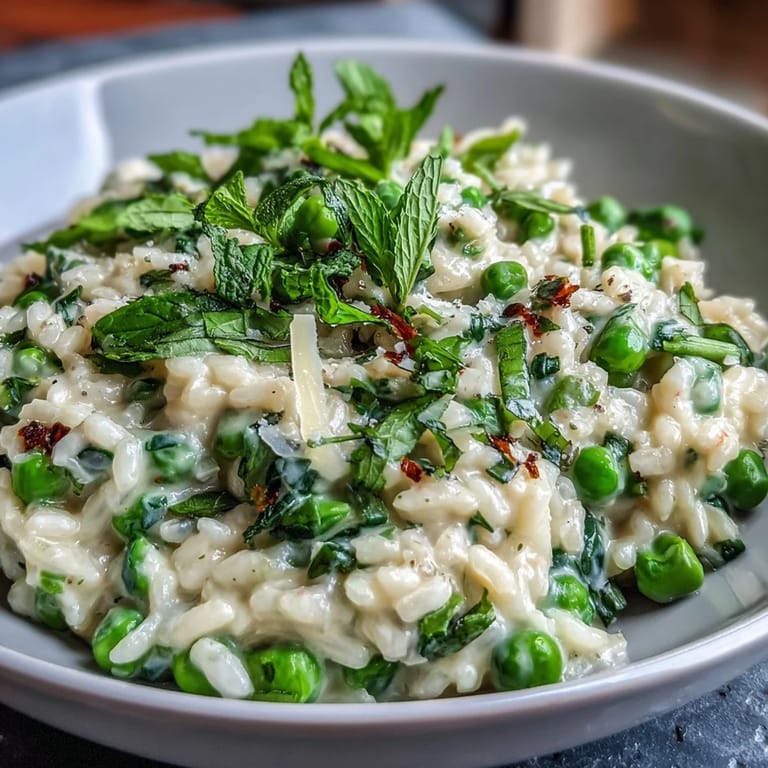
Save Some meals are just food; others become the reason you remember a particular evening. This risotto, with its bright green peas and mint, is the latter. It's the dish you make when you want to slow down and actually taste spring on your tongue.
Recipe FAQs
- → How do I achieve a creamy texture in risotto?
Slowly adding warm broth and stirring frequently allows the rice to release its starches, creating a creamy consistency without cream.
- → Can I substitute fresh spring peas with frozen ones?
Yes, frozen peas work well and can be added directly during the final cooking stages to retain their sweetness and color.
- → What is the role of white wine in this dish?
White wine adds acidity and depth, balancing the richness of butter and cheese while enhancing the flavors of the ingredients.
- → How do I properly incorporate mint for best flavor?
Add finely chopped fresh mint towards the end of cooking to preserve its bright, refreshing aroma without overpowering the dish.
- → Is Parmesan cheese necessary for this dish?
Parmesan contributes a salty, nutty finish and creamy texture; however, alternatives can be used for dietary preferences without compromising flavor.