 Save
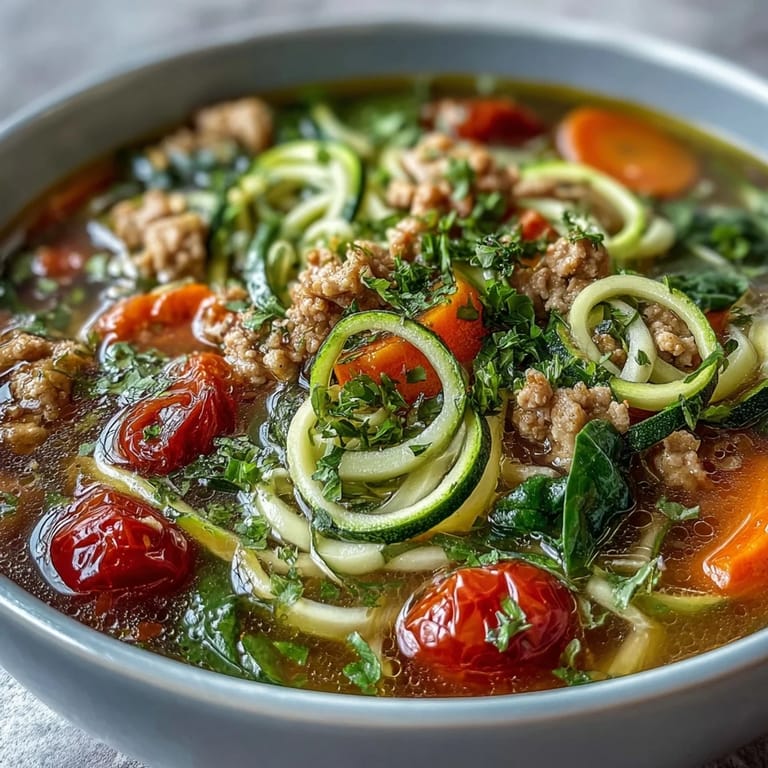
Save My kitchen smelled like celery and thyme on a Tuesday evening when I first threw together this soup, mostly because I had a tired fridge and an ambitious goal of eating lighter. Ground turkey was on sale, zucchini was taking up real estate, and I thought, why not spiral it into noodles instead of boiling pasta like usual? What emerged was this bright, honest bowl that tasted nothing like deprivation—it tasted like I'd actually figured something out.
I made this for my sister when she was visiting, and she ate three bowls while sitting at my counter, half-talking and half-focused on the spoon in front of her. That's when I knew it wasn't just nourishing—it was the kind of food people actually want to come back to.
Ingredients
- Ground turkey (340 g / 12 oz, lean 93% or higher): Lean turkey keeps the soup clean and light without that heavy feeling, and honestly, it's forgiving if you break it up with intention as it cooks.
- Zucchini (2 medium, spiralized): The star that shouldn't be here but absolutely works—spiralize them just before cooking or they'll weep liquid and turn the broth watery.
- Carrots (2 medium, peeled and sliced): They sweeten the broth naturally as they soften, no added sugar needed.
- Celery (2 stalks, sliced): The backbone of flavor that most people don't give enough credit to, especially with the thyme.
- Onion (1 small, diced): Diced small so it melts into everything rather than sitting as chunks.
- Garlic (2 cloves, minced): Added after the softer vegetables so it stays bright and doesn't burn bitter.
- Baby spinach (1 cup): Wilts in at the very end to keep its color and nutrients intact.
- Cherry tomatoes (1 cup, halved, optional): They burst slightly as the soup simmers, adding sweet acidity—skip them if you want something more neutral.
- Low-sodium chicken or turkey broth (1.25 liters / 5 cups): The foundation matters here; cheap broth makes cheap-tasting soup, so choose something with actual flavor.
- Olive oil (1 tablespoon): Just enough to start the vegetables without drowning them.
- Dried thyme and oregano (1 teaspoon each): These two create that rustic, understood flavor profile that feels like home cooking.
- Crushed red pepper flakes (1/2 teaspoon, optional): A whisper of heat that wakes everything up without overwhelming it.
- Lemon juice (from 1/2 lemon, about 1 tablespoon): The final touch that brightens the entire bowl and keeps it from tasting flat.
- Fresh parsley (chopped, for garnish): A small gesture that makes the presentation feel intentional.
- Salt and black pepper (to taste): Season as you go, not all at once at the end.
Tired of Takeout? 🥡
Get 10 meals you can make faster than delivery arrives. Seriously.
One email. No spam. Unsubscribe anytime.
Instructions
- Build your base with softer vegetables:
- Heat the olive oil in a large pot over medium heat and add your onion, carrots, and celery. You'll know they're ready when the pot smells sweet and the edges of the vegetables start to turn translucent, usually around 4 to 5 minutes—don't rush this.
- Wake up the garlic:
- Stir in your minced garlic and let it cook for just one minute until it's fragrant but not browning. This prevents it from becoming harsh or bitter in the final soup.
- Brown the turkey gently:
- Add your ground turkey to the pot and use a wooden spoon to break it into small pieces as it cooks, about 5 minutes, until no pink remains. The meat will absorb all those vegetable flavors you've already built.
- Introduce the broth and seasonings:
- Pour in your broth and add the thyme, oregano, crushed red pepper flakes if you're using them, and a pinch of salt and black pepper. Bring everything to a boil, then immediately lower the heat to a gentle simmer—aggressive boiling will make your zucchini noodles fall apart later.
- Let the soup develop:
- If you're adding cherry tomatoes, do it now and let them cook for about 10 minutes until the soup is cohesive and the vegetables are tender. This is a good moment to taste and adjust your seasonings.
- Add the zucchini noodles and spinach:
- Stir in the zucchini noodles and baby spinach and simmer for just 3 to 4 minutes—any longer and the zucchini becomes mushy and the spinach loses its color. You want them just tender.
- Finish with brightness:
- Squeeze in the lemon juice and give everything a final taste, adjusting salt and pepper as needed. The acidity should make you feel like the soup just woke up.
- Serve and garnish:
- Ladle the soup into bowls and top with fresh chopped parsley for color and a fresh note.
 Save
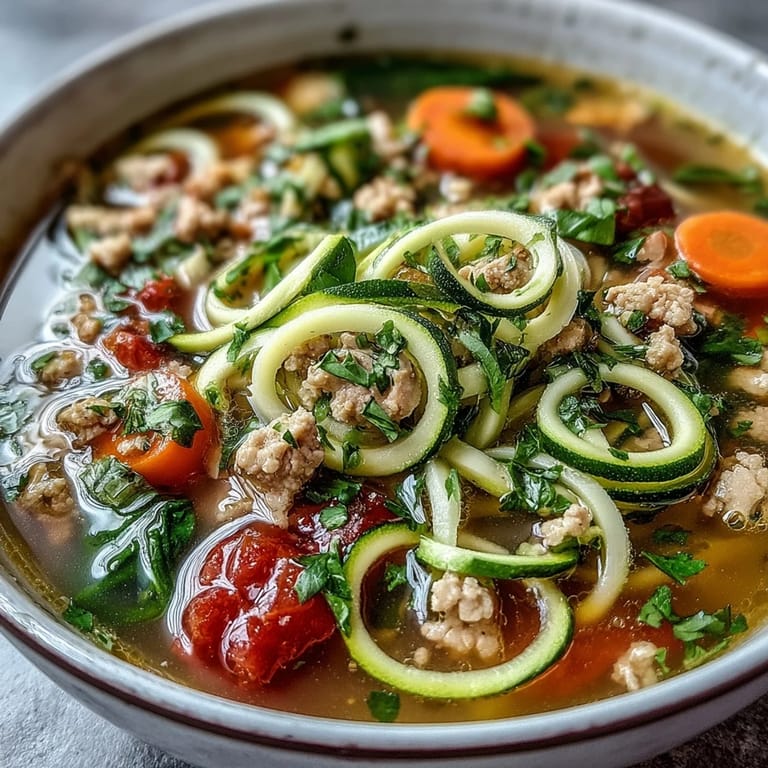
Save There was an afternoon when I made this soup for myself on a day everything felt like too much, and somehow this simple bowl of warm broth and soft vegetables became the thing that actually mattered. It wasn't fancy or complicated, and maybe that's exactly why it worked.
The Magic of Lean Protein
Ground turkey gets a bad reputation because people overcook it or use lower-fat versions that turn grainy and dry. When you choose 93% lean and handle it with respect—breaking it into small pieces and letting it cook gently in the broth—it becomes something silky and nourishing. I've learned that the meat absorbs flavors from the vegetables and aromatics around it, so by the time you're eating it, it tastes like it's been simmering for hours even though the whole soup took 40 minutes.
Why Zucchini Noodles Actually Work Here
I was skeptical the first time I spiralized zucchini into a soup instead of treating it like pasta. But in broth, zucchini noodles behave differently—they don't get that rubbery, defensive quality they sometimes have in stir-fries. They become almost silky, absorbing the thyme and oregano around them while staying structurally interesting. The key is remembering they're not meant to be al dente; they should be just barely translucent, which takes maybe three minutes of simmering.
Finishing Touches That Actually Matter
The lemon juice at the end might seem like a small detail, but it's the difference between a soup that tastes wholesome and one that tastes alive. Acidity brings out all the subtle flavors you've built—the sweetness of the carrots, the earthiness of the thyme, even the quiet nuttiness of the turkey. Fresh parsley is the same principle on a visual level, and it's a reminder that how food looks matters as much as how it tastes.
- Taste your soup multiple times as you cook it, not just at the end, so you can adjust seasonings gradually instead of overshooting.
- If you have a parmesan rind sitting in your kitchen, add it during the simmer and remove it before serving—it adds a savory depth without making the soup cheesy.
- Leftovers keep for three days, though the zucchini noodles will soften slightly, which is honestly fine for a quick weeknight reheating.
 Save
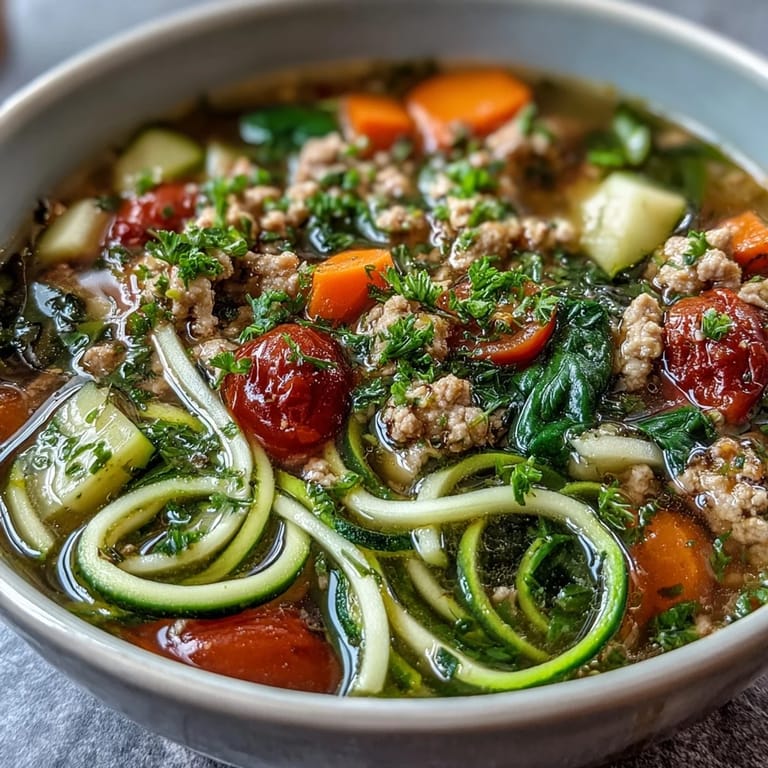
Save This soup became the recipe I make when I want to feel like I'm taking care of myself or someone else, and it never disappoints. It's proof that simple, honest cooking done with attention is its own kind of luxury.
Recipe FAQs
- → What type of meat works best for this dish?
Lean ground turkey with 93% or higher lean content ensures a light, protein-packed base while keeping fat content low.
- → Can I substitute zucchini noodles with another vegetable?
Yes, spiralized carrots or butternut squash are great alternatives that maintain a similar texture and flavor profile.
- → How can I make the soup more flavorful?
Adding a parmesan rind during simmering or enhancing herbs like thyme and oregano adds depth and savory notes.
- → What is the best way to prevent zucchini noodles from becoming mushy?
Simmer zucchini noodles gently for 3-4 minutes and add them towards the end to keep their texture firm and fresh.
- → Can this dish accommodate dietary restrictions?
Yes, it is naturally gluten-free, low carb, and dairy-free, suitable for a variety of dietary needs.