 Save
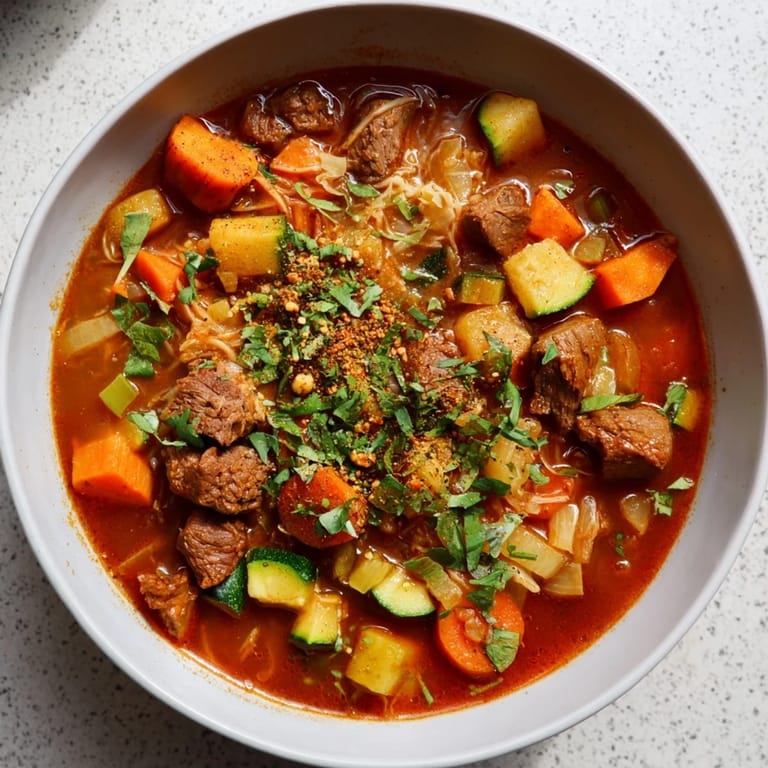
Save My uncle's kitchen in Algiers smelled like this soup every winter—that particular moment when cumin hits hot oil and suddenly you're transported somewhere warm and alive. I didn't appreciate it as a child, too impatient for the hour-long simmer, but years later I found myself recreating that exact smell in my own kitchen, chasing something I couldn't quite name until the first spoonful reminded me: home tastes like lamb, tomato, and the kind of comfort that doesn't need explanation.
I made this for a group of friends on a rainy November evening when nobody felt like going out, and what started as an improvisation became the reason they all kept showing up on cold nights afterward. There's something about ladling soup that makes people linger at the table longer, conversation flowing easier, the kind of gathering that happens around food rather than despite it.
Ingredients
- Lamb shoulder, 500g cubed: The collagen breaks down into gelatin during that long simmer, which is why this soup tastes like it's wrapping around you from the inside out—cheaper cuts actually win here.
- Onion, 1 large: Finely chopped so it almost disappears into the base, building sweetness and depth rather than announcing itself.
- Carrots and celery, 2 each: The vegetable holy trinity starts here, creating the aromatic foundation that everything else rests on.
- Potato and zucchini: One adds body, one adds freshness—they keep each other honest.
- Fresh and canned tomatoes, 1 large plus 400g: The fresh one gets cut into chunks for texture, the canned one dissolves into the broth, giving you both presence and substance.
- Garlic and tomato paste: Two tablespoons of paste sounds like a lot until you realize it's your flavor foundation doing heavy lifting for the full hour ahead.
- Fresh coriander and parsley: One bunch each, chopped at the end so they still taste like green, alive things rather than cooked herbs.
- Cumin, coriander, paprika, cinnamon, black pepper, turmeric, chili flakes: The spice profile is North Africa distilled into half-teaspoons and teaspoons—nothing overpowers, everything harmonizes.
- Olive oil, 2 tablespoons: Enough to get the lamb properly golden without making this greasy.
- Water or beef stock, 1.5 liters: Use stock if you have it; if not, water and time will do the job just as well.
- Vermicelli pasta, 60g: Adds soft substance in the last minutes—almost melts into the broth.
Tired of Takeout? 🥡
Get 10 meals you can make faster than delivery arrives. Seriously.
One email. No spam. Unsubscribe anytime.
Instructions
- Brown the lamb first:
- Heat the oil until it's shimmering, then add your cubed lamb and resist the urge to move it around constantly—let it sit for a couple minutes per side so it actually browns instead of steaming. You'll know you're there when the kitchen smells serious.
- Build the base:
- Throw in onion, garlic, carrots, celery, and potato, and keep stirring for five minutes until everything starts to soften and the onion begins turning translucent. This is where patience starts paying dividends.
- Bloom the spices:
- Add your tomato paste and all those spices, stirring constantly for about two minutes until the kitchen air changes completely—that's the spices waking up and coating everything in flavor. Don't skip this step; it's the difference between good and transcendent.
- Add the tomatoes:
- Fresh diced tomato, canned tomato, fresh zucchini—mix it all together and let it sit for a minute so everything begins knowing each other.
- Simmer low and long:
- Pour in your water or stock, bring to a boil, then drop the heat low and cover partially, letting it bubble gently for a full hour. Skim off any foam that rises in the first few minutes—your grandmother did this, and it matters.
- Finish with pasta:
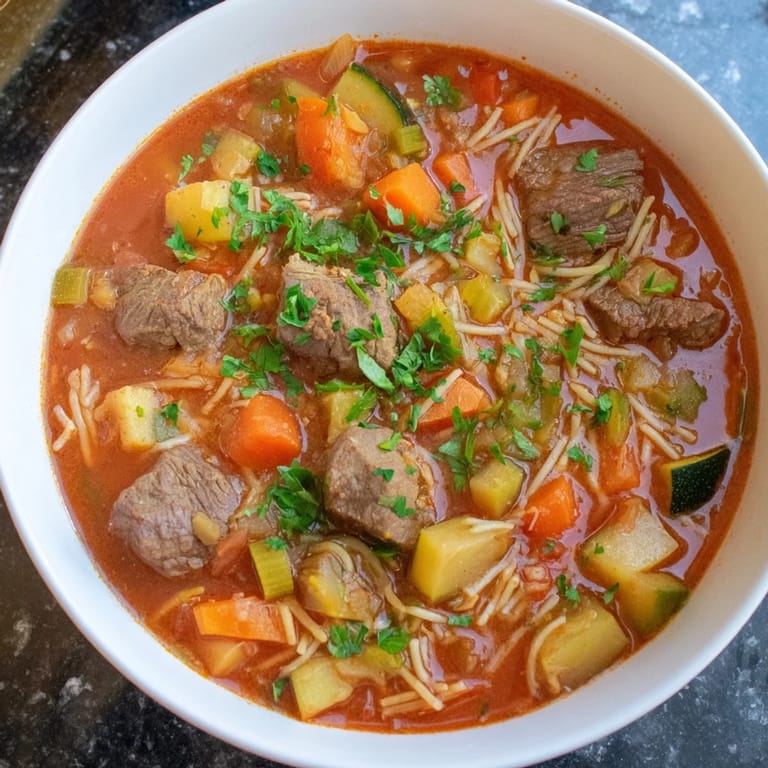
- When the hour is up and the lamb is falling apart at a glance, add your vermicelli and simmer for 10 to 12 minutes until it's tender and has absorbed some broth. Taste now; this is your moment to adjust salt.
- Final herbs and serve:
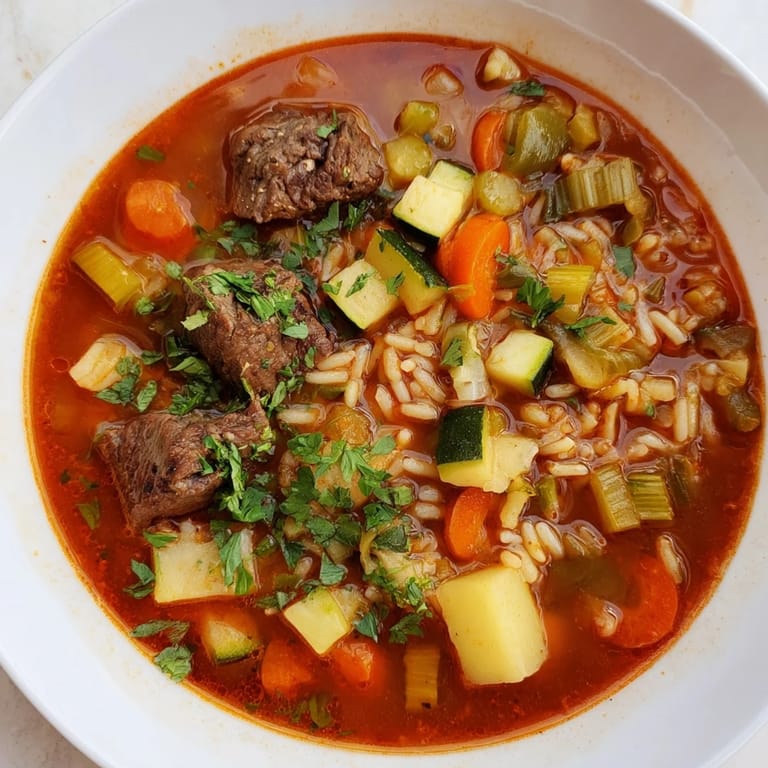
- Stir in your fresh herbs at the very end so they taste like herbs rather than like something that's been cooked to death. Ladle into bowls, top with a whisper of reserved herbs, and serve hot with lemon wedges on the side.
 Save
Save My neighbor once told me this soup tastes like her childhood, and I realized that's what good food really does—it doesn't just feed the body, it reminds us who we are and where we come from. That's worth the hour of simmering.
Variations Worth Trying
Swap the lamb for chicken thighs if that's what's in your fridge, though the broth won't be quite as rich—it'll still be good, just lighter and brighter. You could also add a handful of chickpeas during the last 20 minutes of simmering for extra protein and a creamy texture, or even a pinch of saffron if you're feeling generous with yourself. Some cooks add a teaspoon of honey at the end to balance the tomato's acidity, which is worth knowing even if you never do it.
Serving Suggestions
This is a soup that demands crusty bread or warm flatbread for soaking up the broth—don't serve it without something to break into the bowl. A lemon wedge squeezed over the top just before eating is non-negotiable; it lifts everything and reminds you why fresh citrus exists. Some people add harissa on the side for heat, others serve it alongside a small green salad for contrast, and honestly, both approaches are right.
Storing and Reheating
This soup actually improves after sitting overnight—the flavors deepen and the whole thing tastes more like itself. Refrigerate it in a covered container for up to four days, or freeze individual portions for up to three months. When reheating, do it slowly on the stovetop rather than nuking it, so the broth remembers it's supposed to be gentle.
- If it's too thick when reheated, add a splash of water or stock until it reaches the consistency you want.
- Fresh herbs should go in again after reheating, not before, so they taste alive rather than exhausted.
- A dollop of thick yogurt stirred in at the end adds richness and a slight tangy note that brings everything into focus.
 Save
Save This soup is the kind of cooking that teaches you something every time you make it—how heat works, how flavors marry, how an hour of patience becomes something people want to come back for. Make it once for yourself, then make it again for someone else.
Recipe FAQs
- → What type of meat is used in this chorba?
Lamb shoulder cut into cubes provides rich flavor and tender texture after slow cooking.
- → Can I substitute the pasta in this dish?
Yes, vermicelli or small soup pasta can be used; alternatives like broken spaghetti or orzo also work well.
- → How long should the soup simmer?
The soup simmers gently for about one hour to tenderize the lamb and blend the spices perfectly.
- → What spices bring the authentic taste to this dish?
Ground cumin, coriander, paprika, cinnamon, turmeric, and optionally chili flakes create the characteristic North African flavor profile.
- → Are fresh herbs important in this dish?
Yes, fresh coriander and parsley added at the end and as garnish enhance the dish's freshness and aroma.
- → Is there a lighter protein option?
Chicken can be substituted for lamb to create a lighter variation without sacrificing flavor.