 Save
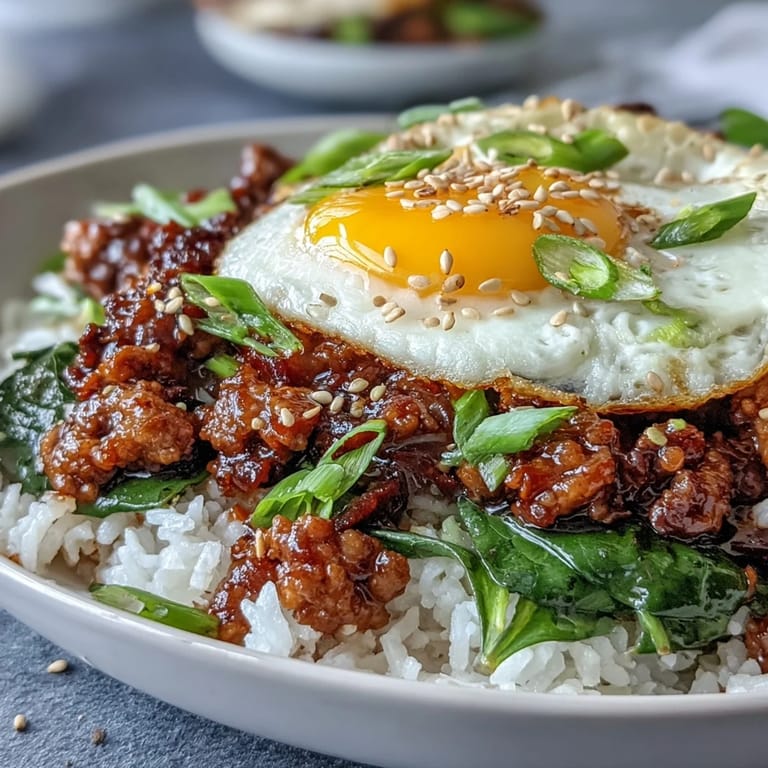
Save A weeknight dinner arrived when I least expected it—standing in front of an almost-empty fridge, staring at ground turkey and leftover rice, wondering if I could pull off something that didn't feel like compromise. Then I remembered a bowl I'd eaten at a tiny Seoul-inspired spot, that glossy red sauce clinging to every grain, the runny egg yolk breaking open like liquid gold. Twenty minutes later, my kitchen smelled like ginger and gochujang, and suddenly dinner didn't feel like making do—it felt intentional.
The first time I made this for friends, I was honestly nervous—gochujang can be polarizing, and I wasn't sure if the creaminess would work or just muddy the flavors. But watching three people go back for seconds, and then one friend asking if she could take the recipe home, I realized I'd accidentally created something that feels both exciting and comforting at the same time. That's the sweet spot.
Ingredients
- Ground turkey: Lean and mild, it becomes a perfect canvas for the bold sauce without fighting for flavor. Don't skip browning it properly—those caramelized bits add depth.
- Gochujang: This Korean red chili paste is where all the personality comes from; it's spicy but rounded with fermented umami. You can't really substitute it without losing the soul of the dish.
- Eggs: The jammy yolk is non-negotiable—seven minutes of simmering gives you that custardy center that makes everything better.
- Sesame oil: Just a tablespoon, but it's doing heavy lifting; it adds that warm, toasty note that whispers Korean kitchen without shouting.
- Short-grain rice: Day-old rice actually works better here because the grains stay separate instead of getting gluey. If you only have fresh rice, spread it on a sheet to cool first.
- Onion, garlic, ginger: The holy trinity for building flavor; don't rush sautéing them—three minutes of patience makes a difference.
- Carrot: Adds sweetness and color; julienning it makes it cook faster and look intentional on the plate.
- Baby spinach: Wilts in seconds and adds a green note that balances the richness; it's mostly about completing the story visually.
- Heavy cream or coconut cream: Optional, but it softens the heat slightly and makes the sauce cling to the rice like a silky coating. Test drive it both ways and pick your preference.
Tired of Takeout? 🥡
Get 10 meals you can make faster than delivery arrives. Seriously.
One email. No spam. Unsubscribe anytime.
Instructions
- Jammy eggs first:
- Bring water to a gentle boil and carefully lower in eggs—seven minutes is the magic number for that runny yolk that oozes into your rice. Ice bath immediately after or they'll keep cooking.
- Build your aromatics:
- Heat sesame oil over medium-high heat and let onion, garlic, and ginger get soft and fragrant, about three minutes. This is where the flavor foundation gets laid.
- Brown the turkey:
- Add ground turkey and break it up as it cooks, looking for browned bits to form, which takes five to six minutes. If there's excess fat pooling, drain it—you want richness, not grease.
- Quick carrot cook:
- Toss in your julienned carrot and let it hang out for two minutes, just enough to take the raw edge off while keeping it slightly crisp.
- Make the sauce:
- Lower heat to medium and add gochujang, soy sauce, honey, rice vinegar, and broth, stirring until everything is evenly coated and the mixture starts to bubble gently. This is where the magic sauce forms.
- Creamy spinach moment:
- Stir in cream if you're using it, then add baby spinach and watch it wilt almost instantly, about a minute. The color shift is beautiful.
- Rice folding:
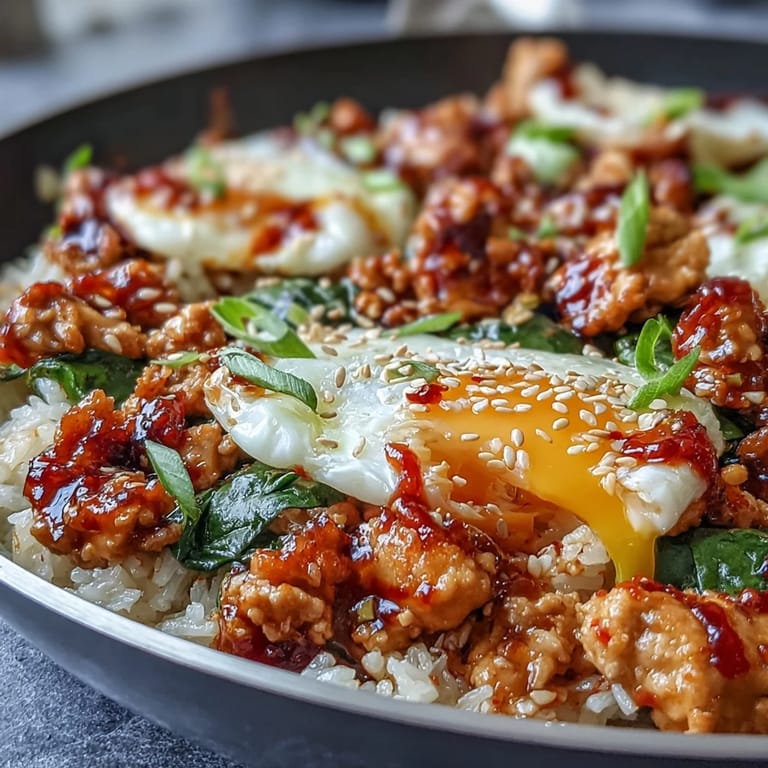
- Add your cooked rice and fold it all together gently but thoroughly, making sure every grain gets touched by that glossy sauce. It should look cohesive and smell irresistible.
- Taste and balance:
- Take a bite and adjust seasoning—maybe more soy sauce for depth, more honey if the heat is overwhelming, more gochujang if it feels muted. Trust your palate.
- Finish and serve:
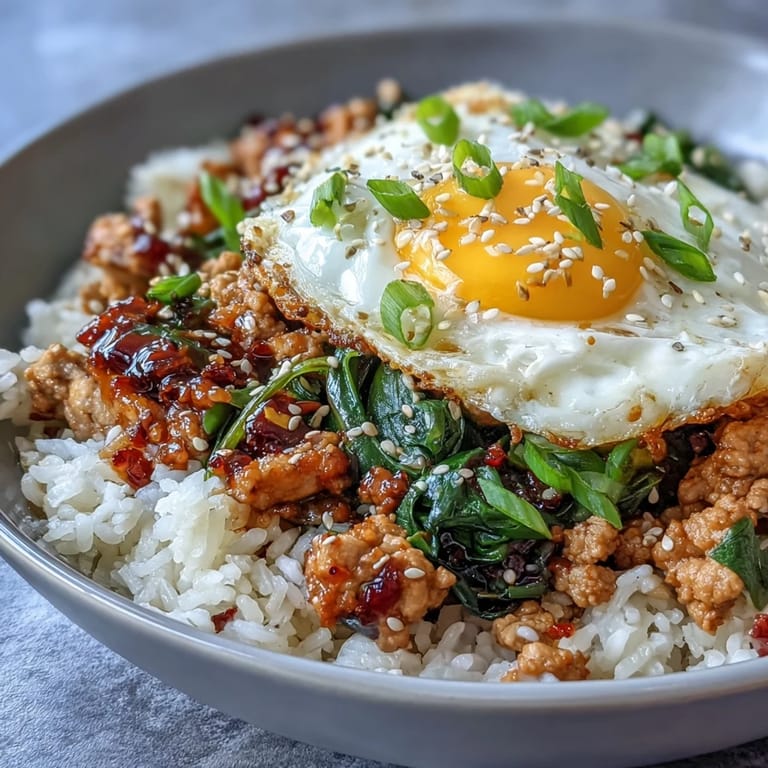
- Slice your jammy eggs in half and crown each bowl with one, then scatter scallions, sesame seeds, and kimchi on top. Serve immediately while everything is hot.
 Save
Save There's a moment when you're watching the spinach wilt into that ruby-red sauce, the whole skillet smelling like a Korean restaurant, when dinner stops being a task and becomes something you actually want to sit down and savor. That's the feeling I'm chasing every time I make this.
The Sauce Strategy
The secret to this dish is understanding that gochujang isn't just heat—it's fermented depth wrapped in chili flavor. When you mix it with honey and vinegar, you're creating a balance that makes people go back for bites they didn't know they wanted. I learned this by accident the first time I forgot the honey and ended up with something aggressively spicy and one-note. Now I always taste at the end and add a pinch more honey if needed, because the goal is to make people feel slightly addicted, not defensive about spice.
Playing with Heat and Creaminess
If you're cooking for people who are nervous about gochujang, lean into the creaminess—that heavy cream or coconut cream softens the edges without making it bland. If you're feeding fellow spice lovers, skip the cream and add a dash of gochugaru (Korean chili flakes) instead. I've served this both ways to different crowds, and honestly, both are winners. The beauty is that you get to decide which version of this dish your table needs.
Why This Works as a One-Pan Dinner
Everything that makes this dish sing happens in sequence without fancy technique or constant attention. You're building flavor as you go—sautéing aromatics, browning turkey, simmering sauce, folding in rice—and by the time you reach the end, it all feels inevitable. The reason I keep coming back to this recipe is that it delivers restaurant-quality flavor without the performance anxiety. It's genuinely foolproof if you stay present for those few key moments.
- Prep your ingredients before you start cooking and everything flows naturally.
- Taste constantly, especially the sauce, because your gochujang might be slightly different from someone else's.
- Serve immediately after assembling—this is a dish that's best when everything is still warm and the egg yolk is still runny.
 Save
Save This skillet is the kind of recipe that reminds you why cooking at home matters—it's faster than delivery, costs a fraction of the price, and tastes infinitely better because you made it yourself. Make it once, and it'll become a regular rotation.
Recipe FAQs
- → What makes this skillet Korean-inspired?
The dish features gochujang (Korean red chili paste), soy sauce, sesame oil, and rice vinegar—classic Korean ingredients that create a sweet, spicy, and umami-rich sauce. Optional kimchi garnish adds authentic fermented flavor.
- → Why use day-old rice?
Day-old rice has dried out slightly, which prevents it from becoming mushy when stirred into the sauce. The grains stay separate and fluffy while absorbing the flavorful glaze perfectly.
- → Can I make this dairy-free?
Yes, simply omit the heavy cream or substitute with coconut cream. The dish remains rich and creamy while accommodating dairy-free dietary needs.
- → How do I achieve jammy eggs?
Gently simmer large eggs for exactly 7 minutes, then immediately transfer to an ice bath to stop cooking. This yields perfectly set whites with golden, runny yolks.
- → What can I substitute for ground turkey?
Ground chicken works beautifully as a direct substitute. For a different protein profile, try lean ground beef or pork, adjusting cooking time as needed.