 Save
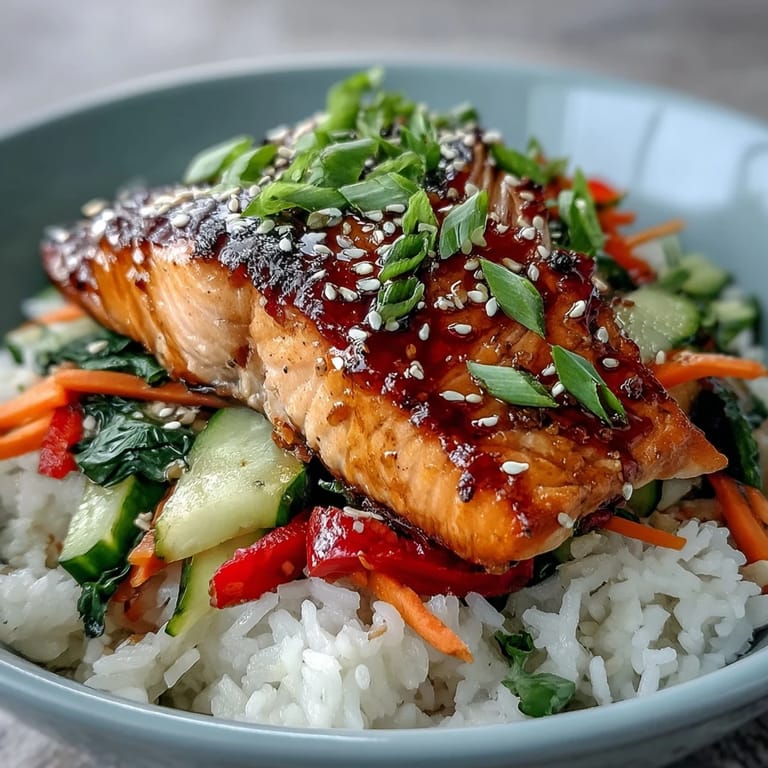
Save There's something about the smell of ginger hitting a hot pan that makes me stop whatever I'm doing and pay attention. A friend brought this soy-ginger glazed salmon bowl to a potluck on a surprisingly warm autumn evening, and I watched people come back for seconds without hesitation. The glaze caught the light as she drizzled it over perfectly cooked salmon, and I realized right then that this wasn't just healthy eating, it was something people actually wanted to eat. What struck me most was how simple it looked but how intentional every component felt, like someone had spent time thinking about balance instead of just throwing ingredients together.
I made this for a Tuesday night dinner when my partner mentioned feeling burnt out from takeout containers, and halfway through plating, I caught them leaning against the counter with this satisfied expression. The kitchen smelled incredible, and the colors were so vivid that we actually took a photo before eating, which never happens in our house. It became our default weeknight dinner after that, the kind of meal you make when you want to feel like you're taking care of yourself without making it a whole production.
Ingredients
- Salmon fillets (4, about 150 g each): Look for fillets that are bright pink and firm to the touch, not mushy or greyish, because the quality of your salmon will shine through in the final dish.
- Soy sauce (3 tbsp): This is where the umami backbone comes from, so don't skimp on a decent one if you can help it.
- Honey (2 tbsp): The sweetness balances the salty and acidic elements, creating that glaze that caramelizes beautifully on the salmon.
- Fresh ginger, grated (1 tbsp): Use a microplane and grate it fresh right before mixing, because pre-ginger loses its punch within days.
- Garlic, minced (2 cloves): Fresh cloves only, never the jar stuff if you want this to taste like actual food.
- Rice vinegar (1 tbsp): This brings brightness and prevents the glaze from tasting one-dimensional and heavy.
- Sesame oil (1 tbsp): A small amount goes a long way, and you'll know immediately if it's good quality because it smells deeply nutty and complex.
- Jasmine or sushi rice (2 cups uncooked): Jasmine rice is more forgiving and stays fluffy, while sushi rice is slightly stickier, so pick based on what texture calls to you.
- Fresh vegetables (carrots, cucumber, red bell pepper): Julienne them yourself if you have the patience, because those thin, uniform pieces are what make the bowl look intentional and feel satisfying to eat.
- Edamame (1 cup cooked): Frozen edamame work perfectly fine, and they add protein and a pop of color that feels substantial.
- Toasted sesame seeds (2 tbsp): Toast them yourself in a dry pan for 2 minutes if you buy them raw, because that changes everything about how they taste.
- Scallions (2, thinly sliced): The freshness at the end keeps the bowl from feeling heavy, so don't skip this layer.
Tired of Takeout? 🥡
Get 10 meals you can make faster than delivery arrives. Seriously.
One email. No spam. Unsubscribe anytime.
Instructions
- Rinse and start your rice:
- Cold water over raw rice, moving it gently with your fingers until the water runs clear, because that starch is what makes rice clumpy. Bring water to a boil, then drop the heat low, cover the pot, and walk away for 15 minutes.
- Build your glaze:
- Whisk soy sauce, honey, ginger, garlic, rice vinegar, and sesame oil in a small bowl until the honey dissolves into the liquid. Taste it raw on a spoon if you're nervous, because this is your moment to adjust anything that feels off-balance.
- Get your salmon ready:
- Pat those fillets dry with paper towels, because any moisture on the surface will steam instead of caramelize. Line a baking sheet with parchment, place salmon skin-side down, and brush generously with glaze, saving what's left.
- Bake with intention:
- Into a 200°C (400°F) oven for 12 to 14 minutes, and you'll know it's done when the flesh flakes easily with a fork and the thickest part is opaque. The glaze on top will look slightly caramelized and sticky, which is exactly what you want.
- Finish your glaze:
- While salmon cooks, simmer the reserved glaze in a small saucepan for a minute or two, just enough to concentrate the flavors slightly and thicken it a little. It should coat the back of a spoon, not run off like water.
- Prepare vegetables quickly:
- Julienne your carrots, cucumber, and red bell pepper while the salmon finishes, keeping everything in separate piles so the colors stay distinct and bright. This takes longer than it sounds, so don't rush it.
- Assemble your bowl:
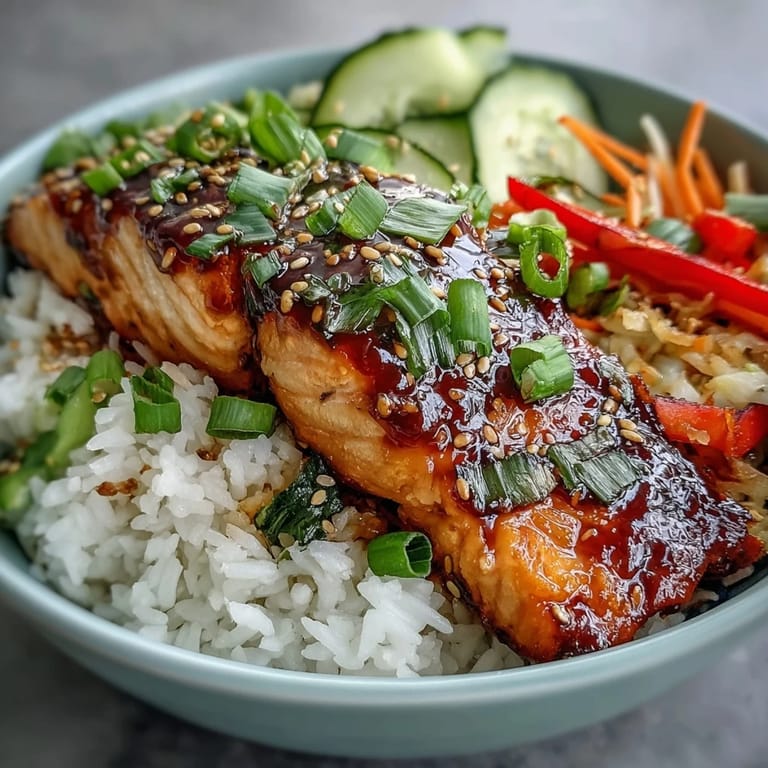
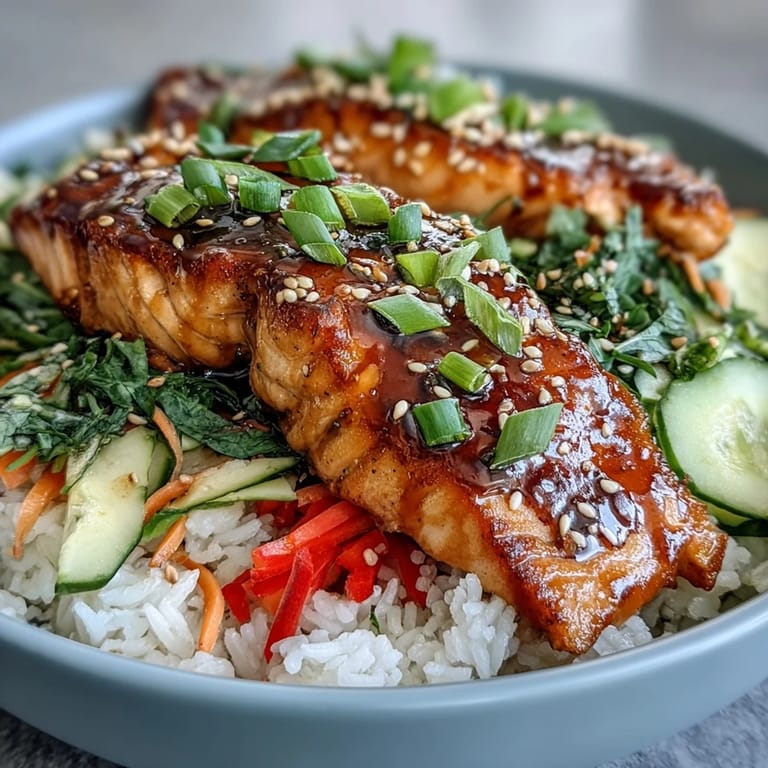
- Divide fluffy rice among four bowls, then arrange your salmon slightly off-center with vegetable piles around it and edamame scattered between. The composition matters here because you're eating with your eyes first.
- Drizzle and garnish:
- Pour extra glaze over everything, then scatter sesame seeds and fresh scallions on top, finishing with a lime wedge on the side if you want that bright acid note at the end.
 Save
Save This bowl became my answer to the question I was getting tired of hearing, which was, "What's for dinner?" because suddenly I had something that felt complete and looked good enough to serve guests without any apologies. There's power in a meal that doesn't require explanation or excuses, and this one gave me that feeling consistently.
Why This Bowl Works as Weeknight Dinner
The beauty of this format is that almost everything can be prepped ahead without losing anything to time. You can julienne vegetables the morning of, cook rice while you shower, and the actual cooking happens in under 15 minutes once your oven is hot. I started doing this on Sundays and found myself reaching for bowls throughout the week, which is the real test of whether something is actually edible or just sounds good on paper.
Variations That Keep Things Interesting
Substituting brown rice or quinoa gives you a nuttier base that actually pairs beautifully with the ginger glaze, and avocado slices add richness if you're serving this on a day when you want something more indulgent. I've also played with pickled ginger stirred into the rice itself, which sounds weird but creates this incredible layered flavor that makes you appreciate every bite. The framework is forgiving enough that you can experiment without ruining anything.
Making This Work for Everyone at Your Table
The tamari swap for gluten-free requirements is genuinely undetectable, and honestly, I've stopped being able to taste the difference between the two. Building the bowl as an assembly situation means people can customize their ratio of vegetables to fish to glaze, which saves you from being interrogated about dietary preferences. You can also prep a small pile of extra sesame seeds to pass around because some people are sesame seed people and some aren't, and there's no point in forcing it.
- Always taste your glaze on a spoon before brushing it on salmon because you might want it sweeter or more salty than the recipe suggests.
- If your salmon fillets are unusually thick, tent them loosely with foil for the first half of baking to prevent the outside from drying out.
- Lime wedges should be squeezed over the bowl at the very last moment so the acidity hits your taste buds fresh instead of sitting and mingling with everything else.
 Save
Save This recipe is really about understanding that eating well doesn't mean punishment, and creating something this intentional takes exactly the same amount of time as ordering takeout. Make it once and you'll understand why people kept coming back for seconds.
Recipe FAQs
- → How do I know when the salmon is cooked through?
The salmon is done when it flakes easily with a fork and the internal temperature reaches 145°F (63°C). The flesh should appear opaque and slightly translucent in the center. Avoid overcooking, as the fish will continue cooking slightly after removing from the oven.
- → Can I make the glaze ahead of time?
Yes, the soy-ginger glaze can be prepared up to 2 days in advance and stored in an airtight container in the refrigerator. Give it a quick whisk before using, as the honey may settle at the bottom. If thickened, warm slightly to loosen the consistency.
- → What other vegetables work well in this bowl?
Feel free to customize with shredded cabbage, snap peas, steamed broccoli, or roasted sweet potato. Pickled vegetables like radishes or carrots add tangy contrast. The key is maintaining a variety of textures and colors that complement the glazed salmon.
- → Is this suitable for meal prep?
Absolutely. Store components separately in airtight containers for up to 3 days. Keep the glaze separate and drizzle just before serving to prevent the rice from becoming soggy. Reheat salmon gently to maintain its texture.
- → How can I make this gluten-free?
Simply substitute regular soy sauce with tamari or a certified gluten-free soy sauce alternative. Ensure all other ingredients, including the rice vinegar, are labeled gluten-free. The rest of the dish naturally contains no gluten.
- → Can I grill the salmon instead of baking?
Grilling works beautifully and adds subtle char flavor. Brush the glaze on the salmon and grill over medium-high heat for 4-5 minutes per side, depending on thickness. Watch closely as the honey in the glaze can caramelize quickly.