 Save
Save One Tuesday evening, I was rushing to put dinner on the table when my partner asked what was for dinner—and honestly, I had no idea. I opened the fridge, found a beautiful salmon fillet, some rice, and a scatter of vegetables, and thought: why not make something that tastes deliberate instead of thrown together? That's when this bowl came to life. It turned out to be one of those happy accidents where everything works because each component shines on its own, then comes together into something greater than the sum of its parts.
I made this for my sister who'd just started trying to eat healthier, and watching her eyes light up when she took that first bite reminded me that good food doesn't have to taste like punishment. She's been asking me to make it ever since, which says more than any review ever could.
Ingredients
- Salmon fillet (500 g, cut into 2 cm cubes): The star of the show—cubes cook faster and more evenly than fillets, and they look beautiful piled on rice.
- Soy sauce (2 tbsp): This is your umami foundation; use tamari if you need gluten-free, and don't skip it thinking you'll add more later.
- Sesame oil (1 tbsp): A little goes a long way—it's potent and fragrant, so measure carefully or you'll overpower everything else.
- Honey or maple syrup (1 tbsp): This balances the salt and adds a subtle sweetness that makes the marinade memorable instead of just salty.
- Fresh ginger (1 tsp grated): Grate it fresh every time; jarred ginger tastes like disappointment compared to the real thing.
- Garlic (1 clove, minced): One clove is enough—garlic should whisper, not shout.
- Black pepper (½ tsp): White or black, freshly ground makes all the difference in a simple marinade.
- Jasmine or sushi rice (2 cups): Jasmine rice has a gentle floral note that pairs perfectly with salmon; don't substitute without tasting first.
- Water (3 cups) and salt (½ tsp): The ratio of water to rice is everything—too much and you'll have porridge, too little and you'll have crunchy disappointment.
- Cucumber (1 cup, thinly sliced): The cooling element that keeps the bowl from feeling heavy, even though it's genuinely nourishing.
- Shredded carrots (1 cup): Raw carrot adds sweetness and crunch; you could roast them instead if you prefer, but the rawness is part of the charm.
- Edamame (1 cup, shelled): Buy them pre-cooked and frozen to save 10 minutes; they'll thaw while everything else cooks.
- Avocado (1): Add this at the very last second before eating, or it'll turn brown and sad.
- Green onions (2, thinly sliced): These are your textural pop and a bright finish that ties everything together.
- Toasted sesame seeds (2 tbsp): Toast your own if you have five minutes; store-bought works, but toasted from scratch tastes noticeably nuttier.
- Sriracha mayo, soy sauce, pickled ginger, and lime: These are your flavor flexers—choose what suits your mood, and don't feel obligated to use them all at once.
Tired of Takeout? 🥡
Get 10 meals you can make faster than delivery arrives. Seriously.
One email. No spam. Unsubscribe anytime.
Instructions
- Get your oven ready:
- Preheat to 220°C (425°F) and line your baking tray with parchment paper so the salmon won't stick and cleanup will be painless. Parchment is worth it.
- Make the marinade and coat the salmon:
- Whisk soy sauce, sesame oil, honey, ginger, garlic, and pepper in a bowl until the honey dissolves into the liquid. Add your salmon cubes and stir gently so each piece gets coated, then let it sit while you handle the rice—ten minutes is enough to season the fish without making it mushy.
- Cook the rice properly:
- Rinse your rice under cold water, stirring it with your fingers until the water runs clear; this removes starch and prevents gumminess. Put the rinsed rice in a saucepan with three cups of water and half a teaspoon of salt, bring it to a boil, then cover and turn the heat down to low for 12 to 15 minutes until the rice is tender and the liquid is absorbed. Let it sit covered for five minutes after—this resting time is when the magic happens and the rice becomes fluffy instead of dense.
- Broil the salmon until cooked through:
- Spread your marinated salmon cubes on the parchment-lined tray in a single layer so heat can reach all sides, then slide it under the broiler for 8 to 10 minutes. You'll know it's done when the edges are lightly browned and the fish flakes when you nudge it with a fork—don't overcook it, or it'll become dry and bitter.
- Prepare your vegetables and toppings:
- Slice your cucumber thin, shred your carrots, thaw your edamame, slice your avocado, and chop your green onions. Lay everything out in separate little piles so you're ready to assemble.
- Build your bowls:
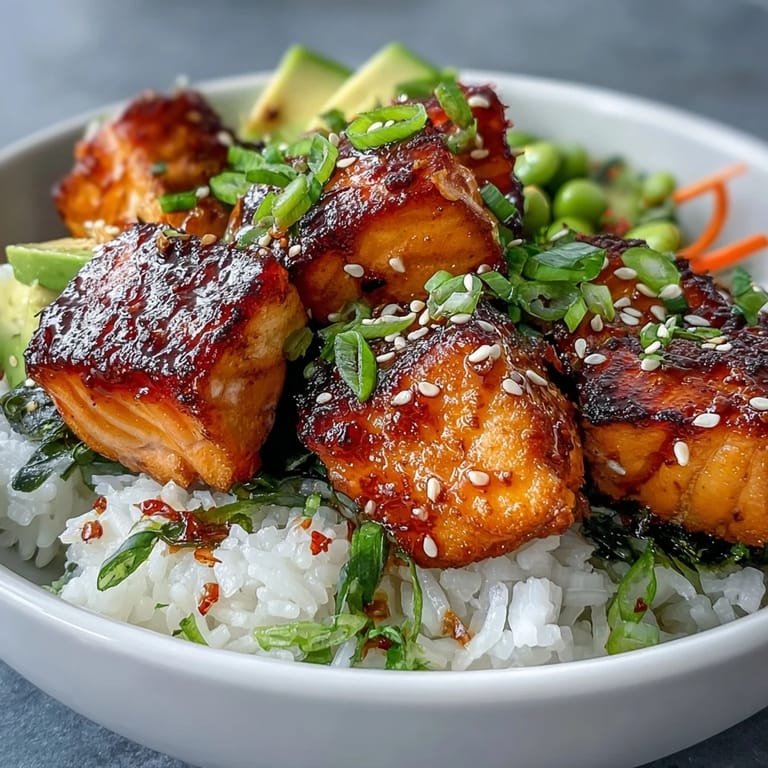
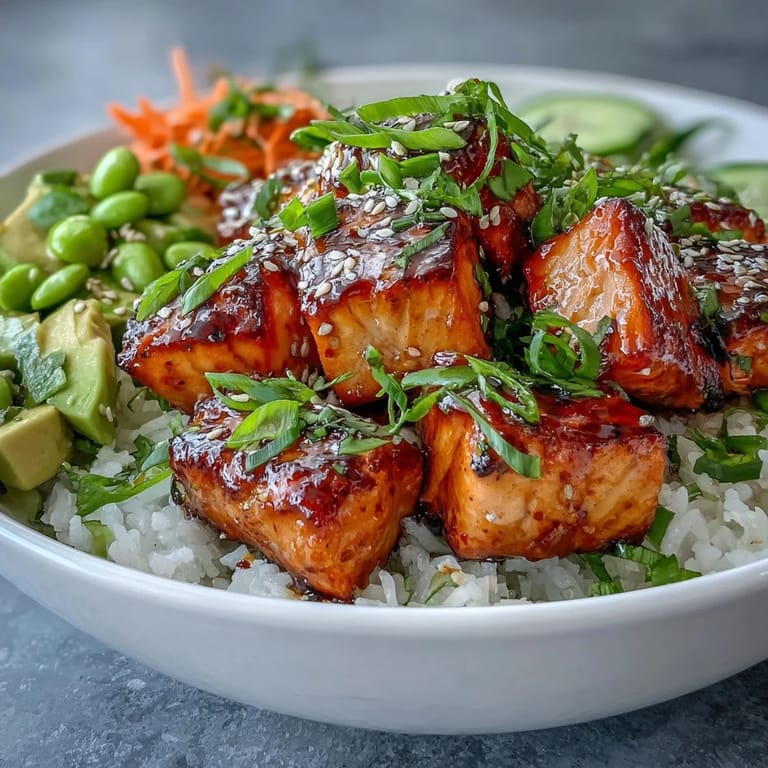
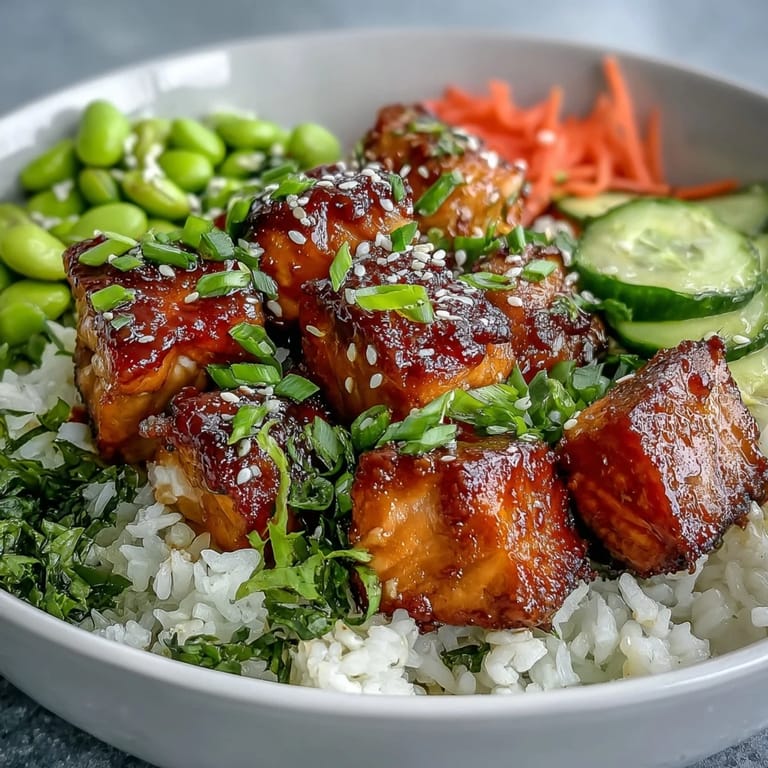
- Divide the warm rice among four bowls, then top each with a portion of the broiled salmon, then arrange the cucumber, carrots, edamame, avocado slices, and green onions around and over the salmon like you're composing something beautiful. Drizzle with whatever sauces call to you, sprinkle sesame seeds over the top, and serve immediately with lime wedges on the side.
 Save
Save There's something quietly satisfying about a bowl where every element has its own flavor and texture, yet they all agree to play nicely together. I've started making extra rice on purpose so I can throw together a quick bowl the next day when I need something that tastes intentional but doesn't ask much of me.
Why This Tastes Like Restaurant Food at Home
The secret isn't complicated—it's that nothing gets mushed or overcooked, and everything stays distinct until the moment you eat it. The warm rice and salmon contrast beautifully with cold cucumber and avocado, and each sauce adds a different flavor story without overwhelming the others. This is comfort food that doesn't actually ask you to sacrifice freshness or nutrition.
Making It Your Own
This bowl is a framework, not a rule book. If you love spice, go heavy on the sriracha mayo and add sliced jalapeños. If you prefer subtlety, use only the soy sauce and a squeeze of lime. Some people add roasted nori strips for an ocean flavor, others scatter in pickled radish for tanginess, and I've seen variations with sriracha mayo mixed right into the warm rice instead of drizzled on top.
Timing and Prep Strategy
The beauty of this meal is that nothing happens in a rush—your rice cooks while the salmon marinates, and the salmon cooks while you slice vegetables. If you prep your vegetables first and lay them out, the actual cooking time feels like watching something come together rather than scrambling to keep up.
- Start your rice first, since it takes the longest and everything else times around it.
- Get your vegetables prepped and ready before the salmon goes in the oven, so assembly feels smooth and unhurried.
- Squeeze lime over the entire bowl right before eating—it brightens everything and ties all the flavors together.
 Save
Save This bowl has become my answer to the question of what to make when I want to feel like I'm taking care of myself without spending my evening in the kitchen. It's become that meal—the one you make when you want to feel good about what you're eating and actually enjoy it.
Recipe FAQs
- → Can I use frozen salmon for this bowl?
Yes, frozen salmon works well. Thaw completely in the refrigerator overnight before cutting into cubes and marinating. Pat dry thoroughly to ensure proper broiling.
- → What rice alternatives work best?
Brown rice, quinoa, or cauliflower rice make excellent substitutions. Adjust cooking times accordingly—brown rice takes longer while cauliflower rice needs just 2-3 minutes.
- → How do I store leftovers?
Store components separately in airtight containers. Rice keeps 4-5 days, salmon 2-3 days. Reheat salmon gently and assemble bowls fresh for best texture.
- → Can I make this gluten-free?
Absolutely. Use tamari instead of soy sauce, verify all condiments are gluten-free, and choose certified gluten-free ingredients throughout.
- → What vegetables can I substitute?
Shredded red cabbage, sliced bell peppers, steamed broccoli, snap peas, or roasted sweet potato work beautifully. Adjust quantities to maintain bowl balance.
- → How can I add more protein?
Add extra edamame, top with a soft-boiled egg, or include shredded chicken alongside the salmon. Tofu or tempeh also complement the flavors.