 Save
Save The first time I made butternut squash mac and cheese, it was a rainy Tuesday and I was craving something cozy but not the usual heavy pasta dish. I had a squash sitting on my counter that I had no plan for, and suddenly wondered what would happen if I blended it into a cheese sauce. The result was so silky and naturally sweet that it instantly became a regular in my fall rotation.
I served this at a small dinner party last October, and my friend who swore she hated squash went back for thirds. She texted me the next day asking for the recipe, and now she makes it for her family every Sunday. Thats always my favorite moment, when something I experimented with becomes someone elses tradition too.
Ingredients
- 340 g (12 oz) elbow macaroni or small shells: Choose pasta with plenty of surface area for the sauce to cling to, and avoid overcooking since it will bake briefly if you add the topping
- 500 g (1 lb) butternut squash, peeled and cubed: Roasting the squash first concentrates its natural sugars and creates deeper flavor than boiling would ever achieve
- 1 tbsp olive oil: Toss the squash thoroughly so every cube gets coated for even caramelization in the oven
- 1/2 tsp salt and 1/4 tsp black pepper: Season the squash before roasting to build flavor from the very first step
- 2 tbsp unsalted butter: Let this melt completely before adding flour so your roux is smooth without any lumps
- 2 tbsp all-purpose flour: Cook this just until it smells faintly nutty, about 1 to 2 minutes, to avoid a raw flour taste in your sauce
- 480 ml (2 cups) whole milk: Warm milk slightly if you have time, it incorporates faster and prevents the sauce from breaking
- 120 g (1 cup) grated sharp cheddar cheese: Sharp cheddar gives that classic mac and cheese punch everyone recognizes immediately
- 60 g (1/2 cup) grated Gruyère or fontina cheese: This melts beautifully and adds sophisticated nuttiness that balances the squash sweetness
- 1/8 tsp nutmeg: A tiny pinch enhances the squashs natural flavor and creates that warm spice profile that makes this taste autumnal
- 1/2 tsp Dijon mustard: This is the secret ingredient that cuts through the richness and makes all the flavors pop
- Salt and pepper, to taste: Taste your sauce before combining with pasta, since the squash already added some salt earlier
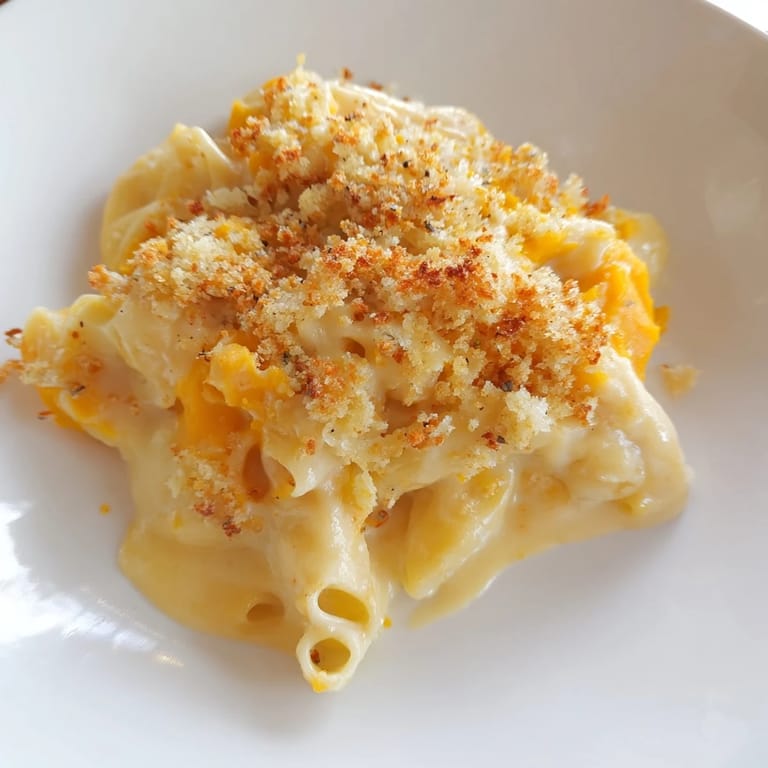
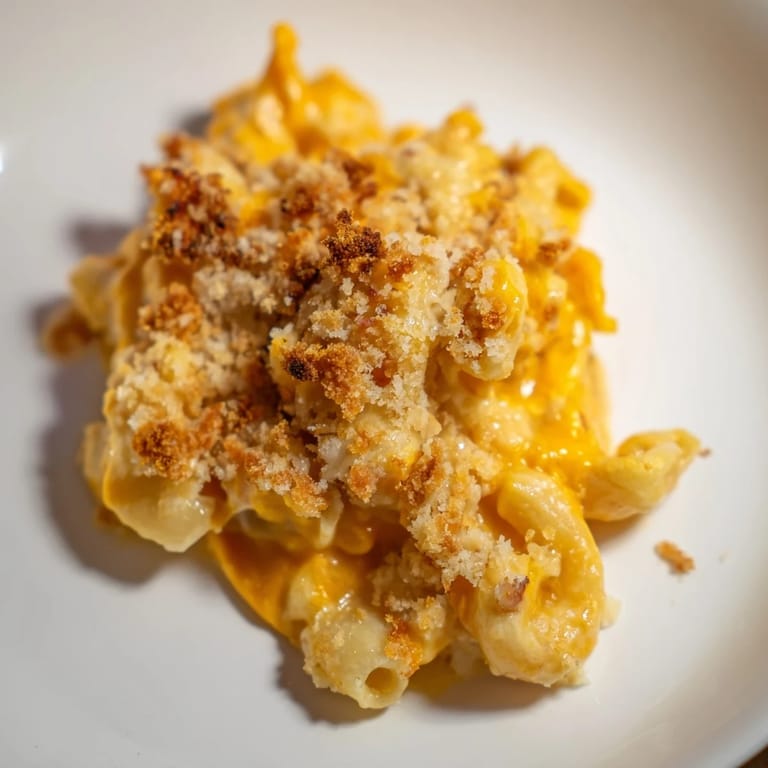
- 30 g (1/4 cup) panko breadcrumbs: These create that irresistible crispy topping that contrasts beautifully with the creamy pasta underneath
- 1 tbsp melted butter: Toss the panko with melted butter so it turns golden and crunchy under the broiler
- 2 tbsp grated parmesan: Mix this into the breadcrumbs for salty, savory depth in every crispy bite
Tired of Takeout? 🥡
Get 10 meals you can make faster than delivery arrives. Seriously.
One email. No spam. Unsubscribe anytime.
Instructions
- Roast the squash:
- Preheat your oven to 200°C (400°F) and toss the cubed squash with olive oil, salt, and pepper until every piece is coated. Spread in a single layer on a baking sheet and roast for 20 to 25 minutes, flipping once halfway through, until the squash is tender and edges are caramelized.
- Cook the pasta:
- While the squash roasts, bring a large pot of salted water to a boil and cook the pasta until al dente according to package directions. Drain well and set aside, reserving a splash of pasta water just in case you need to thin the sauce later.
- Make the squash puree:
- Transfer the roasted squash to a blender or food processor, add 1/2 cup of the milk, and blend until completely smooth. The mixture should be thick and creamy, with no chunks remaining.
- Start the roux:
- In a large saucepan over medium heat, melt the butter until foamy, then whisk in the flour. Stir constantly for 1 to 2 minutes until the mixture bubbles and turns a pale golden color, cooking out any raw flour taste.
- Build the béchamel:
- Slowly whisk in the remaining 1 1/2 cups of milk, a little at a time, to prevent lumps from forming. Continue whisking over medium heat for 3 to 4 minutes until the sauce thickens enough to coat the back of a spoon.
- Add the cheese:
- Remove the pan from heat, then stir in the squash puree, cheddar, Gruyère, nutmeg, and Dijon mustard. Keep stirring until all the cheese has melted and the sauce is velvety smooth, then season with salt and pepper to taste.
- Combine everything:
- Add the cooked pasta to the sauce and stir gently until every piece is evenly coated. The sauce should be thick and creamy, clinging to the pasta rather than pooling at the bottom.
- Add the crispy topping (optional):
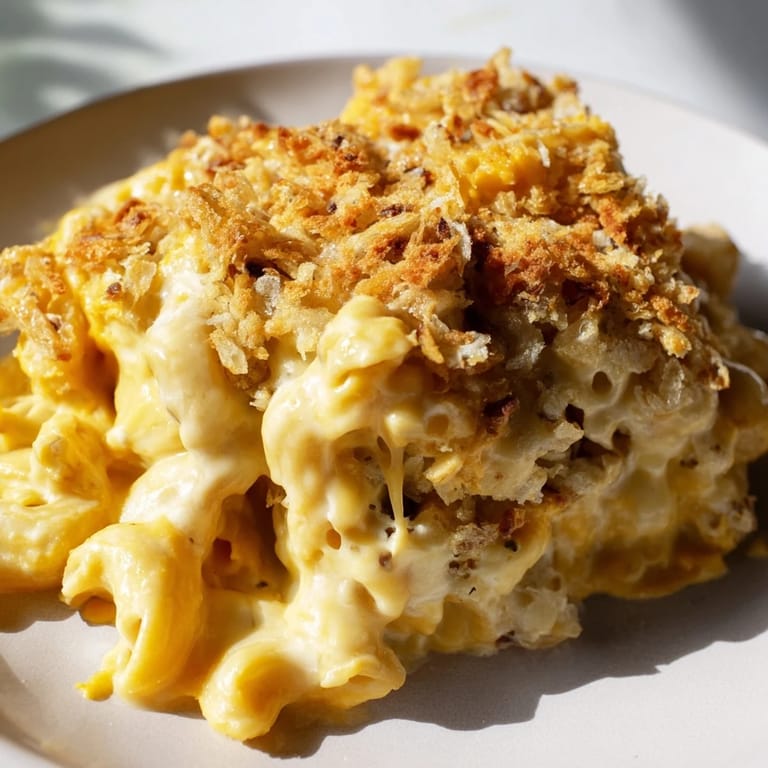
- Transfer the mac and cheese to a lightly greased baking dish if you want that golden crust. Mix the panko with melted butter and parmesan, sprinkle evenly over the top, and broil for 2 to 3 minutes until golden and crispy, watching closely so it does not burn.
- Serve immediately:
- Serve hot while the cheese is still molten and the topping is at its crunchiest, with extra grated cheese or fresh herbs if you like.
 Save
Save Last winter my neighbor was going through a tough time, so I dropped off a container of this mac and cheese on her porch. She texted me later that night saying her kids had actually asked for seconds and the house smelled like fall comfort. Sometimes food really is the simplest way to say Im thinking of you without needing any words at all.
Make Ahead Advice
You can roast the squash and make the cheese sauce up to two days in advance, storing them separately in airtight containers in the refrigerator. When you are ready to serve, gently reheat the sauce with a splash of milk, combine with freshly cooked pasta, and add the topping just before broiling. The sauce thickens in the fridge, so do not worry if it looks too thick at first.
Cheese Swaps That Work
I have played around with different cheese combinations, and honestly most melty cheeses work beautifully here. Fontina creates an incredibly creamy sauce if you want something milder than Gruyère, and aged gouda adds a wonderful caramel note that pairs unexpectedly well with the squash. Just avoid fresh mozzarella, which releases too much water and makes the sauce stringy instead of smooth.
Serving Ideas
This dish is rich enough to stand on its own as a main course, especially with a simple green salad dressed with bright vinaigrette to cut through the creaminess. I have also served it alongside roast chicken or as part of a Thanksgiving spread, where it somehow manages to steal the show from the traditional sides.
- A crisp white wine like Chardonnay or Sauvignon Blanc balances the richness perfectly
- Steamed broccoli or roasted green beans add fresh color and texture to the plate
- Crumble cooked bacon or crispy pancetta on top if you want to make it extra indulgent
 Save
Save Hope this brings as much comfort to your table as it has to mine over the years. Happy cooking.
Recipe FAQs
- → How do you prepare the butternut squash for this dish?
Peel and cube the squash, toss with olive oil, salt, and pepper, then roast at 200°C (400°F) for 20–25 minutes until tender and caramelized.
- → What cheeses are used in the sauce?
Sharp cheddar and Gruyère or fontina are blended into the sauce for a rich, smooth flavor profile.
- → Can I make this dish gluten-free?
Using gluten-free pasta and substituting all-purpose flour with a gluten-free alternative will make the dish gluten-free.
- → What is the purpose of Dijon mustard in the sauce?
Dijon mustard adds a subtle tang and depth, enhancing the overall flavor balance of the cheese sauce.
- → Is the breadcrumb topping necessary?
The panko and parmesan topping adds a crispy contrast, but the dish is flavorful and creamy without it as well.