 Save
Save There's something about the smell of buttery biscuits emerging from the oven that stops you mid-conversation. My neighbor knocked on my kitchen door one summer afternoon, drawn in by that golden aroma, and I ended up teaching her how to make strawberry shortcake right then and there while the berries macerated on the counter. It became our thing after that—every June, she'd text me a photo of fresh strawberries from her garden as a gentle reminder that it was time.
I made this for a family birthday once and watched my dad take a bite, go quiet for a moment, then say it reminded him of his grandmother's version from decades ago. That's when I realized this isn't just a dessert—it's a flavor that carries memory, and when you nail it, people don't just eat it, they feel something.
Ingredients
- All-purpose flour (2 cups): The structure of your biscuit starts here; make sure it's spooned and leveled, not scooped straight from the bag, or you'll end up with dense, heavy layers.
- Granulated sugar (1/4 cup for biscuits): Just enough to kiss the dough with sweetness without making them cake-like; this balance is everything.
- Baking powder and baking soda (1 tablespoon and 1/2 teaspoon): The leavening duo that creates those tender, cloud-like layers—use fresh, not what's been sitting in your cabinet for two years.
- Salt (1/2 teaspoon): Amplifies the butter flavor and prevents the sweetness from feeling flat.
- Cold unsalted butter (1/2 cup, cubed): Cold is non-negotiable; it creates pockets of steam that lift the biscuits as they bake, so keep it in the freezer until the last moment.
- Cold buttermilk (3/4 cup plus more for brushing): The acid in buttermilk reacts with the baking soda to create lift, and the cold temperature keeps everything tender.
- Vanilla extract (1 teaspoon for biscuits): A quiet flavor that rounds out the butter without announcing itself.
- Fresh strawberries (1 1/2 pounds): Peak season berries are sweeter and need less sugar; choose them the day you plan to bake if possible.
- Granulated sugar (1/3 cup for berries): Draws out the strawberry juices naturally, creating a light syrup that soaks into the warm biscuits.
- Lemon juice (1 teaspoon): Brightens the strawberry flavor and prevents it from tasting cloying.
- Heavy whipping cream (1 cup, chilled): The fat content is what creates those pillowy peaks; don't use lower-fat alternatives or you'll chase them endlessly.
- Powdered sugar (3 tablespoons): Dissolves instantly into the cream without the grittiness of granulated sugar.
- Vanilla extract (1 teaspoon for cream): Echoes the vanilla from the biscuits, tying the whole flavor story together.
Tired of Takeout? 🥡
Get 10 meals you can make faster than delivery arrives. Seriously.
One email. No spam. Unsubscribe anytime.
Instructions
- Set your oven and prep:
- Heat your oven to 425°F and line a baking sheet with parchment paper. This temperature is your friend—hot enough to create golden, crispy exteriors in the short time they need.
- Build the dry base:
- Whisk together flour, sugar, baking powder, baking soda, and salt in a large bowl, making sure everything is evenly distributed so the leavening works uniformly throughout.
- Incorporate the cold butter:
- Add your cold, cubed butter and work it in using a pastry cutter, fork, or your fingertips until the mixture resembles coarse breadcrumbs with some small pea-sized pieces remaining. These little butter pockets are what create those gorgeous layers.
- Bring the dough together gently:
- Pour in the cold buttermilk and vanilla, stirring just until the dough comes together—this is where patience pays off. Overmixing develops gluten and creates tough biscuits, so stop as soon as you don't see dry flour.
- Shape and cut:
- Turn the dough onto a lightly floured surface and gently pat it into a 1-inch thick rectangle, then use a 2 1/2-inch round cutter to cut biscuits, pressing straight down without twisting. Gather scraps gently and re-pat to cut again.
- Finish and bake:
- Place biscuits on your parchment-lined sheet, brush the tops lightly with buttermilk, and bake for 15 to 18 minutes until deep golden brown. Cool them on a wire rack while you prepare everything else.
- Macerate the strawberries:
- Combine sliced strawberries, sugar, and lemon juice in a bowl and gently toss, then let them sit for at least 20 minutes. This draws out their juices and creates a light syrup that's pure strawberry essence.
- Whip the cream:
- In a chilled bowl, beat heavy cream, powdered sugar, and vanilla until soft peaks form—clouds that hold their shape but still look pillowy. Chill it until assembly time.
- Assemble your layers:
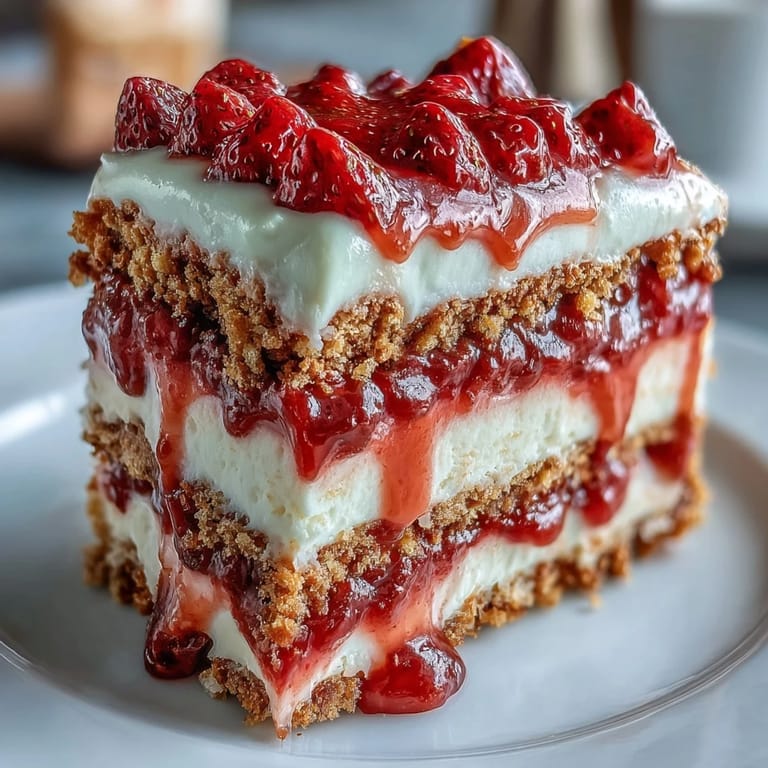
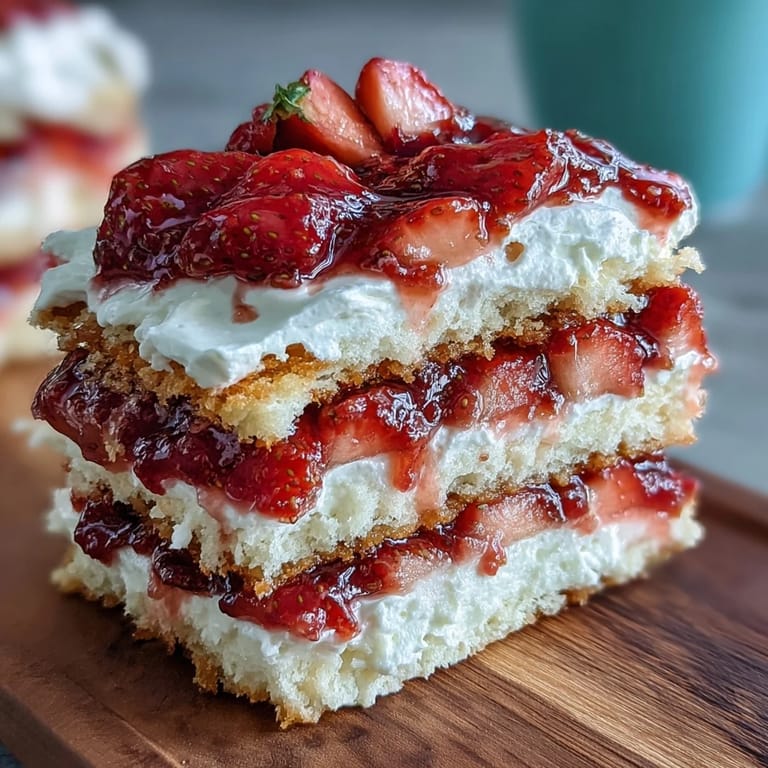
- Carefully split each cooled biscuit in half, then layer: biscuit bottom, strawberries and their juices, a generous dollop of whipped cream, then the biscuit top, more berries, and a final crown of cream. Serve immediately so the biscuits stay at their best.
 Save
Save I once made this for a friend who was having a difficult time, and she told me later that the simple act of sharing it made her feel seen in a way nothing else could that week. Food does that sometimes—it becomes the conversation you couldn't quite find words for.
The Art of Perfect Biscuits
The biscuit is honestly the star here, and it demands respect. I learned this the hard way after watching my first batch come out dense and tough because I'd stirred the dough with the confidence of someone who didn't know what they were doing. Now I treat biscuit dough like I'm handling something delicate—because I am. The moment you see the dough pull together, you stop; every additional stir is another gluten strand formed, and gluten is the enemy of tender layers. Think of it like the difference between a whisper and a shout; you want the gentle approach.
Why Strawberries Need to Macerate
Macerating is just a fancy word for letting fruit sit in sugar, and it's honestly one of those techniques that seems unnecessary until you taste the difference. When sugar sits on sliced strawberries, osmosis begins—the sugar draws out the natural juices, creating a light syrup that tastes pure strawberry. This juice is what transforms a dry biscuit into something special, soaking into all those tender layers and adding moisture and flavor simultaneously. I used to skip this step when I was impatient, thinking I'd save time, but I only ended up with dry shortcake and regret.
Assembly Secrets and Serving Timing
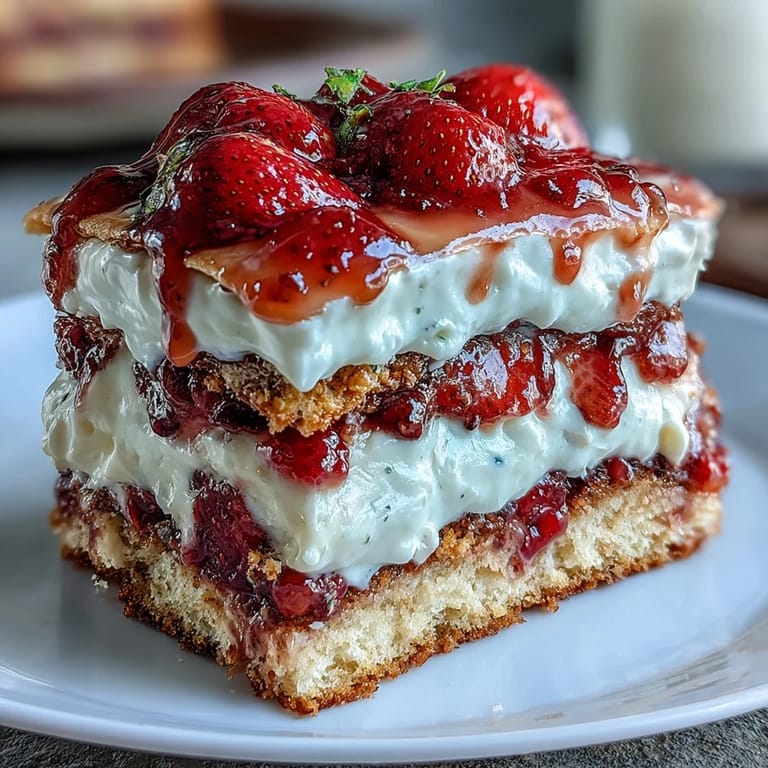
Assembly is where the magic actually happens, and it's simpler than you might think. Split each cool biscuit carefully—a serrated knife works wonders here—then build your layers with intention: biscuit, berries, cream, repeat. The warm biscuit and cool cream create this beautiful temperature contrast that makes every bite interesting. One last thing that matters more than you'd expect: serve this immediately after assembly, while the biscuits are still at their peak.
- If you're serving a crowd, assemble just before everyone sits down so the texture stays perfect through the first bites.
- Leftover biscuits keep in an airtight container for a day, but they're honestly best enjoyed the day they're baked.
- You can macerate strawberries up to 4 hours ahead, and whip the cream 2 hours before serving if your kitchen is cool.
 Save
Save This dessert isn't complicated, but it feels luxurious, and that's the whole point. When you get it right, it becomes the thing people ask you to make again and again.
Recipe FAQs
- → How do you ensure biscuits are tender and flaky?
Use cold unsalted butter cut into flour until it resembles coarse crumbs and avoid overmixing the dough to maintain flakiness.
- → What is the purpose of macerating strawberries?
Macerating softens the strawberries and releases their juices, enhancing sweetness and flavor balance in the dessert.
- → Can buttermilk be substituted in the biscuit dough?
Yes, buttermilk adds acidity for tenderness; if unavailable, a mix of milk and lemon juice or yogurt can work as alternatives.
- → How long should the strawberries macerate for best results?
At least 20 minutes allows the sugar and lemon juice to draw out juices and soften the fruit nicely.
- → What is the key to achieving stable whipped cream?
Chill the cream and bowl thoroughly, then whip until soft peaks form without overbeating to maintain lightness and stability.