 Save
Save I discovered this salad on a sweltering afternoon when my farmer's market haul included more edamame than I knew what to do with. Rather than steaming them plain, I tossed them into a bowl with cucumber scraps and whipped up a sesame dressing on impulse. The combination was so bright and satisfying that it became my go-to when I needed something that felt both nourishing and effortless.
I remember serving this at a potluck where I wasn't sure what to bring, and it disappeared before anything else. A friend asked if it was "that trendy restaurant thing," and I loved being able to say I'd made it myself in my own kitchen.
Ingredients
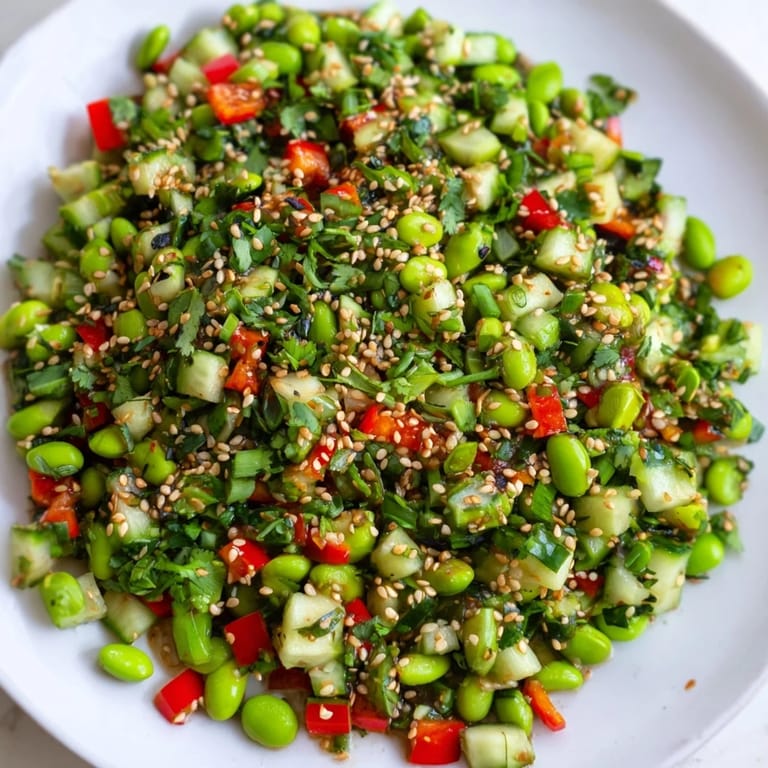
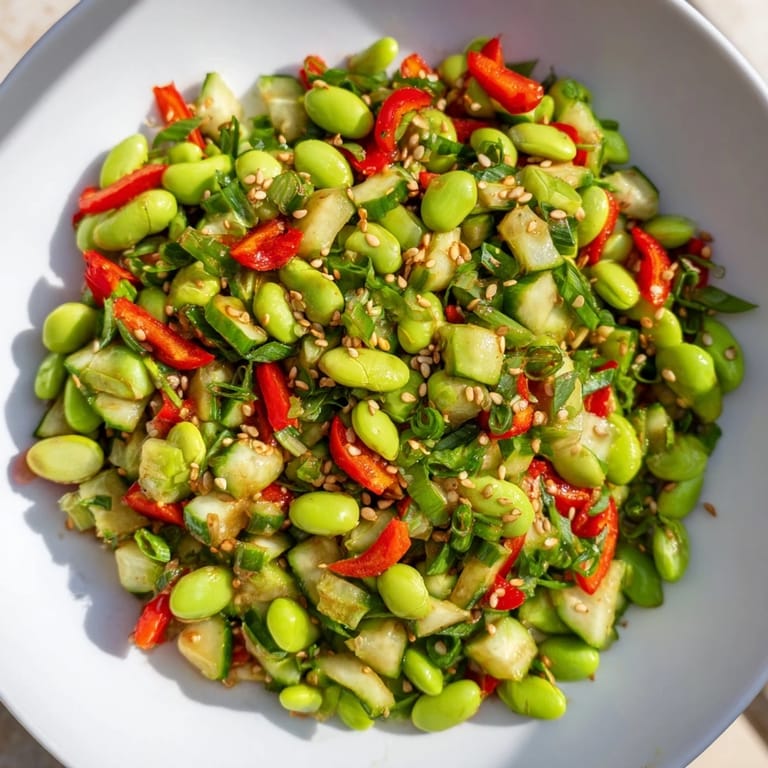
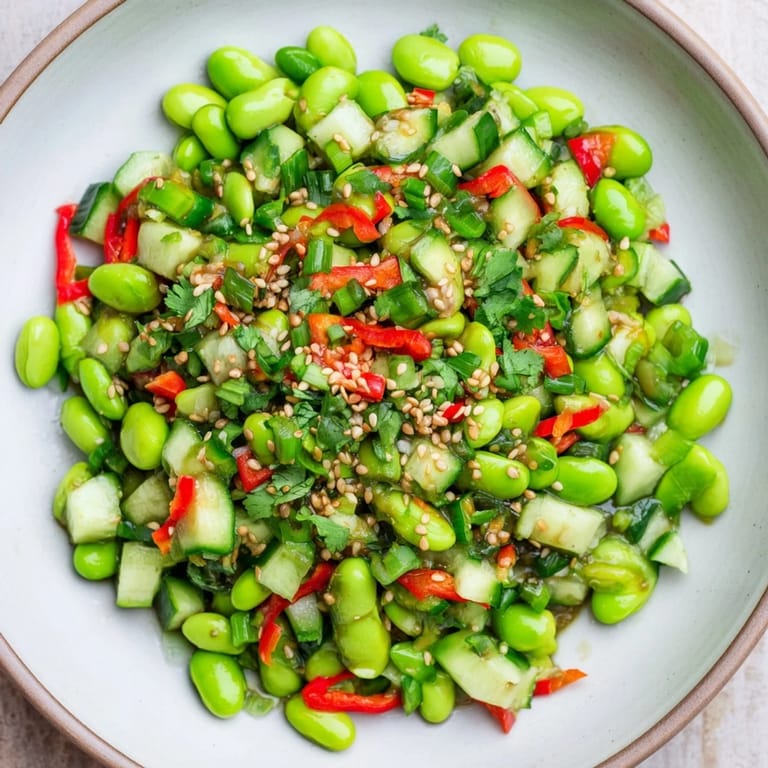
- Edamame: Two cups of shelled beans—fresh or frozen, it doesn't matter—become wonderfully tender when blanched and chilled, giving you that satisfying bite without any cooking fuss.
- Cucumber: One large cucumber, diced into small, bite-sized pieces, keeps the salad light and refreshing; I learned to salt mine lightly before tossing to keep them from getting watery.
- Green onions: Thinly slice two for a sharp, oniony note that cuts through the richness of the sesame oil beautifully.
- Red bell pepper: One small pepper, optional but highly recommended, adds a hint of sweetness and a gorgeous pop of color.
- Toasted sesame oil: Use two tablespoons of the good stuff—the darker, nuttier kind that costs a bit more but makes all the difference in depth of flavor.
- Rice vinegar: One tablespoon of this mild, slightly sweet vinegar balances the sesame without overpowering delicate vegetables.
- Soy sauce or tamari: A tablespoon provides umami depth; tamari works seamlessly if you need gluten-free.
- Honey or maple syrup: Just a teaspoon rounds out the dressing's edges and prevents it from tasting too sharp.
- Fresh ginger: One teaspoon grated adds a subtle warmth that lingered in my mouth in the best way.
- Garlic: One finely minced clove—don't skip it even though it's minimal—because raw garlic in a cold dressing is where the magic lives.
- Sesame seeds: Two teaspoons toasted and divided, one mixed into the dressing and one sprinkled on top for texture and flavor in every bite.
- Cilantro: A tablespoon chopped and scattered over the top is optional, but it adds an herbaceous brightness I can't resist.
Tired of Takeout? 🥡
Get 10 meals you can make faster than delivery arrives. Seriously.
One email. No spam. Unsubscribe anytime.
Instructions
- Boil and chill the edamame:
- Bring a pot of generously salted water to a rolling boil, then add your edamame and cook for three to five minutes until the beans are tender but still have a slight firmness. Drain them immediately and run them under ice-cold water—this stops them from cooking further and locks in their bright green color.
- Build your base:
- In a large bowl, combine the chilled edamame with your diced cucumber, sliced green onions, and red bell pepper if you're using it. This is where you're creating the canvas for your dressing to cling to.
- Whisk the dressing:
- In a small bowl, combine the sesame oil, rice vinegar, soy sauce, honey, ginger, garlic, and one teaspoon of the toasted sesame seeds. Whisk everything together until the dressing looks emulsified and the honey is fully dissolved—this takes just a minute or two.
- Bring it together:
- Pour that silky dressing over your vegetables and toss everything gently to coat evenly, being careful not to crush the cucumber or edamame. You want every bite to taste like dressing.
- Finish and serve:
- Scatter your remaining toasted sesame seeds and cilantro across the top for both visual appeal and an extra layer of flavor. Serve immediately if you like things crisp, or chill for 30 minutes if you want the flavors to marry together.
 Save
Save There's something deeply satisfying about a salad that tastes this composed and intentional when you've barely spent any real time on it. It feels like a small act of care, even when you're just feeding yourself.
Why This Dressing Works
The magic of this salad lives entirely in the dressing. Sesame oil brings a toasted, slightly savory warmth, rice vinegar adds brightness without harsh acidity, and the honey smooths everything into balance. I used to make Asian-inspired dressings with regular vinegar and never understood why they felt flat until I realized how much the combination of these three specific ingredients matters. The ginger and garlic are waking agents—they keep the dressing from being one-dimensional—while the sesame seeds add texture and reinforce that nutty sesame flavor.
Serving and Pairing Ideas
I serve this as a cold side dish next to grilled fish or chicken, and it never fails to feel sophisticated without requiring any last-minute fussing. It's also wonderful tucked into a bento box for lunch the next day, as the vegetables stay crisp and the flavors actually deepen. On warmer days, I've even served it as a light main course by adding grilled tofu or some shrimp, turning a simple side into something more substantial.
Make It Your Own
This recipe is endlessly flexible, which is part of why I keep making it. I've added snap peas when edamame weren't in season, swapped the cilantro for mint, and once threw in some thinly sliced radishes because I had them on hand. The sesame dressing acts as a bridge that makes whatever vegetables you choose feel intentional and connected. I've also experimented with different vinegars—apple cider vinegar is earthier, rice wine vinegar is slightly sweeter—and you can absolutely adjust the honey if you want it less sweet or the ginger if you prefer it spicier.
- Add red pepper flakes or a small drizzle of sriracha if you want heat.
- Try blanched snow peas or sugar snap peas as a substitute or addition to the edamame.
- Fresh mint or basil can replace cilantro for a different herbaceous angle.
 Save
Save This salad has become my answer to "what should I bring" because it's reliable, unexpected, and genuinely delicious. Once you understand how the dressing works, you'll find yourself reaching for it on regular weeknights too.
Recipe FAQs
- → How do I cook edamame for this salad?
Boil shelled edamame in salted water for 3–5 minutes until tender, then drain and rinse under cold water to chill before adding to the salad.
- → Can I make this salad gluten-free?
Yes, replace soy sauce with tamari to keep it gluten-free without sacrificing flavor.
- → What optional vegetables can I add?
Red bell pepper adds color and crunch, but you can also try sugar snap peas or blanched snow peas for variety.
- → How can I add a spicy kick?
Include a pinch of red pepper flakes or a dash of sriracha to the dressing to introduce some heat.
- → What dishes pair well with this salad?
It pairs nicely with grilled fish or can be included in a bento lunch for a balanced meal.