 Save
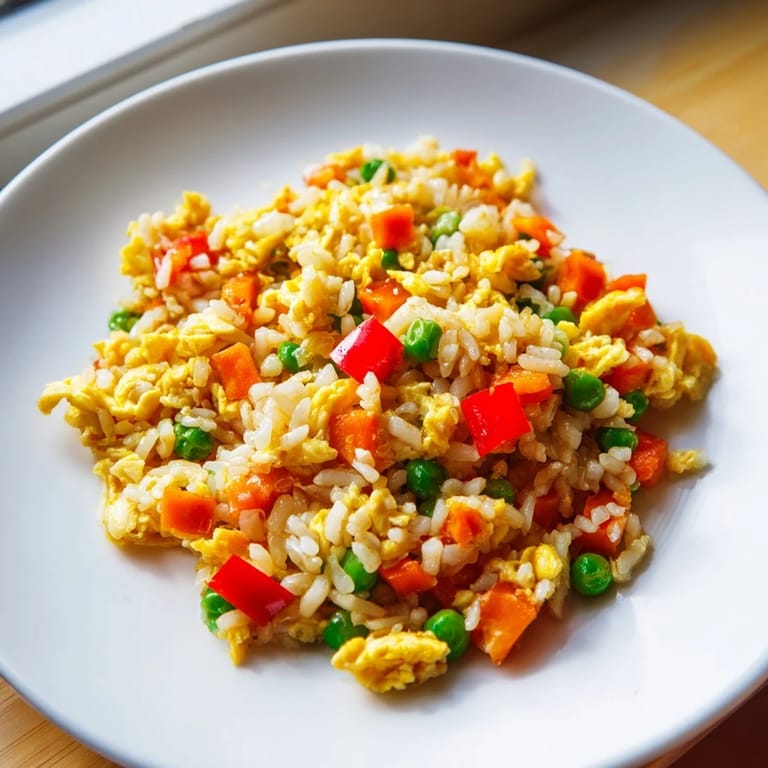
Save My roommate once challenged me to make dinner with whatever was in our fridge, and somehow a container of day-old rice and three eggs became the star of the show. That night, I learned that the best meals aren't always complicated—they're just honest, quick, and somehow always exactly what you need. Egg fried rice became my go-to whenever I wanted something warm and filling without the stress, and now I can make it in the time it takes to set the table.
I made this for my sister when she came home exhausted from a double shift, and watching her face light up when she tasted it reminded me that sometimes the simplest dishes carry the most warmth. She ate it straight from the wok with chopsticks while we caught up, and I realized egg fried rice had quietly become our thing—no fancy plating required.
Ingredients
- Cold cooked white rice (4 cups, preferably day-old): Day-old rice is crucial because fresh rice holds too much moisture and gets mushy instead of developing those little crispy edges you're after.
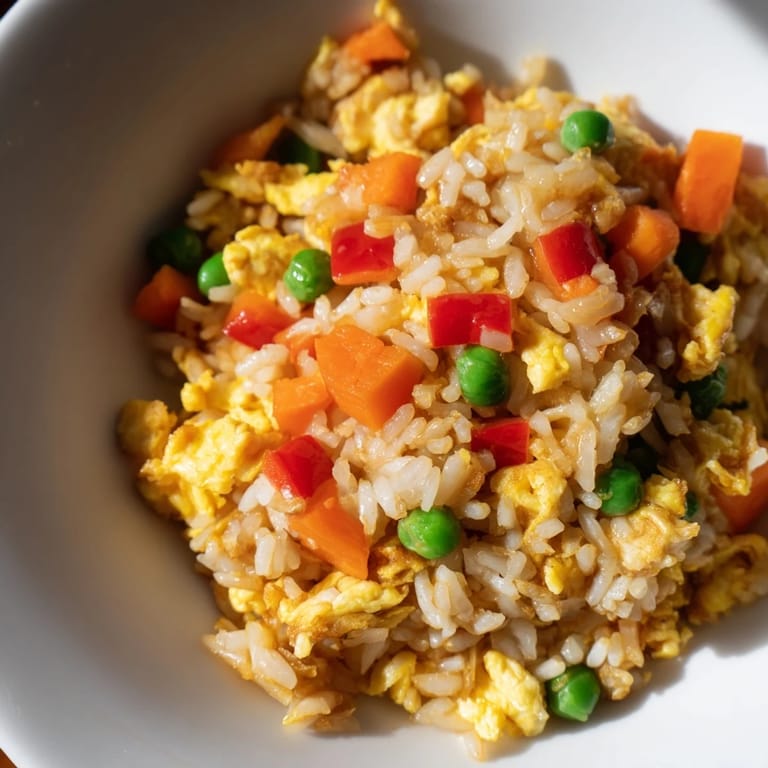
- Large eggs (3): They scramble into creamy pockets throughout the rice, but don't overbeat them—you want texture, not a uniform yellow mush.
- Vegetable oil (2 tbsp, divided): Use a neutral oil like canola or vegetable oil; it has a higher smoke point than olive oil and won't compete with the other flavors.
- Frozen peas and carrots (1 cup, thawed): Frozen actually works better than fresh here because they're already tender and won't release excess water into your rice.
- Scallions (½ cup, finely sliced): Save some of the green parts for garnish at the end—that pop of color and fresh bite makes all the difference.
- Red bell pepper (½, diced): The color is beautiful, but honestly, any vegetable works—broccoli, snap peas, mushrooms, whatever you've got.
- Soy sauce (3 tbsp, low sodium preferred): Low sodium gives you room to adjust the seasoning instead of ending up with something that tastes like a salt lick.
- Toasted sesame oil (1 tsp): This is the secret weapon that makes people ask what you did differently; it adds a depth that vegetable oil simply can't match.
- Ground white pepper (½ tsp): White pepper has a subtler heat than black pepper and won't show up as visible flecks in the finished dish.
- Garlic (1 clove, minced): Mince it fine so it perfumes the oil without creating harsh, burnt bits.
- Fresh ginger (1 tsp, grated, optional): If you use it, grate it on a microplane so it disperses evenly; it adds a gentle warmth without overpowering.
Tired of Takeout? 🥡
Get 10 meals you can make faster than delivery arrives. Seriously.
One email. No spam. Unsubscribe anytime.
Instructions
- Beat the eggs with intention:
- Crack them into a bowl, add a small pinch of salt, and whisk until the yolks and whites are fully combined. This takes maybe thirty seconds and makes scrambling so much cleaner.
- Get the first oil sizzling:
- Heat 1 tablespoon of oil in your wok or large skillet over medium-high heat until it shimmers and smells hot. You're looking for movement in the oil, not smoke.
- Scramble the eggs gently:
- Pour in the beaten eggs and let them sit for a few seconds before stirring slowly and deliberately. You want soft curds, not overworked rubber, so pull them from the heat when they're still slightly underdone—they'll finish cooking when you add them back later.
- Build the flavor base:
- Build the flavor base:
- Add the remaining tablespoon of oil to the wok, then immediately add your minced garlic, ginger if using, and the white parts of the scallions. Give it about 30 seconds until your kitchen smells like an Asian restaurant and the aromatics are just starting to caramelize at the edges.
- Introduce the vegetables:
- Toss in your peas, carrots, and diced bell pepper, stirring constantly for 2 to 3 minutes. You want them warm and just tender, not soft enough to disappear into the rice.
- Make it crispy:
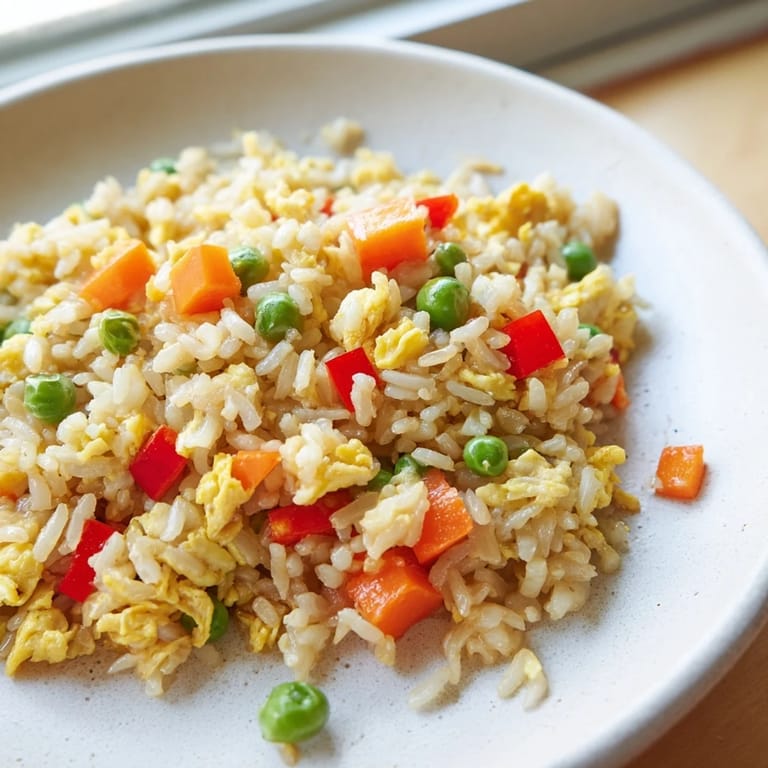
- Turn the heat up to high, add all your cold rice, and break up any clumps with the back of your spatula as you stir. The rice will pop and crackle—that's the sound of it developing little crispy spots, which is exactly what you're after.
- Bring it all together:
- Return those scrambled eggs to the wok in bite-sized pieces, then pour in your soy sauce, sesame oil, and white pepper. Toss everything together for about a minute until it's hot and evenly coated, then taste and adjust if needed.
- Finish with flourish:
- Sprinkle those reserved green scallion tops over the top just before serving so they stay bright and fresh instead of turning dark and limp.
 Save
Save There was this moment when I made egg fried rice for my nephew and he asked if we were eating restaurant food at home, which somehow meant more to me than any compliment about fancy cooking ever could. I realized then that this dish isn't about complexity—it's about showing up and making something that feels like abundance on a Tuesday night.
The Rice Secret Nobody Talks About
I spent way too long wondering why my egg fried rice never tasted like the takeout version until a chef friend told me it was all about the rice temperature and age. The humidity in day-old rice has mostly evaporated, so each grain stays distinct and gets those beautiful golden-brown spots instead of melting together into a porridge. If you're in a pinch and only have fresh rice, spread it on a plate and let it cool for an hour—it won't be perfect, but it'll be close.
Playing With Proteins and Flavor
The beauty of egg fried rice is that it's genuinely flexible, which means you can treat it like a vehicle for whatever protein you're excited about. I've made it with leftover roasted chicken, thawed frozen shrimp, crispy tofu, and even thin slices of leftover steak, and every version feels like its own complete meal. The soy sauce and sesame oil are flexible too—if you like heat, a drizzle of sriracha or chili oil at the end transforms it into something fierier without affecting the texture.
Timing and Temperature Matter More Than You'd Think
High heat is your friend here—it's what creates that restaurant-quality texture where some rice is tender and some has a slight crunch. If you're using a regular skillet instead of a wok, just use the biggest one you have and work in batches if you need to; crowding the pan lowers the temperature and turns everything steamy instead of toasted. One last thing that changed everything for me was adding the soy sauce right at the end rather than earlier—it coats the rice while it's still hot enough to absorb the flavor without making everything soggy.
- Let your rice be cold, not room temperature—this is the difference between crispy and steamed.
- Taste as you go and adjust soy sauce at the very end since it's easy to add but impossible to take out.
- If you end up with leftovers, they reheat beautifully in a hot skillet for about two minutes.
 Save
Save Egg fried rice taught me that some of the best meals come from working with what you have rather than starting from a blank slate. It's been my kitchen companion through busy weeknights, exhausted mornings the day after cooking for a crowd, and moments when I wanted something warm and genuine in fifteen minutes flat.
Recipe FAQs
- → Why should I use day-old rice?
Day-old rice works best because it's drier and grains separate easily when stir-frying. Fresh, warm rice tends to clump and become mushy during cooking.
- → Can I add protein to this dish?
Absolutely. Cooked shrimp, diced chicken, or crumbled tofu work wonderfully. Add them when you return the eggs to the wok for even heat distribution.
- → How do I keep the rice from sticking?
Use high heat and stir constantly. Breaking up clumps as you add the rice and ensuring it's cold helps achieve that desirable slightly crispy texture without sticking.
- → What can I substitute for soy sauce?
Tamari makes an excellent gluten-free alternative. Coconut aminos or low-sodium soy sauce are also good options depending on your dietary needs.
- → Can I make this vegetarian?
Yes, this dish is naturally vegetarian when using vegetarian soy sauce. For added protein, include tofu or chickpeas to make it more substantial.
- → How spicy can I make this?
Add chili sauce, sriracha, or fresh jalapeños to taste. Start with a dash and adjust based on your heat preference. Add spicy elements at the end to control the intensity.