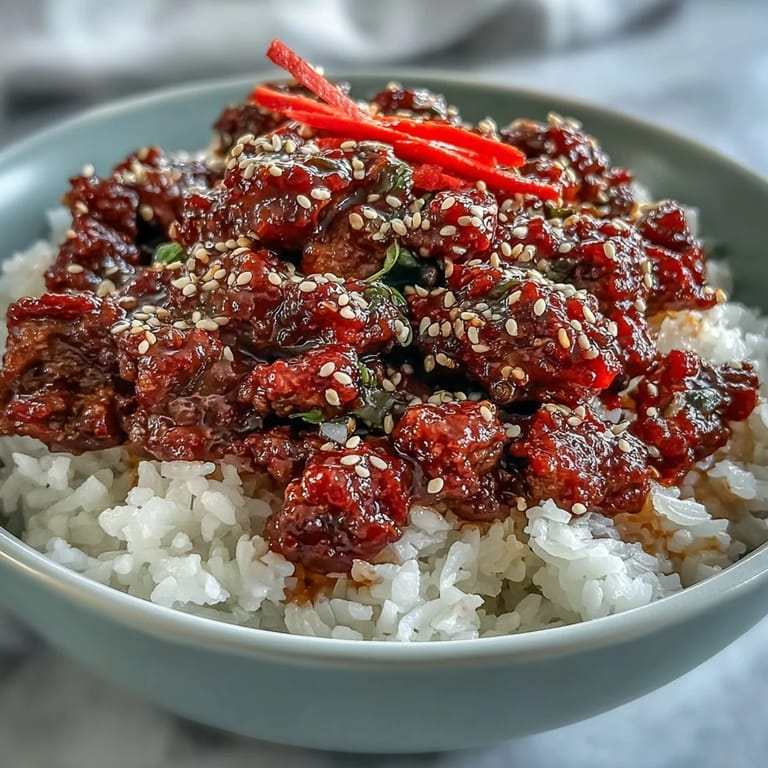
 Save
Save My coworker Sarah brought a Korean beef bowl to lunch one ordinary Tuesday, and I spent the entire afternoon thinking about those bright, punchy flavors. The way the spicy gochujang clung to each grain of rice, how the pickled vegetables cut through the richness with their sharp tang—I knew I had to recreate it at home that same week. What surprised me most was how quickly it came together, and how every element seemed to have a purpose beyond just tasting good. The textures, the contrasts, the way nothing felt heavy despite being so deeply satisfying. I've made it at least twenty times since.
I made this for a small dinner party when my sister was visiting from out of state, and watching her face light up on that first bite told me everything. She's usually skeptical of anything unfamiliar, but she went back for seconds without hesitation, and we ended up talking less about the food itself and more about how the meal felt—alive, energetic, the opposite of heavy. That's when I realized this bowl had become something I could confidently serve to anyone, knowing it would bridge whatever culinary comfort zones existed at the table.
Ingredients
- Lean ground beef (1 lb): The backbone of this bowl—it soaks up the gochujang sauce beautifully, and the leaner the cut, the cleaner the final dish tastes.
- Gochujang (3 tbsp): This fermented chili paste is non-negotiable; it has depth that sriracha can't touch, with a subtle funk that makes people ask what's different about your version.
- Fresh garlic and ginger: Never skip the fresh versions here—minced garlic and grated ginger create an aromatics foundation that canned or powdered versions simply don't deliver.
- Soy sauce and rice vinegar: They balance the heat and sweetness; the acid in the vinegar keeps the sauce from becoming flat.
- Toasted sesame oil (1 tsp): A small amount goes a long way—it's added at the end to preserve that nutty aroma that cooking would destroy.
- Rice vinegar for pickling: This mild acid is gentler than white vinegar; it lets the vegetables stay crisp without turning rubbery.
- Cucumber, radish, and kimchi: These toppings aren't just garnish—they're textural and flavor counterpoints that prevent the bowl from feeling monotonous.
Tired of Takeout? 🥡
Get 10 meals you can make faster than delivery arrives. Seriously.
One email. No spam. Unsubscribe anytime.
Instructions
- Quick-pickle the vegetables:
- Whisk together rice vinegar, sugar, and salt until the crystals disappear, then toss in your julienned carrot and daikon. The vegetables soften slightly while you work on the beef, absorbing enough tang to brighten every spoonful without overwhelming anything else.
- Build your aromatics:
- Heat oil in a skillet until you can feel the warmth radiating from it, then add minced garlic and ginger. You're looking for that moment when the kitchen smells suddenly alive—about one minute in—before the garlic can brown.
- Brown the beef thoroughly:
- Let the ground beef sit undisturbed for a minute before breaking it up; this gives it a chance to develop color and flavor. Keep breaking and stirring until no pink remains and the meat is in small, distinct pieces.
- Coat in the spiced sauce:
- Stir in gochujang, soy sauce, brown sugar, rice vinegar, and sesame oil together. Watch as the sauce thickens and deepens in color over two to three minutes—this is when the flavors meld from separate ingredients into something cohesive.
- Assemble with intention:
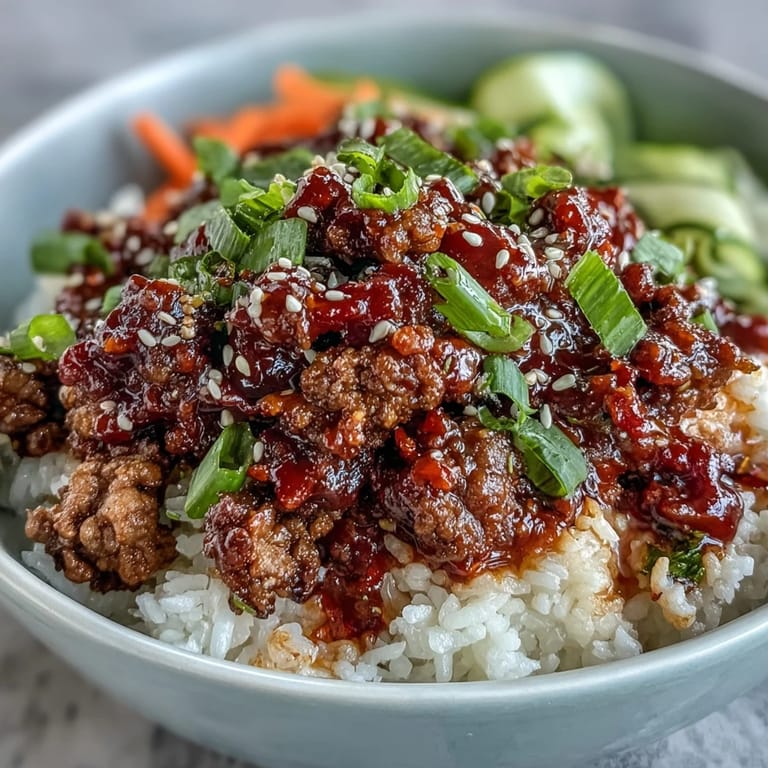
- Start each bowl with a bed of rice, then crown it with the beef mixture. Arrange the pickled vegetables, fresh cucumber, radish, and kimchi in separate sections so each spoonful can capture a different element if the eater wants variety.
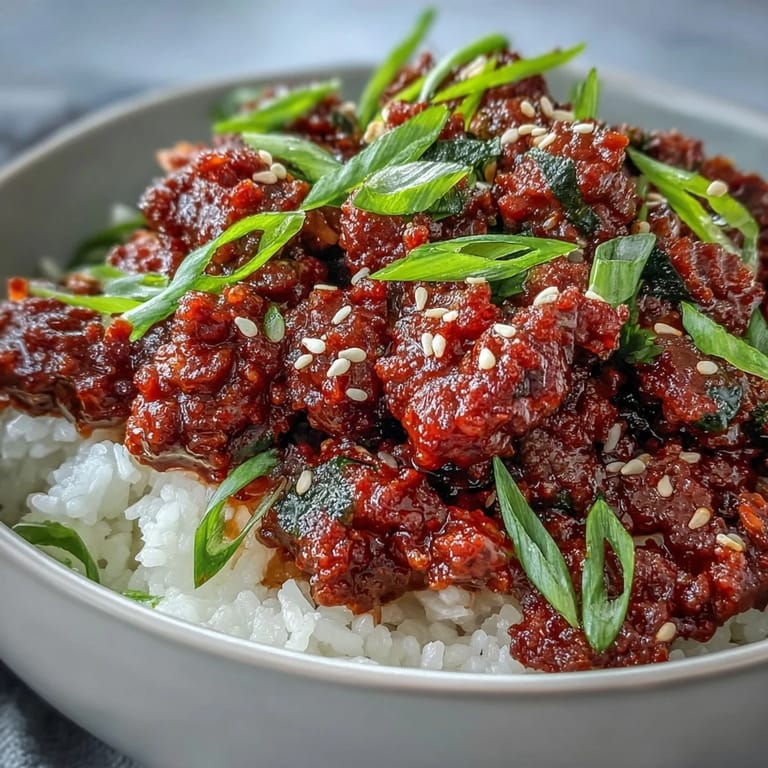 Save
Save There was a moment last month when my teenager, who usually eats like a sparrow at dinner, asked for seconds of this bowl and actually sat at the table talking instead of retreating to their room. It wasn't the meal itself that mattered—it was that the food created enough interest to spark conversation, to keep them engaged long enough to be present. Those small moments are why I keep making this.
The Magic of Proper Seasoning Layers
What makes this bowl sing isn't just one ingredient but the way three separate flavor profiles work together. The gochujang brings heat and funk, soy sauce adds umami and saltiness, and the acid from rice vinegar and a touch of brown sugar create balance. I used to make this with only gochujang, thinking that was enough, and it tasted flat and one-dimensional. Once I started layering the seasonings together, understanding that each one had a specific job, the whole dish transformed into something with actual complexity.
Texture Is Your Secret Weapon
A perfectly assembled bowl has at least four different textures working at once: soft rice, tender beef, crisp pickled vegetables, and the slight chew of cooked kimchi. This textural variety keeps your mouth interested bite after bite, and it's why serving everything separately rather than mixing it all together matters so much. The minute you stir it all into one homogeneous mass, you lose that contrast that makes the bowl memorable.
Making This Work for Your Table
The beauty of a bowl-format meal is that everyone can customize exactly how much of each element they want. Some people load up on kimchi and pickled vegetables while keeping the beef minimal; others do the opposite. The components don't have to blend—they coexist, and that flexibility means this dish works for picky eaters and adventurous ones equally.
- If you're batch cooking, brown all the beef and make the sauce ahead, then reheat gently and assemble fresh bowls right before serving.
- Cucumber can be prepped hours ahead and stored in the fridge; it won't get soggy because it's not sitting in liquid.
- The pickled vegetables actually improve over a day or two, so make them the night before if you want even more developed flavor.
 Save
Save This bowl has become my answer to the question of what to make when you want something that feels special without pretense. It's humble and honest, the kind of food that brings people to the table without apology.
Recipe FAQs
- → What is gochujang and where can I buy it?
Gochujang is a Korean fermented chili paste with a sweet and spicy flavor profile. You can find it in Asian grocery stores, the international aisle of well-stocked supermarkets, or online. Look for it in red tubs or jars.
- → Can I make this dish less spicy?
Yes, reduce the amount of gochujang to 1-2 tablespoons instead of 3, or choose a mild variety. You can also add more brown sugar to balance the heat. Serve with extra rice and cucumber to help temper the spice.
- → How long do the pickled vegetables last?
The quick-pickled carrots and daikon will keep in the refrigerator for up to 1 week in an airtight container. They actually develop more flavor as they sit, so you can make them ahead of time.
- → Can I use ground chicken or turkey instead?
Absolutely. Ground chicken or turkey work well as lighter alternatives. Since they're leaner than beef, you may want to add an extra teaspoon of oil to prevent drying out and maintain the richness of the dish.
- → Is there a gluten-free option for this bowl?
Yes, use tamari instead of soy sauce and ensure your gochujang is certified gluten-free, as some brands contain wheat. The rest of the ingredients are naturally gluten-free.
- → What other toppings can I add?
Fried eggs, avocado slices, shredded cabbage, bean sprouts, or spinach make excellent additions. You can also add sliced jalapeños for extra heat or crushed nori seaweed for umami depth.