 Save
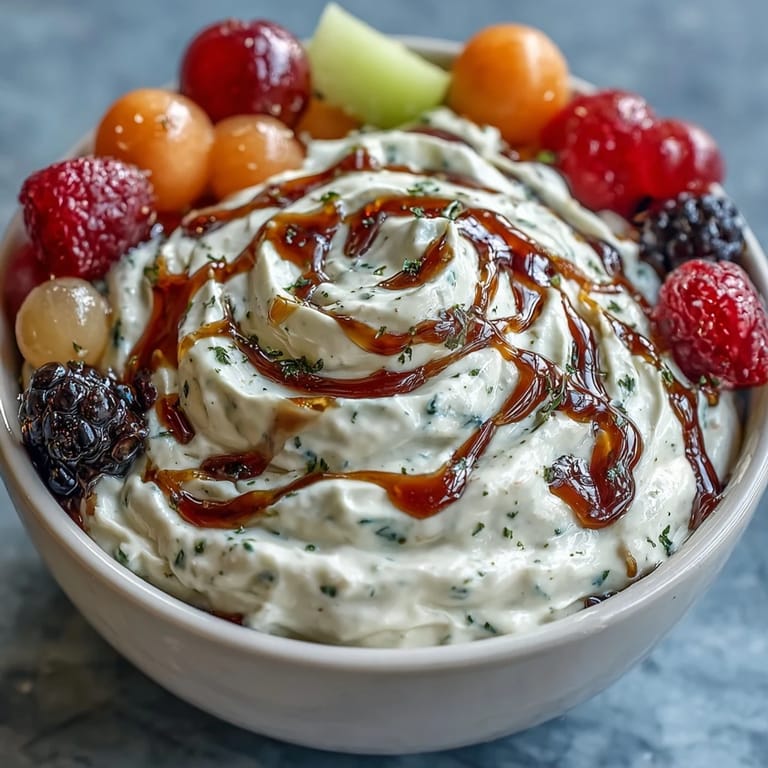
Save My sister texted me a photo of a melon platter she'd seen at a farmer's market café—just the image alone made me crave summer in the middle of March. I spent that afternoon in the kitchen experimenting with melon ballers I'd never actually used before, rolling them through watermelon like I was hunting for tiny treasure. The kitchen smelled impossibly sweet, and by the time I'd arranged three different melons on a platter with berries scattered between them, I understood why she'd sent that photo. That honey-lime dip came together almost as an afterthought, but it became the reason people kept coming back for more.
Last summer, I brought this to a neighborhood cookout where someone had forgotten the dessert. I set it down on the picnic table and watched it disappear faster than the burgers, which felt like a small victory I didn't expect. My neighbor Janet actually asked if I'd made it or bought it, and when I said I made it, she looked genuinely surprised—the kind of surprised that makes you feel like a kitchen wizard even though you basically just cut fruit.
Ingredients
- Watermelon (2 cups, balled or cubed): Choose one that feels heavy for its size and has a pale yellowish spot on the bottom—that's where it sat ripening in the sun.
- Cantaloupe (2 cups, balled or cubed): The sweet one that perfumes your entire kitchen just by sitting on the counter.
- Honeydew melon (2 cups, balled or cubed): This one's subtler and slightly floral, so it keeps the platter interesting.
- Strawberries (1 cup, hulled and halved): Pick ones that smell fragrant at the stem—that's how you know they'll actually taste like something.
- Blueberries (1 cup): Buy them fresh if you can, because frozen ones weep into the platter and stain everything blue.
- Seedless grapes (1 cup): Red or green, depending on what looks good—they're the palette cleanser between heavier fruits.
- Fresh mint leaves: Tear them gently by hand rather than cutting, so they don't bruise and turn dark.
- Plain Greek yogurt (1 cup): Full-fat makes the dip creamy and luxurious; low-fat works but tastes a little thinner.
- Honey (2 tablespoons): Raw honey or regular, though raw honey dissolves more smoothly into cold yogurt.
- Fresh lime juice (1 tablespoon): Always squeeze it yourself—bottled tastes like it came from a science lab.
- Lime zest (1 teaspoon): Use a microplane and just catch the colored part, not the bitter white pith underneath.
- Salt (pinch): A tiny amount brings all the flavors forward without making it taste salty.
Tired of Takeout? 🥡
Get 10 meals you can make faster than delivery arrives. Seriously.
One email. No spam. Unsubscribe anytime.
Instructions
- Prep your melons like you mean it:
- Cut the watermelon, cantaloupe, and honeydew in half, scoop out any seeds, and go to town with your melon baller—twist and push, and the fruit pops right out. If you don't have a melon baller, a sharp knife and cutting board work just fine, though you'll have more geometric shapes and fewer spheres.
- Ready the berries and grapes:
- Rinse strawberries, pull off the green hulls (a small knife works faster than you'd think), and slice them in half lengthwise. Blueberries and grapes need just a quick rinse and a pat dry so they don't slip all over the platter.
- Arrange your masterpiece:
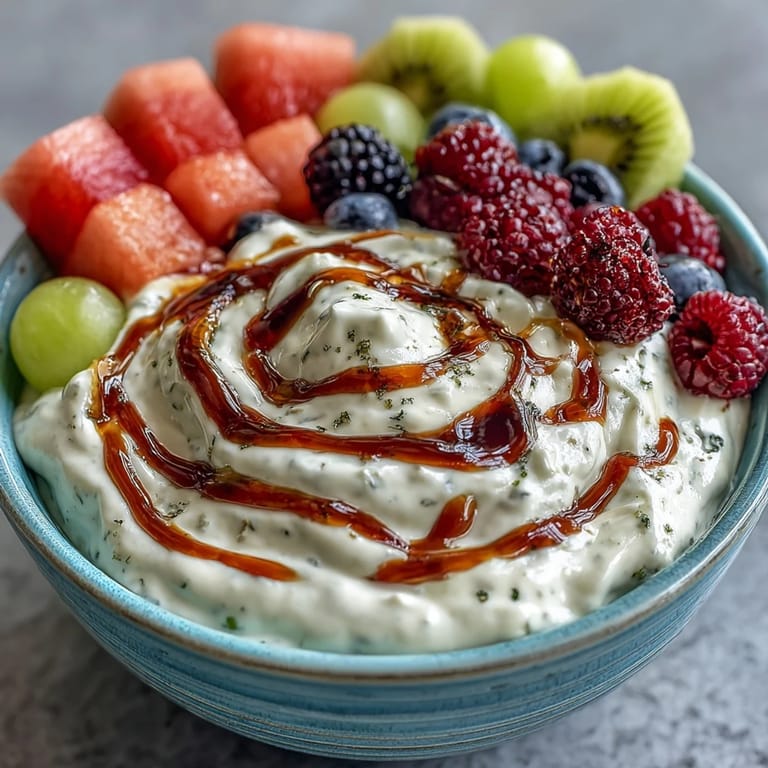
- Grab your biggest, prettiest serving platter and start placing fruit in clusters—all the watermelon together, then cantaloupe, then honeydew, filling in gaps with strawberries and grapes. Scatter blueberries across everything like jewels, then tear mint leaves and tuck them between the fruit for color and freshness.
- Make the dip come alive:
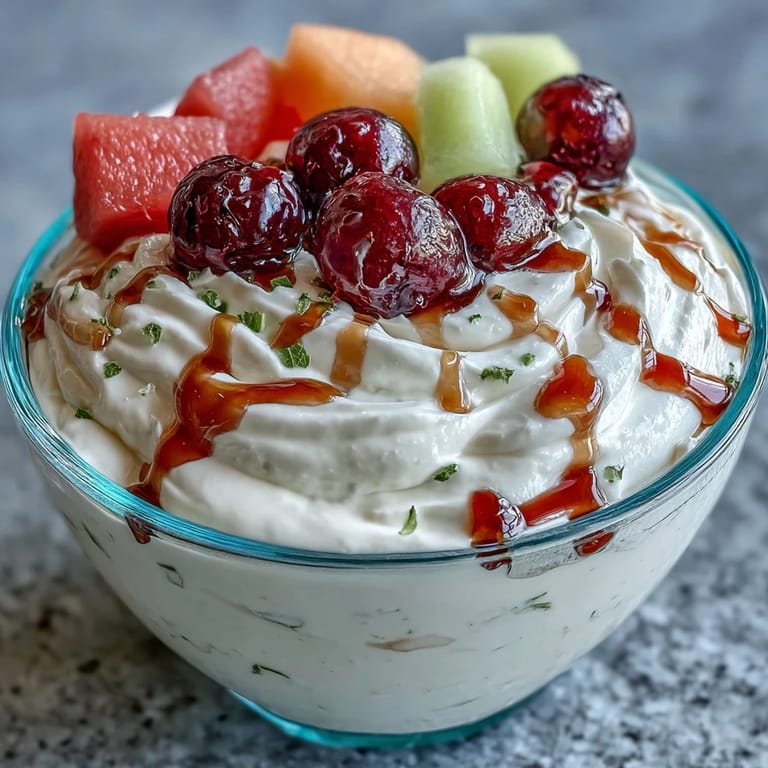
- In a small bowl, add yogurt, honey, fresh lime juice, lime zest, and just a pinch of salt, then whisk until the honey dissolves and everything turns smooth and pale yellow. Taste it and add another squeeze of lime if you want more tang, or a touch more honey if it needs sweetness.
- Bring it all together:
- Pour the dip into a small bowl and nestle it into the center of the platter, or set it alongside so people can grab fruit with one hand and dip with the other. Serve right away while everything's cold, or cover with plastic wrap and refrigerate for a few hours.
 Save
Save My eight-year-old nephew stood at the kitchen counter watching me arrange the platter and asked why I was making "art you can eat." That phrase stuck with me because it's exactly what this is—something beautiful that also nourishes you. He demanded to know why the dip was green (it's not, but the lime made it seem that way to him), and by the time his parents picked him up, he'd convinced me to make it again for his birthday party.
The Melon Baller Game
If you've never used a melon baller before, it feels awkward for about thirty seconds, and then it becomes weirdly meditative. Press it gently into the fruit, twist a quarter turn, and push—there's a satisfying little pop when the sphere releases. The first few might be lopsided or have a flat side, but honestly, nobody cares once it's arranged on a platter, and they all taste the same.
Why This Works for Every Season
Summer is obvious—berries and melons are at their peak and cheap. But in spring, you can swap in fresh pineapple and kiwi for a lighter vibe, and in early fall, mango and raspberries keep it interesting. The honey-lime dip is flexible enough to work with whatever fruit is good that day, so you're never locked into one version.
Small Variations That Matter
Once you've made this once, you'll start seeing ways to make it yours. A light dusting of Tajín (that chili-lime seasoning) on one section transforms it into something slightly savory. A teaspoon of vanilla stirred into the dip adds unexpected warmth. Even switching from Greek yogurt to regular yogurt changes the texture from thick and luxurious to lighter and more pourable.
- Keep the dip separate from the fruit until the last moment so nothing gets soggy or diluted.
- If you're making this ahead, cover everything with plastic wrap and chill for up to four hours without worry.
- Always taste the dip before serving—everyone's lime has different strength, so adjust the tartness and sweetness to what feels right.
 Save
Save This platter is proof that sometimes the simplest things—fresh fruit, a good dip, a pretty presentation—are enough to make people genuinely happy. It never fails to be the first thing empty at a table.
Recipe FAQs
- → What types of melons are used in this platter?
Watermelon, cantaloupe, and honeydew are balled or cubed to create a colorful and juicy base.
- → How is the honey lime dip made?
The dip combines plain Greek yogurt, honey, fresh lime juice, lime zest, and a pinch of salt whisked until creamy.
- → Can I substitute any fruits in the platter?
Yes, seasonal fruits like mango, kiwi, or pineapple can be swapped in to suit your taste and availability.
- → How should the platter be served and stored?
Arrange fruit on a large platter and serve the dip alongside. Refrigerate leftovers promptly to maintain freshness.
- → Is there a way to make the dip vegan-friendly?
Substitute the yogurt with a dairy-free, plant-based alternative to accommodate vegan diets.