 Save
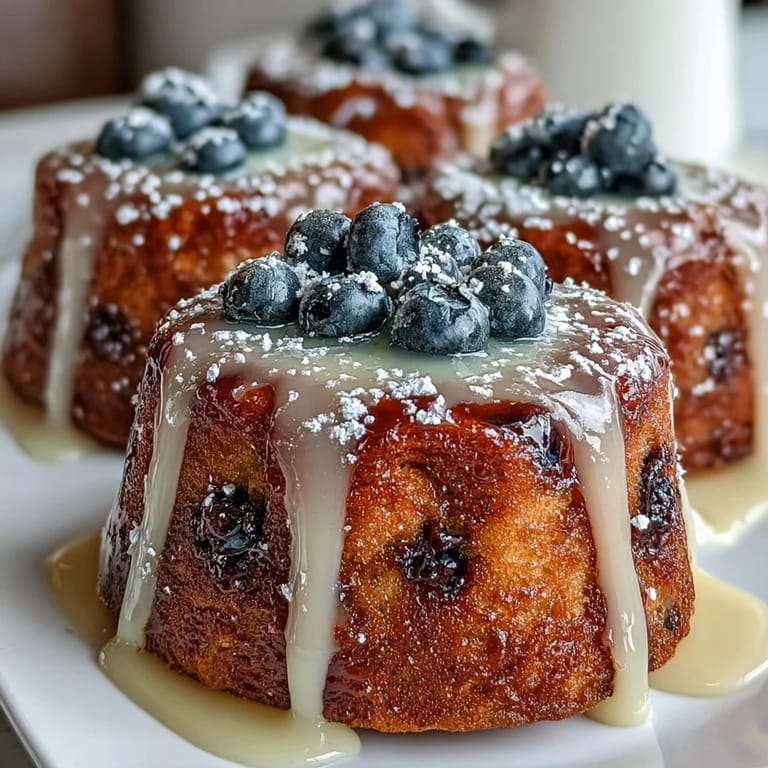
Save Last summer, I had a jar of sourdough starter that had grown a bit too enthusiastic, and I was searching for creative ways to use the discard without the commitment of baking bread. That's when these mini lemon blueberry bundt cakes appeared in my kitchen almost by accident—a happy collision of wanting something elegant but approachable for a Saturday brunch. The first time I poured that bright lemon glaze over the warm cakes, watching it pool into the little ridges, I knew I'd stumbled onto something special. My neighbor came over, took one bite, and asked for the recipe before I'd even finished the first slice.
I made these for my daughter's small book club gathering, nervous because I'd never used mini bundt pans before. The cakes tumbled out of their molds like little golden treasures, and watching five women pass them around the table, talking more about the cake than the book, was worth every second of the prep work. One guest said it tasted like summer on a plate, which feels about right.
Ingredients
- All-purpose flour (2 cups): The foundation here, and honestly, measuring by weight gives you more consistent results than spooning and leveling.
- Baking powder and baking soda (1 tsp and 1/2 tsp): Together they create lift without that metallic aftertaste, but don't skip checking expiration dates because stale leavening is a silent cake killer.
- Unsalted butter (1/2 cup), softened: Room temperature is non-negotiable if you want that fluffy crumb, so pull it from the fridge 30 minutes early.
- Granulated sugar (3/4 cup): The creaming step matters here more than anywhere else, so give yourself the full three minutes even though it feels like forever.
- Eggs (2 large), room temperature: Cold eggs create little pockets of oil in the batter, so running them under warm water for a minute actually makes a difference.
- Sourdough starter (1/2 cup): This is where the magic happens—that gentle tang and moisture content elevates these beyond standard lemon cakes, and honestly, discard works just as beautifully as active starter.
- Whole milk (1/2 cup), room temperature: Acts as a tenderizer and plays nice with the sourdough for a velvety texture.
- Fresh lemon juice and zest (2 tbsp juice, 1 tbsp zest): Use actual lemons, not the bottled stuff, because the oils in fresh zest are where half the flavor lives.
- Vanilla extract (1 tsp): Just a teaspoon, but it rounds out the lemon without making this taste like a bakery bathroom.
- Fresh blueberries (1 cup): Frozen works too if you don't thaw them—they actually stay suspended better that way.
- Powdered sugar for glaze (1 cup): Sift it if you have time because lumps make the glaze look unfinished.
Tired of Takeout? 🥡
Get 10 meals you can make faster than delivery arrives. Seriously.
One email. No spam. Unsubscribe anytime.
Instructions
- Set the stage:
- Preheat your oven to 350°F and grease those mini bundt pans like you mean it—get into every ridge and corner with butter or spray, then dust with flour. These little cakes want to come out cleanly, and skipping this step is how you end up with cake stuck in the pan while the glaze sits there judgment-free.
- Combine your dry team:
- In a medium bowl, whisk together flour, baking powder, baking soda, and salt, making sure there are no hiding spots for the baking soda to clump up. The whisking aerates and distributes everything evenly so you don't bite into a pocket of baking soda and regret your life choices.
- Cream the butter and sugar:
- In your large mixing bowl, beat the softened butter and sugar together for about three full minutes until it looks pale and fluffy like cumulus clouds. This step isn't just a formality—you're building tiny air pockets that become the tender crumb everyone raves about.
- Add the eggs one at a time:
- Drop in the first egg, let it fully incorporate, then add the second, scraping down the bowl's sides between additions so nothing gets left behind. Cold spots mean uneven mixing, and that's how you end up with a grainy texture hiding in one section of your cake.
- Introduce the sourdough mixture:
- Add your sourdough starter, milk, lemon juice, lemon zest, and vanilla to the creamed butter and eggs, stirring until everything is cohesive and you can smell that bright citrus. This is where the batter starts smelling like something worth baking.
- Bring the dry and wet together:
- Add your flour mixture gradually to the wet ingredients, stirring just until combined—when you see a few flour streaks still visible, stop immediately. Overmixing develops gluten and turns delicate cake into dense, tough disappointment, and you'll know you've gone too far when the batter looks tough and glossy.
- Coat and fold the blueberries:
- Toss your blueberries with a tablespoon of flour in a separate bowl (this keeps them from sinking straight to the bottom), then gently fold them into the batter with a spatula using as few strokes as possible. You want them distributed but intact, not bruised and leaking their color everywhere.
- Fill the pans:
- Divide the batter evenly among your eight mini bundt pans, filling each about two-thirds full so there's room for the cakes to rise without overflowing. A small ice cream scoop makes this part less of a guessing game.
- Bake with patience:
- Slide them into your preheated oven for 22 to 25 minutes, watching for golden-brown edges and a toothpick that comes out clean from the center. The smell that fills your kitchen is basically edible proof that you made the right choice.
- Cool strategically:
- Let the cakes rest in their pans for ten minutes—this is crucial because turning them out too early means sticky bottoms and broken cakes. After ten minutes, run a thin knife around each edge, place your wire rack on top, take a breath, and invert with confidence.
- Make the glaze:
- While cakes cool completely, whisk your powdered sugar with fresh lemon juice until you have something that drips slowly but smoothly from a spoon. If it's too thick, add juice drop by drop; too thin and it'll run right off like you didn't put in the effort.
- Finish strong:
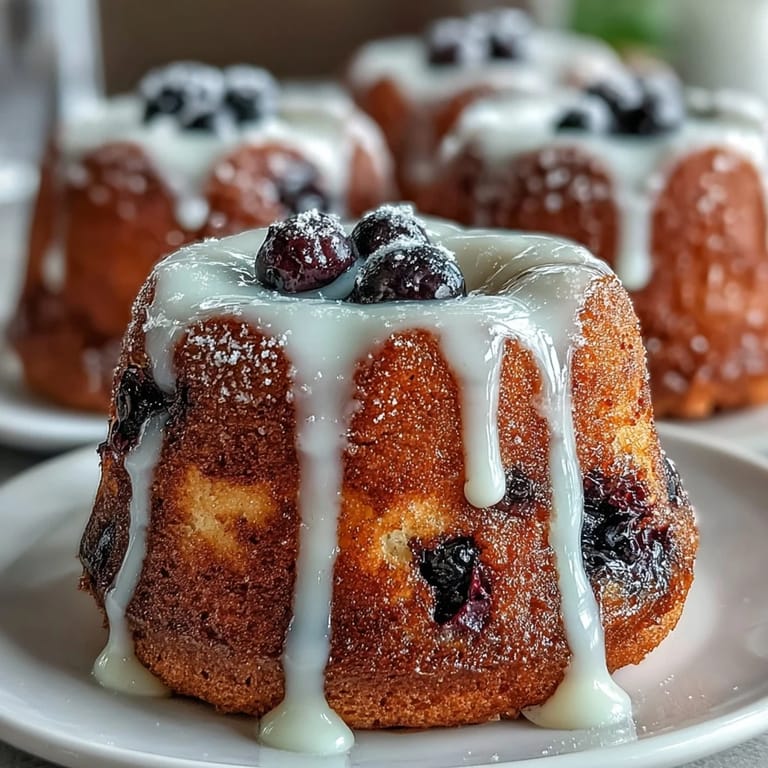
- Drizzle the glaze over cooled cakes in whatever pattern feels right, letting it settle into the grooves and create beautiful contrast against the golden cake. This is the moment where a simple bake becomes something that photographs well and tastes even better.
 Save
Save My son, who normally picks out blueberries from everything, tried one of these cakes without realizing what he was eating and actually ate the whole thing. That's when I knew I'd accidentally created something that transcends typical dessert preferences and just belongs on every table.
The Sourdough Secret
Using sourdough starter in cakes seems strange until you taste the difference it makes. The fermentation creates complexity and moisture that you genuinely cannot replicate with a regular cake recipe, and it actually extends the shelf life because of the natural acidity. I've kept these in an airtight container for four days, and they stayed soft and tender the entire time, which is basically cake magic.
Why Mini Bundts Matter
There's something about individual bundts that feels fancier than a sheet cake even though they're the same amount of effort. They bake faster, cool faster, and somehow make your kitchen feel like a real bakery instead of just a place where you happen to bake things. Plus, one person can eat one whole cake without judgment, which is honestly the best part.
Serving and Pairing Ideas
I started serving these with a small dollop of crème fraîche on the side, and it became the best decision I made because the tang works beautifully with the lemon brightness. A cup of Earl Grey tea is the obvious pairing, but I've also found they're perfect with sparkling Moscato on a warm afternoon or just a strong cup of coffee if you're being practical.
- Make these the day before and store in an airtight container so the flavors actually have time to develop and meld together.
- The glaze can be made an hour ahead and left at room temperature, giving you one less thing to worry about during your serving time.
- Extras freeze beautifully for up to three months—honestly they taste just as good straight from the freezer as they do fresh, which is basically permission to make double batches.
 Save
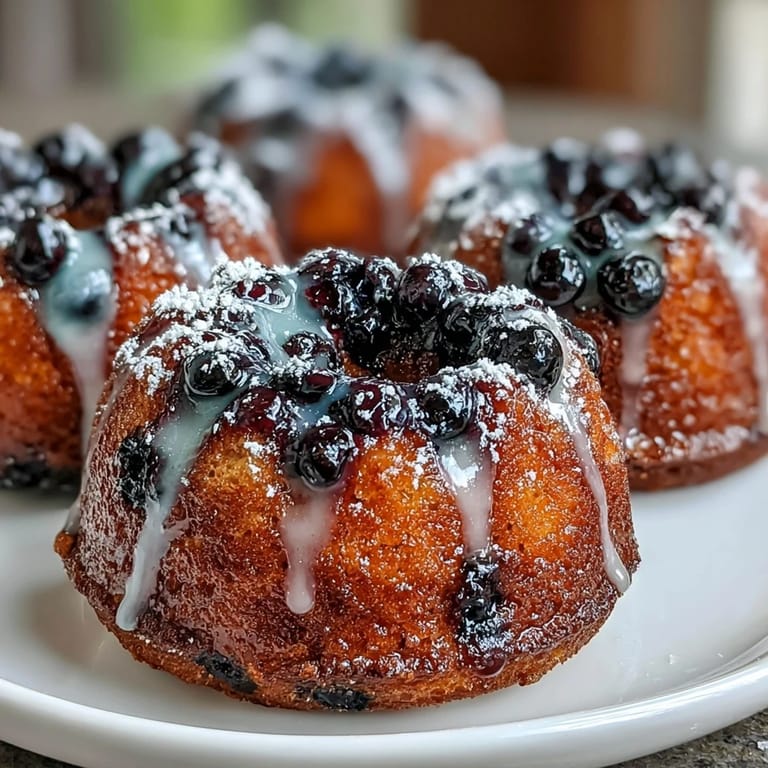
Save These little cakes turned into my answer whenever someone asked what to bring to a gathering, and honestly they've become the dessert people actually remember. That's worth showing up to your kitchen for.
Recipe FAQs
- → How do I prevent blueberries from sinking in the batter?
Toss fresh or frozen blueberries with a little flour before folding them into the batter. This helps suspend them evenly during baking.
- → Can I substitute the sourdough starter?
Plain Greek yogurt can replace sourdough starter to maintain moisture and add slight tang without affecting texture.
- → What is the best way to achieve a glossy lemon glaze?
Whisk powdered sugar with fresh lemon juice until smooth and pourable, adjusting consistency by adding more juice or sugar as needed.
- → How long should I bake the mini bundt cakes?
Bake at 350°F (175°C) for 22 to 25 minutes, or until a toothpick inserted comes out clean.
- → Can these bundts be stored and reheated?
Store in an airtight container at room temperature for up to two days. Reheat gently in a low oven or microwave before serving.