 Save
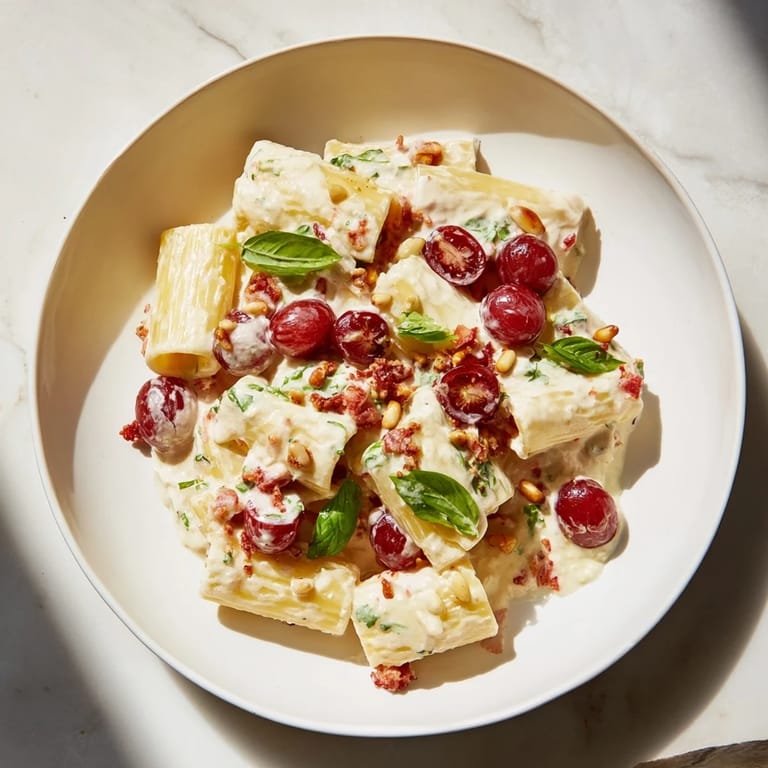
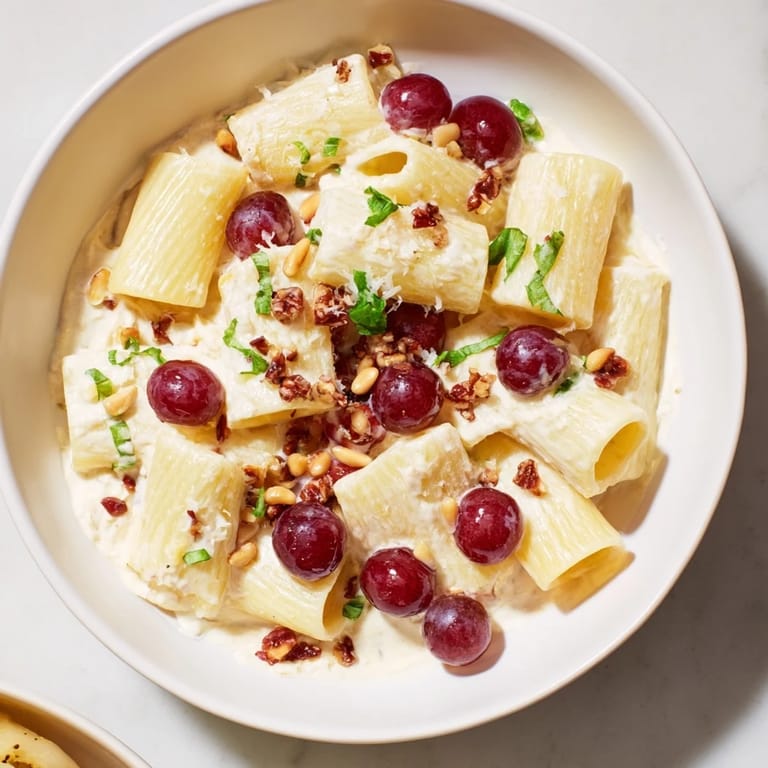
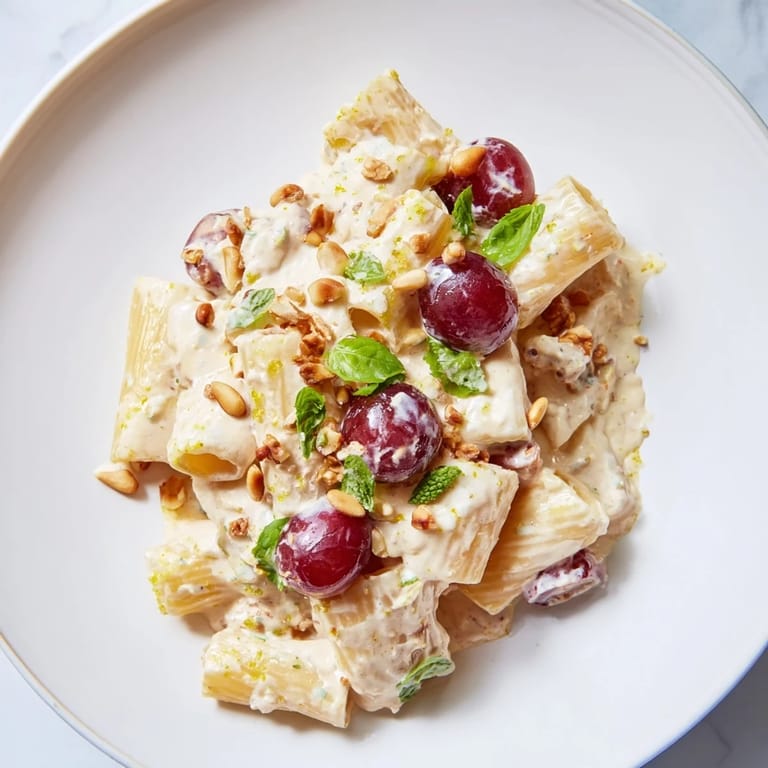
Save The first time I saw grapes roasting in the oven, I thought someone had made a mistake. But the smell that filled the kitchen—sweet, jammy, almost caramelized—made me forget my skepticism. When I tossed those blistered grapes with creamy ricotta and hot pasta, every bite was a surprise: bursts of sweetness against tangy lemon and herbaceous basil. It's the kind of dish that makes you rethink what belongs in a pasta bowl.
I made this for a friend who swore she didn't like fruit in savory dishes. She took one cautious bite, then another, and by the end of dinner she was scraping her plate clean. We sat at the table talking long after the food was gone, the empty bowls proof that sometimes the best meals are the ones that break your own rules.
Ingredients
- Pasta: Short shapes like penne or rigatoni catch the creamy ricotta and roasted grape juices in their ridges, making every forkful balanced and satisfying.
- Seedless grapes: Red or black grapes roast into sweet, jammy bursts that contrast beautifully with the tangy cheese, and their juices become part of the sauce.
- Fresh ricotta: Use the creamiest ricotta you can find, it melts into the hot pasta and creates a velvety coating without any cream or butter.
- Lemon zest and juice: Brightness is key here, the citrus cuts through the richness and wakes up every other flavor on the plate.
- Fresh basil and parsley: Herbs add a grassy, aromatic layer that keeps the dish from feeling too heavy or sweet.
- Toasted pine nuts: Optional but worth it, they bring a nutty crunch that plays off the soft grapes and creamy pasta.
Tired of Takeout? 🥡
Get 10 meals you can make faster than delivery arrives. Seriously.
One email. No spam. Unsubscribe anytime.
Instructions
- Roast the grapes:
- Preheat your oven to 220°C (425°F) and spread the grapes on a parchment lined tray. Drizzle with olive oil, season with salt and pepper, then roast for 20 to 25 minutes until they blister and start to caramelize, their skins wrinkled and juices pooling beneath them.
- Cook the pasta:
- Boil a large pot of well salted water and cook your pasta until al dente. Before draining, scoop out half a cup of the starchy pasta water, it will help the ricotta cling to every piece.
- Mix the ricotta:
- In a bowl, stir together ricotta, lemon zest, lemon juice, basil, parsley, and a pinch of salt until smooth and fragrant. The mixture should taste bright and creamy, almost like a soft cheese spread.
- Combine everything:
- Toss the drained pasta with the ricotta mixture, adding splashes of pasta water until the sauce coats each piece in a silky layer. Gently fold in the roasted grapes and their juices, letting some burst and some stay whole for texture.
- Finish and serve:
- Drizzle with extra virgin olive oil, scatter toasted pine nuts and fresh basil on top, and add black pepper and Parmesan if you like. Serve immediately while the pasta is hot and the grapes are still warm and jammy.
 Save
Save There was a night when I served this to my family and no one spoke for the first few minutes. Not because it was awkward, but because everyone was too busy eating. My sister finally looked up and said it tasted like summer and fall had a conversation on her plate, and I realized that's exactly what this dish is.
How to Choose the Best Grapes
Look for firm, plump grapes with tight skins and a slight bloom, that dusty coating means they are fresh. Red or black varieties work best because they have deeper sweetness and their color stains the pasta in the most beautiful way. Avoid grapes that feel mushy or have wrinkled stems, they will not roast well and can turn sour instead of jammy.
Making It Your Own
If you want more tang, swap the ricotta for fresh goat cheese and watch the sauce become even brighter. For a heartier version, toss in some wilted spinach or arugula just before serving. I have also added crumbled pancetta for friends who wanted a bit of salt and smoke, and it worked beautifully against the sweet grapes.
Storage and Leftovers
This pasta is best enjoyed fresh, but leftovers can be stored in an airtight container in the fridge for up to two days. The ricotta may stiffen as it cools, so when reheating, add a splash of water or olive oil and warm gently in a pan over low heat. The grapes will soften further but still taste delicious, just a bit more jammy than before.
- Reheat gently to avoid breaking the pasta or drying out the sauce
- Add a squeeze of fresh lemon juice before serving leftovers to wake up the flavors
- If the dish feels too thick after refrigeration, loosen it with a few tablespoons of warm water
 Save
Save This is the kind of dish that reminds you cooking does not have to be complicated to be special. Serve it with a chilled glass of white wine and let the table do the rest.
Recipe FAQs
- → How do roasting grapes affect the flavor?
Roasting grapes softens them and intensifies their natural sweetness, creating caramelized notes that add depth and a subtle tartness to the dish.
- → Can I substitute ricotta cheese?
Yes, goat cheese offers a tangier flavor and a similar creamy texture, which pairs well with the sweet roasted grapes and herbs.
- → What pasta types work best for this dish?
Short pasta shapes like penne, rigatoni, or fusilli hold the sauce well and complement the roasted grapes without overpowering the flavors.
- → Is it necessary to reserve pasta water?
Reserving some pasta water helps loosen the ricotta sauce, ensuring a smooth coating on the pasta without being too thick.
- → How can I make this dish nut-free?
Simply omit the toasted pine nuts for a nut-free version without compromising the main flavors.
- → What herbs are used in the dish?
Fresh basil and parsley add herbal brightness and freshness, balancing the creamy ricotta and sweet roasted grapes.