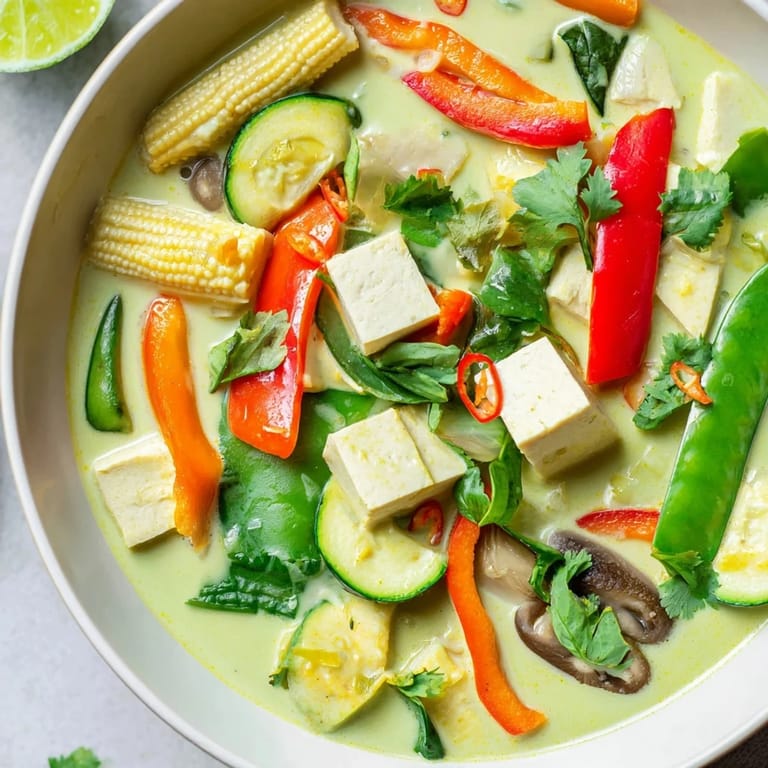
 Save
Save There's something almost magical about the moment curry paste hits hot oil—that sudden bloom of fragrance that fills your entire kitchen and makes you pause mid-thought. I discovered Thai green curry soup on a rainy afternoon when a friend dropped off a jar of authentic curry paste from her trip to Bangkok, and I had no idea what to do with it. What started as cautious experimentation became one of those dishes I now make whenever I want to feel transported somewhere warm and alive, even on the grayest days.
I made this soup for my sister one winter when she was feeling overwhelmed by everything, and watching her face relax after that first spoonful reminded me why I cook. She asked for the recipe the next day, and now it's her go-to when she needs to feel better. That's when I realized this wasn't just soup—it was comfort with complexity, quiet confidence in a bowl.
Ingredients
- Firm tofu or chicken breast (400 g): Tofu gives you that silky texture and absorbs all the curry flavors beautifully, while chicken offers heartiness; I learned to cut tofu into generous cubes so it doesn't dissolve, and to slice chicken thin so it cooks gently in the broth.
- Green curry paste (2 tbsp): This is your flavor foundation—the real stuff from a Thai market tastes incomparably better than generic versions, and blooming it in hot oil releases all its complexity.
- Coconut milk (400 ml): Full-fat coconut milk creates that luxurious mouthfeel, though you can use light if you prefer; always give the can a good shake first.
- Vegetable or chicken broth (500 ml): This keeps the soup from becoming too heavy while letting the curry flavor shine through clearly.
- Fish sauce (1 tbsp): I know it smells intense, but trust it—this is the secret ingredient that makes everything taste authentically Thai; use soy sauce if you're vegetarian, though the depth will be slightly different.
- Fresh vegetables (bell pepper, zucchini, baby corn, snap peas, mushrooms, carrot): Choose vegetables you actually enjoy eating raw too, because you'll taste each one individually in this broth.
- Sugar (1 tsp): Just a whisper of sweetness to balance the heat and umami—don't skip it, even though it seems small.
- Vegetable oil (1 tbsp): Use a neutral oil with a high smoke point so the curry paste blooms properly.
- Garnishes (cilantro, lime, Thai basil, chili): These aren't decorative—they're the final act that makes each bite feel fresh and intentional.
Tired of Takeout? 🥡
Get 10 meals you can make faster than delivery arrives. Seriously.
One email. No spam. Unsubscribe anytime.
Instructions
- Wake up the curry paste:
- Heat your oil over medium heat until it shimmers, then add the curry paste and let it sizzle for a minute or two—you want to see it darken slightly and smell that incredible aroma starting to fill the room. This step is everything; it cracks open all the flavor compounds in the paste.
- Soften the onion:
- Stir in your sliced onion and cook gently until it becomes translucent and sweet, about two minutes. This gives you a flavorful base that the broth will build on.
- Add your protein:
- If using chicken, add it now and cook for 2-3 minutes—you want it to turn opaque on the outside but still tender inside. With tofu, it's more forgiving; just let it warm through and soak up that paste flavor.
- Pour in the creamy base:
- Add your coconut milk and broth together, stirring gently to combine the curry paste evenly. Bring everything to a soft, rolling simmer rather than a hard boil, which keeps the broth silky.
- Add the vegetables:
- Now comes the fun part—add all your cut vegetables at once and let them cook for 8-10 minutes. You're aiming for tender-crisp, where they still have a little snap but aren't raw anymore.
- Season to taste:
- Stir in the fish sauce (or soy sauce) and sugar, then taste and adjust—you might want a squeeze more lime, a pinch more heat, or another pinch of sugar depending on your preference. This is your soup, so make it speak to you.
- Finish with brightness:
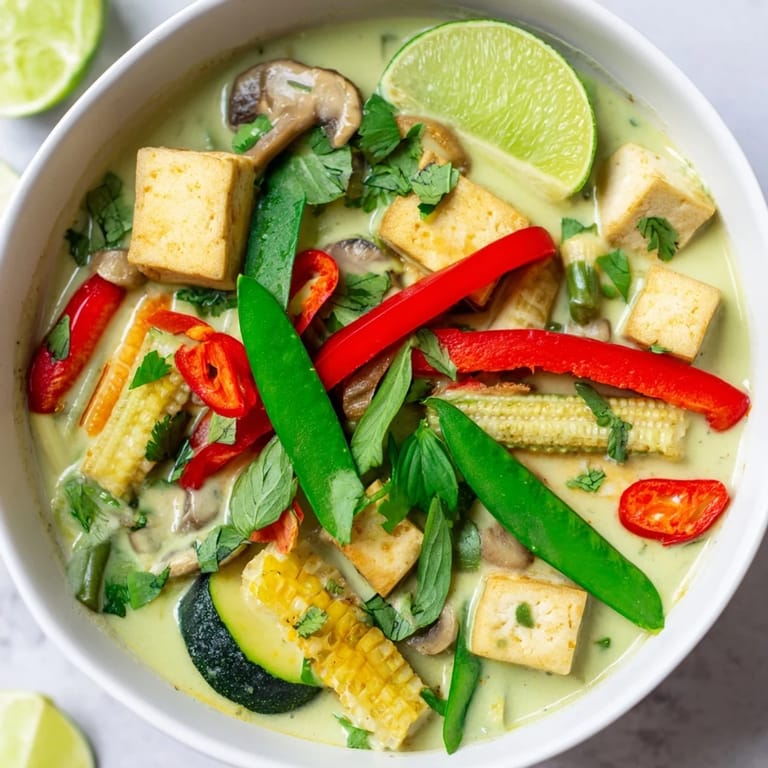
- Ladle the soup into bowls and top generously with cilantro, Thai basil leaves, a lime wedge tucked on the rim, and thin slices of red chili if you want extra heat. The garnishes wake up everything in the bowl.
 Save
Save The first time someone I'd cooked for asked me to make this soup again, unprompted, I realized I'd cracked something: how to make something that feels indulgent but takes barely 40 minutes, something that tastes like you've been working the whole day but you haven't. That's when food stops being about following steps and becomes about sharing something that matters.
Customizing Your Bowl
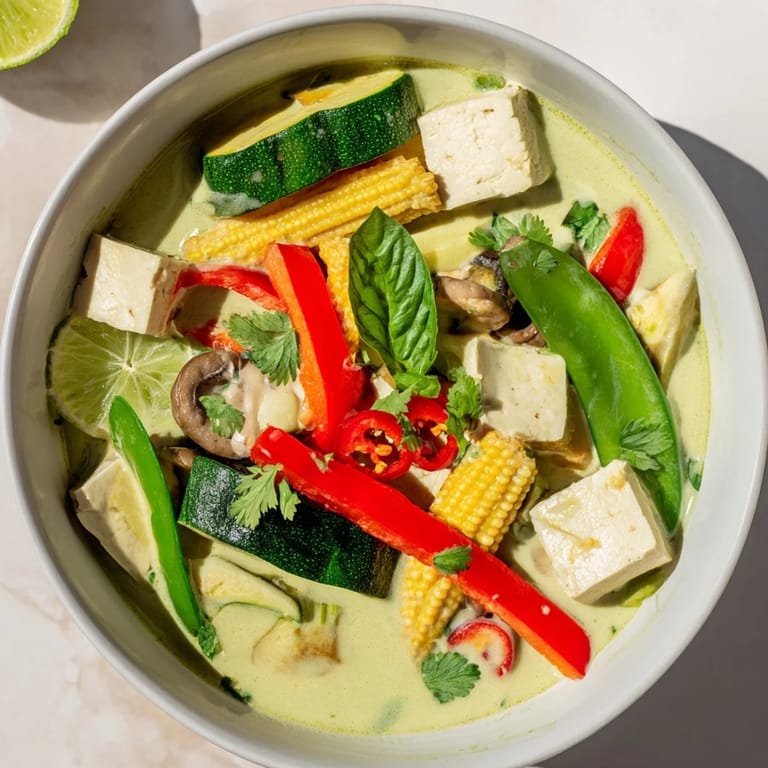
One of the best things about this soup is how it invites you to make it your own without losing its soul. I've made it with extra mushrooms on weeks when I'm craving earthiness, and with snap peas and baby corn when I want something brighter. You could add bamboo shoots, Thai eggplant, or even winter squash—the coconut broth welcomes almost anything with open arms. The key is respecting the cooking times so everything finishes tender at roughly the same moment.
Playing With Heat
Heat in this soup isn't a bug, it's a feature you can control completely. The green curry paste gives you a gentle warmth that builds slowly, but if you want more punch, add a diced Thai chili or a teaspoon of sambal during cooking, or reserve some chili slices for garnish and let people adjust their own bowls. I've learned that heat should surprise and excite you, not make you suffer—if you're not enjoying it, you've gone too far. My favorite discovery was adding just half a teaspoon of white pepper along with the chili; it adds a different kind of complexity that plays beautifully against the coconut's sweetness.
Making It Your Ritual
This soup taught me that the best recipes are the ones you return to for different reasons each time—sometimes because you need comfort, sometimes because you want to show off, sometimes just because your kitchen smells better when this is simmering. The beauty is that it takes less than an hour start to finish, so it fits into a regular weeknight without demanding a whole afternoon. Serve it with jasmine rice or rice noodles on the side if you want something more substantial, or just with crusty bread if you're keeping it simple.
- If you're cooking for someone with shellfish allergies, use soy sauce instead of fish sauce and the soup will still be absolutely delicious.
- Leftovers keep for three days in the fridge and actually taste better the next day when flavors have melded together.
- Make a double batch and freeze the soup base (without the fresh vegetables and garnishes) for nights when you want this comfort but have zero time.
 Save
Save Every time I make this soup, I'm reminded that cooking doesn't have to be complicated to be meaningful. This bowl asks for less than an hour of your time and gives back so much more.
Recipe FAQs
- → Can I make this dish vegetarian?
Yes, substitute chicken with firm tofu and use soy sauce instead of fish sauce to keep it vegetarian-friendly.
- → How can I adjust the spice level?
Add more green curry paste or sliced fresh chili to increase heat; reduce curry paste or omit chili for milder flavor.
- → What vegetables work best in this dish?
Fresh, crisp vegetables like bell pepper, zucchini, baby corn, snap peas, mushrooms, and carrot complement the curry well.
- → Can I prepare this ahead of time?
The flavors develop beautifully if made ahead; reheat gently to preserve the texture of vegetables and protein.
- → What can I serve alongside this dish?
Steamed jasmine rice or rice noodles make excellent accompaniments for a complete, satisfying meal.
- → Is it possible to use light coconut milk?
Yes, light coconut milk works well and reduces fat content while maintaining creaminess.