 Save
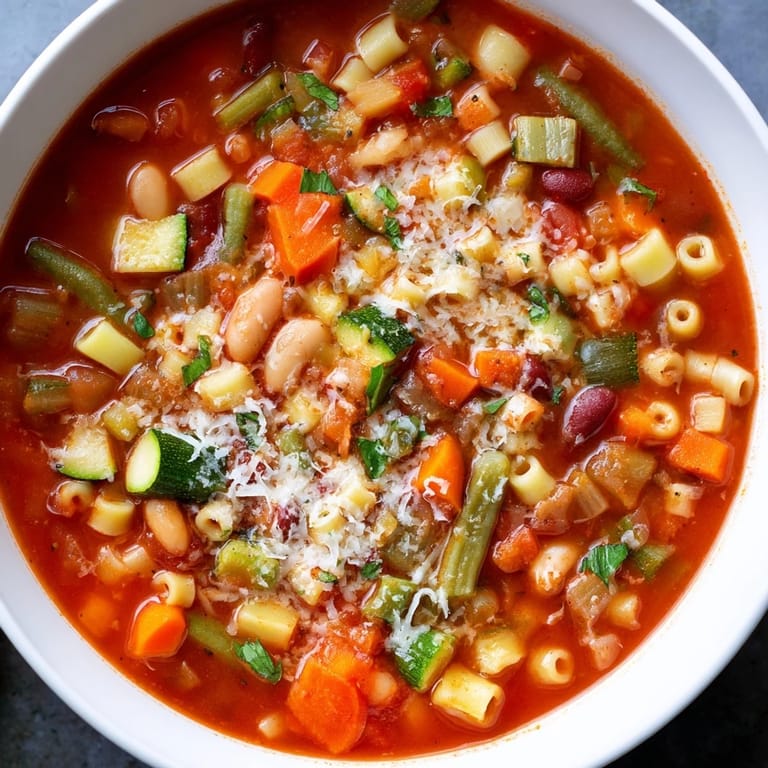
Save There's something about the smell of sautéed vegetables hitting hot oil that makes you feel like you're doing something right in the kitchen. Years ago, I made this minestrone on a random Thursday evening, and what started as me just trying to use up vegetables before they went bad turned into the soup I'd crave on cold mornings and lazy Sunday afternoons. The beauty of it is how forgiving it is—you can throw in whatever vegetables you have, but the tomato and basil keep it grounded in something deeply comforting and real.
I made this for a friend who'd just moved into their first apartment, and I remember them tearing open the container, the steam rising up, and they just smiled and said it smelled like home. That stuck with me—how soup has this quiet power to feel like someone's taking care of you, even when you're just doing the cooking yourself.
Ingredients
- Olive oil: It's the starting point for everything; don't skip it or use something timid, you need that fruity flavor building the base.
- Onion, carrots, and celery: The holy trinity that appears in almost every soup for a reason—they create a sweet, savory foundation that nothing else quite replaces.
- Garlic: Minced fresh, not from a jar; the difference is in how it perfumes the whole pot.
- Zucchini and green beans: They add texture and color without overpowering the tomato, staying tender but not mushy if you time it right.
- Diced and crushed tomatoes: The combination gives you both body and brightness; use the best canned ones you can find because they're doing the heavy lifting here.
- Vegetable broth: This is where you can taste quality—a good broth makes the difference between soup and something that feels like it has actual dimension.
- Oregano, thyme, salt, and pepper: The dried herbs go in early to release their flavors into the broth, building layers as everything simmers.
- Tomato paste: A small amount concentrates the tomato flavor and adds a subtle richness that deepens everything.
- Ditalini pasta: Small tubes are perfect because they hold onto the broth without getting lost in the bowl; if you can't find ditalini, elbow macaroni works.
- Cannellini beans: They soften and absorb the flavors while giving the soup protein and a slight creaminess without any cream involved.
- Fresh basil and parsley: Added at the very end so they stay bright and aromatic instead of turning dark and muted.
- Parmesan cheese: Optional but transformative if you're in the mood; a generous handful melts into the warm soup and takes it somewhere else.
Tired of Takeout? 🥡
Get 10 meals you can make faster than delivery arrives. Seriously.
One email. No spam. Unsubscribe anytime.
Instructions
- Build the base:
- Heat your olive oil in a large pot over medium heat until you can smell it warming—not smoking, just ready. Add the onion, carrots, and celery, and let them soften into each other for about 5 minutes, stirring now and then so they cook evenly without browning.
- Add the second wave:
- Drop in the minced garlic, zucchini, and green beans, stirring everything together and cooking for another 3 minutes until the raw garlic smell melts into something sweeter and the vegetables start to release their juices.
- Make it a soup:
- Pour in both cans of tomatoes, the broth, and all your seasonings—the oregano, thyme, salt, pepper, red pepper flakes if you want heat, and that tomato paste. Stir until everything is incorporated, then let it come to a boil.
- Low and slow:
- Once it's boiling, turn the heat down to a simmer and let it bubble gently uncovered for 15 minutes, which gives the flavors time to get to know each other and the vegetables to soften completely.
- Finish the build:
- Stir in your pasta and drained beans, then simmer for another 10 to 12 minutes until the pasta is tender and has absorbed some of that beautiful broth.
- The final touch:
- Right before serving, stir in the fresh basil and parsley—this is where the soup goes from good to unforgettable, bright and alive.
 Save
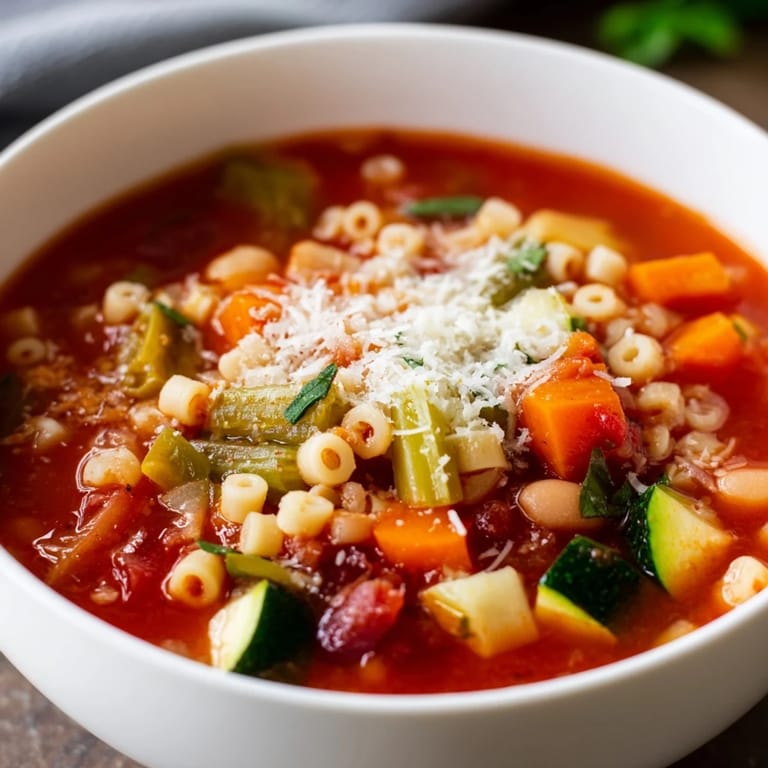
Save There was a winter afternoon when I made this soup while my partner was working, and by the time they got home, the whole house smelled like something you'd want to wrap around yourself. We ate it in quiet, and that's when I realized this soup wasn't just convenient—it had become something that meant comfort to us.
Variations You Can Try
This soup is a canvas, honestly. I've added fresh spinach or kale in the last few minutes if I had them around, and it never feels wrong. Some nights I've tossed in diced bell peppers instead of zucchini, or swapped the cannellini beans for white beans or chickpeas. Even adding a splash of white wine or a parmesan rind while it simmers deepens everything without changing what the dish is fundamentally about.
Timing and Make-Ahead
The beauty of this soup is that it tastes even better the next day when everything has settled together, so don't hesitate to make it ahead. You can refrigerate it for up to four days, and it reheats beautifully on the stovetop with just a splash of water if it's thickened up. The pasta does continue to absorb liquid over time, so if you're serving later, you might want to add a bit more broth before heating.
What to Serve It With
Minestrone is the kind of soup that doesn't need much, but a thick slice of toasted bread, ideally something crusty that you can dip into the bowl and let soak up the broth, turns dinner into something almost ceremonial. A simple salad on the side feels right too, something green and acidic to cut through the richness of the oil and cheese.
- Serve with crusty bread for soaking up every last drop of broth.
- A squeeze of fresh lemon juice at the table brightens everything if the soup feels too heavy.
- Grated Parmesan or a good Pecorino on top makes it feel more intentional and complete.
 Save
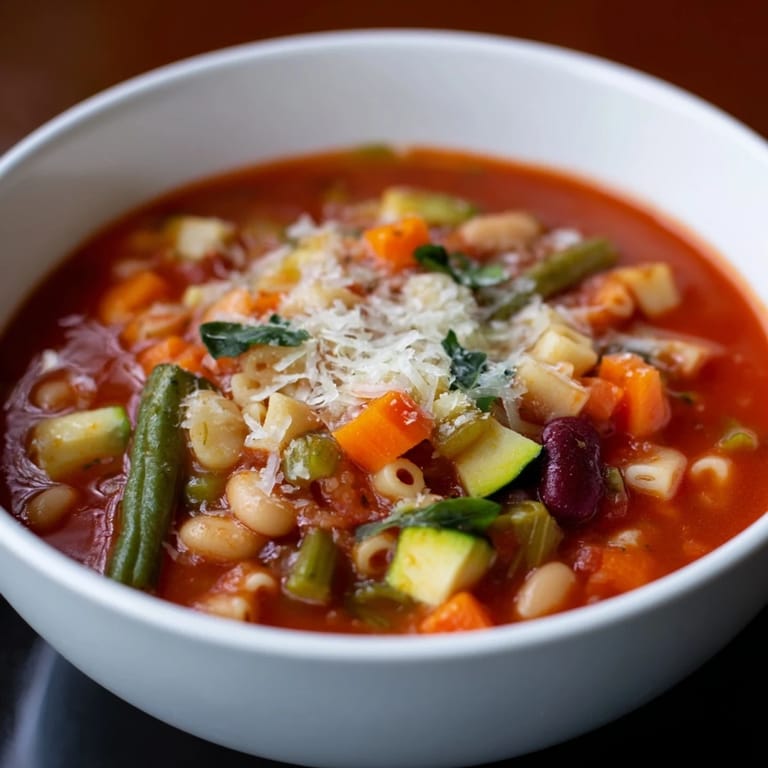
Save This soup has a way of becoming a constant in your rotation once you make it, the kind of meal you return to without thinking. There's something grounding about that.
Recipe FAQs
- → Can I use gluten-free pasta in this dish?
Yes, gluten-free pasta works well as a substitute to accommodate dietary needs without altering the overall flavor.
- → How can I add more greens to the soup?
Adding spinach or kale near the end of cooking boosts the vegetable content and adds extra nutrients and color.
- → Is it possible to make this soup vegan?
Simply omit the Parmesan cheese topping to keep the dish fully plant-based while retaining rich flavors.
- → What pasta shapes are best for this soup?
Small shapes like ditalini or elbow macaroni hold broth well and cook evenly in the soup's simmering process.
- → Can I prepare the soup in advance?
Yes, this soup tastes even better the next day as flavors meld; just reheat gently to preserve texture.