 Save
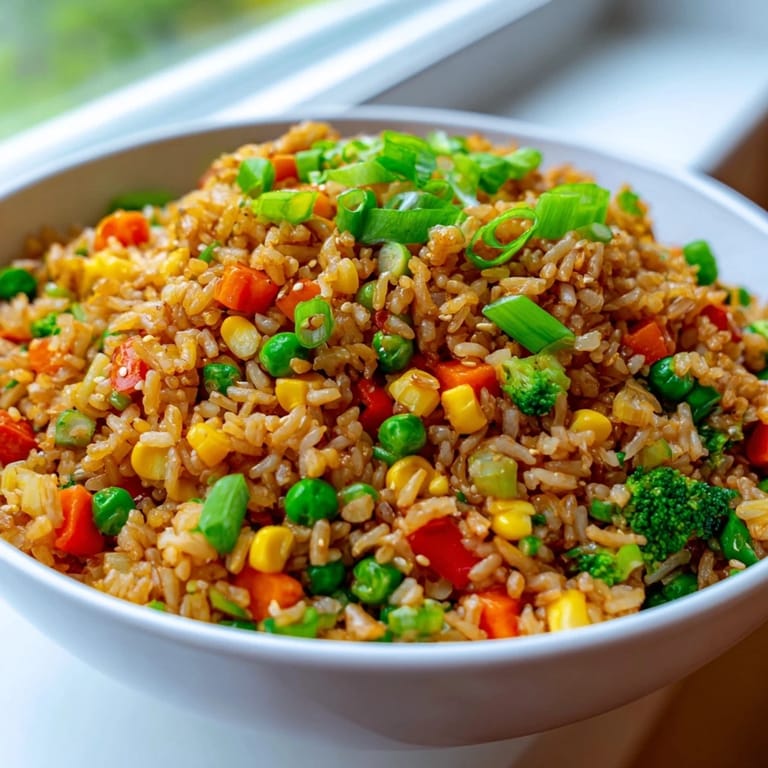
Save There's a particular Tuesday evening that stands out—my roommate had invited friends over with barely two hours notice, and I had half a container of day-old jasmine rice staring at me from the fridge. What started as mild panic became pure flow once I realized how forgiving fried rice is, how it transforms humble leftovers into something that tastes intentional and vibrant. That night taught me that the best meals don't require fancy ingredients or endless prep, just confidence and a hot wok.
I made this for my neighbor who'd just moved in, and she stood in my kitchen watching the vegetables tumble through the wok, asking question after question. The sizzle and aroma—that toasted sesame and ginger hitting hot oil—somehow made us both feel like we were doing something more complicated than we actually were. She came back two weeks later asking for the recipe, which felt like the highest compliment.
Ingredients
- Cooked jasmine or long-grain rice (3 cups, day-old and cold): This is non-negotiable—fresh warm rice absorbs moisture and becomes sticky, while cold rice grains stay separate and create that perfect texture every fried rice lover chases.
- Carrots, diced (1 cup): Their natural sweetness balances the soy sauce, and they hold their structure through the high heat without turning mushy.
- Bell pepper, diced (1 cup): Choose whichever color you have; they add sweetness and visual appeal without overpowering the other flavors.
- Frozen peas, thawed (1 cup): Frozen actually works better than fresh here because they're pre-cooked and won't split apart during stir-frying.
- Broccoli florets, small (1 cup): Keep them small so they cook through in the high-heat moments without becoming tough.
- Sweet corn kernels (1/2 cup): Adds a subtle sweetness and texture contrast that makes each bite interesting.
- Green beans, chopped (1/2 cup): They provide a slight earthiness and snap that prevents the dish from feeling one-dimensional.
- Green onions, sliced (3, with some reserved for garnish): Add half during cooking for flavor integration and scatter the rest raw on top for a fresh finishing touch.
- Garlic, minced (2 cloves): Blooming it in hot oil for just 30 seconds releases its essence without letting it burn—timing matters here.
- Ginger, minced (1-inch piece): Fresh ginger adds warmth and complexity that powdered ginger can't quite match; grate it if mincing feels tedious.
- Soy sauce (3 tbsp): This is your main seasoning, so taste as you go—brands vary in saltiness, and you might need less than you expect.
- Sesame oil (1 tbsp): A little goes a long way here; it's potent and fragrant, so resist the urge to add more than called for.
- Vegetable oil (1 tbsp): Use something neutral that can handle high heat without smoking—canola and sunflower work perfectly.
- Toasted sesame seeds (1 tsp, optional): These add a nutty finish and visual texture that makes the dish feel more intentional.
- White or black pepper (1/2 tsp): White pepper dissolves more seamlessly into the rice, but black pepper works if that's what you have.
- Salt, to taste: Always taste before adding more—soy sauce already carries salt, and you might not need much.
Tired of Takeout? 🥡
Get 10 meals you can make faster than delivery arrives. Seriously.
One email. No spam. Unsubscribe anytime.
Instructions
- Get your pan screaming hot:
- Pour the vegetable oil into a large wok or deep skillet and let it heat over medium-high until you see the first hint of smoke—this matters because the vegetables need quick cooking to stay crisp, not a slow simmer.
- Wake up the aromatics:
- Immediately add the minced garlic and ginger, stirring constantly for about 30 seconds until your kitchen smells like you're cooking something seriously good. This quick burst prevents them from burning while releasing their flavor into the oil.
- Build color and crunch:
- Add the carrots, bell pepper, broccoli, green beans, and corn all at once, then stir-fry for 3 to 4 minutes. You're aiming for vegetables that are just tender enough to bite through but still have resistance—that's the magic spot.
- Bring in the tender vegetables:
- Stir in the thawed peas and most of the green onions, cooking for about 1 minute until everything is warmed through and glistening.
- Make rice the star:
- Crank the heat to high and add all your cold rice at once, breaking up any clumps with your spatula or wooden spoon as you go. This takes 2 to 3 minutes—you'll hear it sizzle and feel the texture change under your tool, which is how you know it's getting heated through evenly.
- Season with intention:
- Drizzle the soy sauce and sesame oil across the rice, then sprinkle the pepper over everything. Toss continuously for another minute, making sure the seasoning coats every grain rather than pooling in one spot.
- Taste and adjust:
- Remove the pan from heat and try a forkful—this is the moment to decide if you need a pinch more salt or a splash more soy sauce. Trust your palate, not the recipe.
- Finish and serve:
- Transfer to a serving bowl or platter, scatter the reserved green onions and sesame seeds on top, and get it to the table while everything is still steaming.
 Save
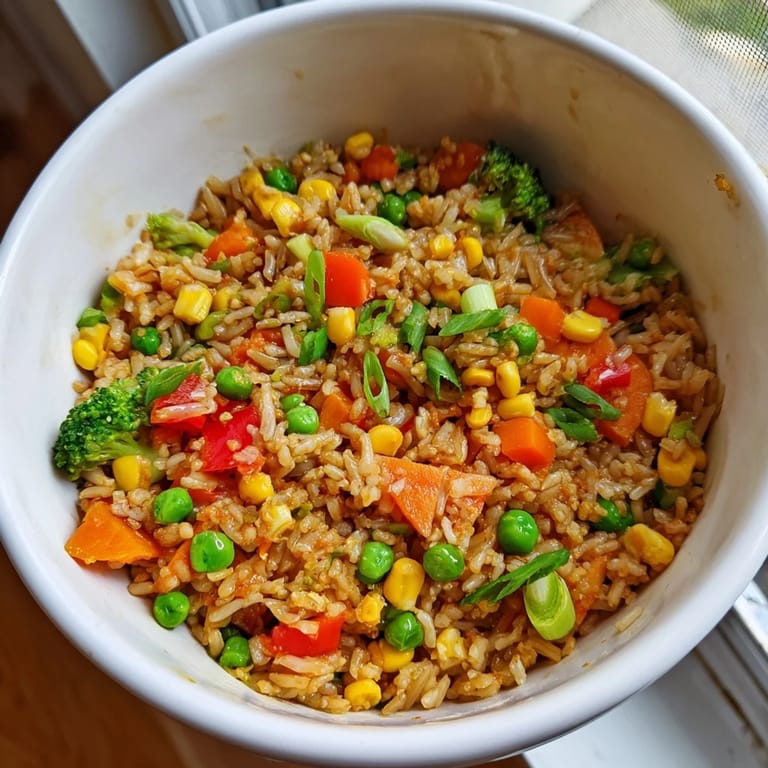
Save My partner ate three helpings of this one Sunday and asked me why I don't make it more often, and I realized that somewhere between chopping and tossing, I'd stopped thinking of it as a quick weeknight filler and started seeing it as a dish worth celebrating. That shift—from feeling obligatory to feeling proud—changed how I approach cooking altogether.
The Cold Rice Factor
This is worth its own section because it's genuinely the difference between restaurant-quality fried rice and disappointing mush. Fresh, warm rice is full of moisture and starts to clump the second it hits heat; cold rice has firmed up and actually gets crispier when you stir-fry it. If you're making this on the fly and don't have day-old rice, spread freshly cooked rice on a sheet tray, let it cool to room temperature, then pop it in the fridge for at least 30 minutes before cooking.
Customizing Without Losing Balance
The vegetables I've listed are a framework, not a prison. I've swapped in mushrooms for broccoli, added snap peas, thrown in zucchini, even used leftover roasted Brussels sprouts once and it was unexpectedly incredible. The only rule I follow is keeping the total volume of vegetables roughly the same so the rice-to-vegetable ratio stays balanced and nothing gets watered down.
Variations and Flavor Play
Sometimes I add a beaten egg right after the aromatics, breaking it into scrambled bits before adding vegetables—it adds richness without changing the fundamental character of the dish. For spice lovers, a drizzle of chili sauce or fresh sliced chili mixed in at the very end brings heat without overwhelming everything else. I've also experimented with swapping half the soy sauce for oyster sauce, which adds a deeper umami note that makes people pause and ask what you did differently.
- Tofu cubes can be pan-fried until golden and added with the vegetables for plant-based protein that stays distinct rather than disappearing into the rice.
- A splash of rice vinegar right before serving adds brightness and cuts through the richness in a way that feels sophisticated but tastes natural.
- Cashews or peanuts scattered on top add crunch and make the dish feel more substantial without requiring any changes to the base recipe.
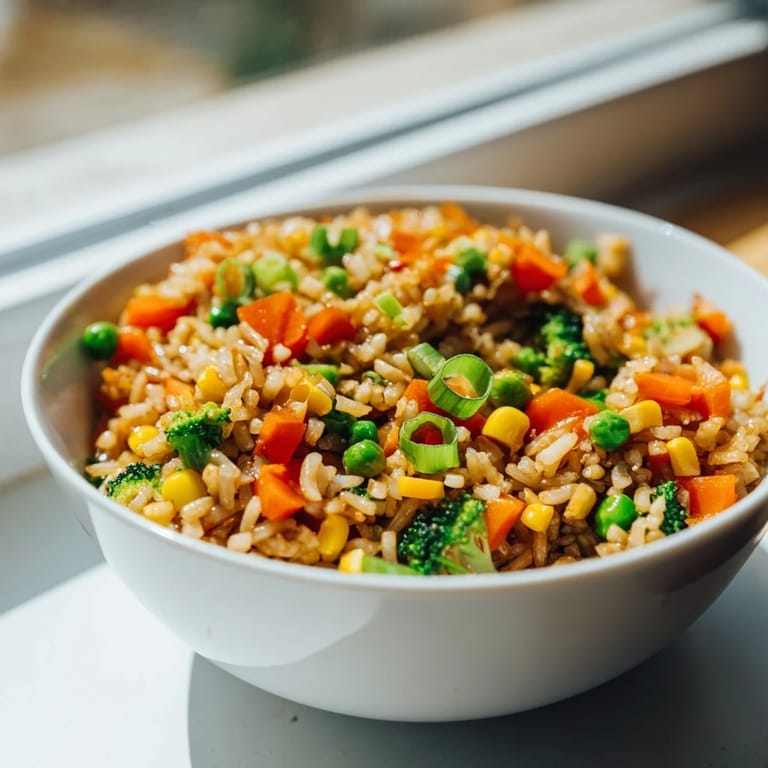 Save
Save This recipe has become one of those dishes that feels both effortless and impressive, which is exactly what makes it worth knowing by heart. Whether you're feeding yourself on a tired Wednesday or impressing people who drop by unexpectedly, it quietly delivers.
Recipe FAQs
- → Why should I use day-old rice?
Day-old rice works best because it has dried out slightly, preventing the finished dish from becoming soggy. Fresh, warm rice absorbs too much moisture during stir-frying. Store leftover rice in the refrigerator uncovered or loosely covered to help it dry out.
- → Can I substitute the vegetables?
Absolutely. Feel free to swap in mushrooms, zucchini, snap peas, bok choy, or any vegetables you prefer. The key is maintaining a mix of textures and colors while keeping cut pieces uniform for even cooking.
- → How do I add protein to this dish?
Scrambled eggs or cubed tofu are excellent additions. Cook them separately first, then fold them in during the final stages of stir-frying to prevent overcooking. You can also use cooked chickpeas or cashews for variety.
- → What makes this dish gluten-free?
Regular soy sauce contains wheat, but tamari is a certified gluten-free alternative that delivers the same rich, salty flavor. Always check your sauce labels to ensure all ingredients meet gluten-free standards.
- → How do I achieve the perfect texture?
Use high heat and keep ingredients moving constantly with a spatula. Stir-fry vegetables until they're tender but still crisp, typically 3-4 minutes. Add the cold rice at high heat to warm it through without making it mushy.
- → Can I make this spicy?
Yes. Add chili sauce, fresh minced chili peppers, or sriracha to taste. Start with a small amount and adjust based on your heat preference. Add spicy elements near the end of cooking to preserve their flavor intensity.