 Save
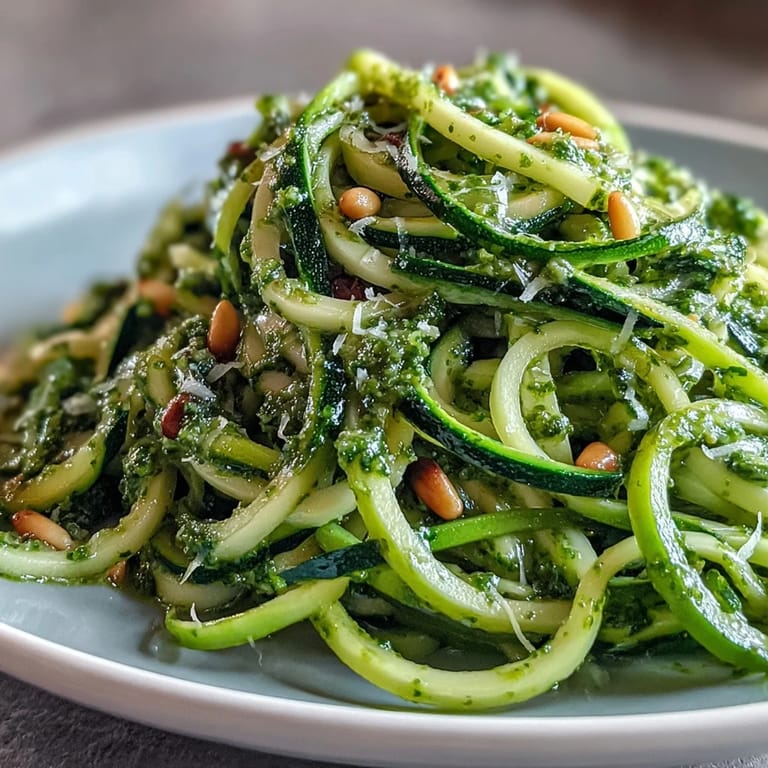
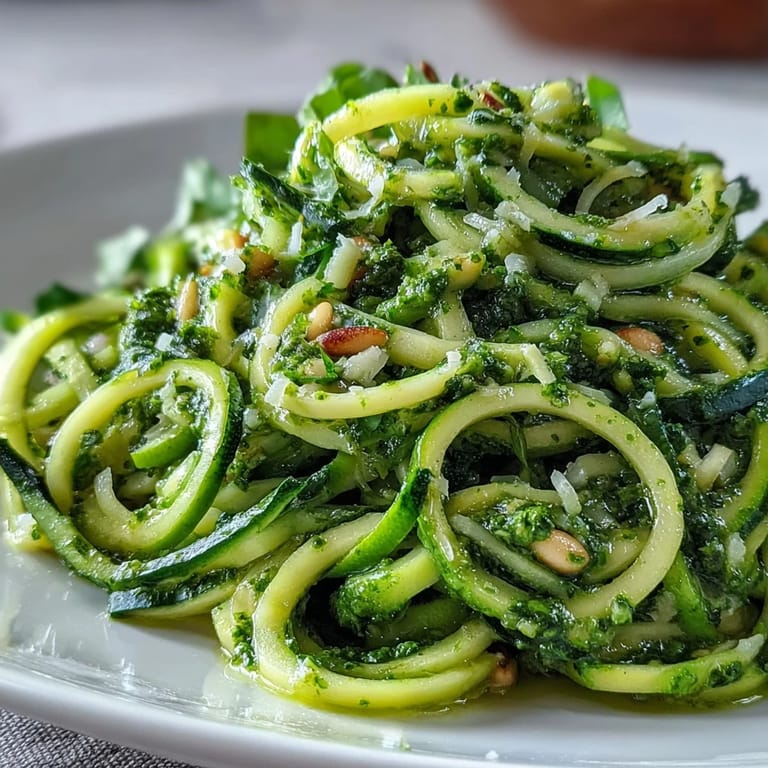
Save My neighbor brought over a spiralizer one summer afternoon, and I was skeptical—until she showed me how to turn a simple zucchini into something that actually felt like pasta on the fork. That evening, I made this pesto version almost by accident, blending up some basil from my garden because it was about to bolt, and suddenly had something so bright and alive on my plate that I forgot I was eating vegetables. Now it's what I make when I want to feel good without the heaviness, or when someone mentions they're trying to eat lighter and I want to prove that doesn't mean boring.
I made this for my sister after she casually mentioned wanting to cut back on pasta, and the way she asked for seconds—without any sense of deprivation—made me realize this wasn't a substitute at all, but something genuinely delicious in its own right. She's been making her own pesto ever since, and every time she texts me a photo from her kitchen, I get a little proud.
Ingredients
- Zucchini (2 medium, spiralized): The texture matters here—you want them fresh and firm, not the soft ones sitting in the back of your crisper drawer, or they'll turn mushy the moment heat touches them.
- Olive oil (1 tablespoon for noodles, 1/4 cup for pesto): The good stuff for pesto makes a real difference in flavor, but regular olive oil works fine for sautéing the noodles.
- Basil (1 cup, packed): Pick it gently, wash it just before using, and don't bruise the leaves—they'll oxidize and turn dark, which affects both color and taste.
- Parmesan cheese (1/4 cup grated): Freshly grated is non-negotiable; the pre-shredded stuff has cellulose that keeps it from blending smoothly into pesto.
- Pine nuts (1/4 cup): They're pricey, which is why walnuts or even sunflower seeds work beautifully as swaps without losing the depth.
- Garlic (1 clove): Just one—pesto is delicate, and garlic can easily overpower it if you're heavy-handed.
- Lemon juice (1 tablespoon): This keeps the pesto bright and prevents the basil from darkening too quickly.
- Salt and black pepper: Season gradually and taste as you go; you can always add more.
Tired of Takeout? 🥡
Get 10 meals you can make faster than delivery arrives. Seriously.
One email. No spam. Unsubscribe anytime.
Instructions
- Blend your pesto first:
- Combine the basil, Parmesan, pine nuts, and garlic in a food processor and pulse until everything is finely chopped but still has some texture—you're not aiming for baby food. With the processor running, slowly drizzle in the olive oil and lemon juice, letting it emulsify into something silky and bright, then taste and season with salt and pepper until it sings.
- Spiralize your zucchini:
- Do this right before cooking to keep the noodles from releasing too much water and becoming soggy. If you don't have a spiralizer, a julienne peeler or even a regular vegetable peeler works in a pinch.
- Sauté gently:
- Heat the olive oil in a large skillet over medium heat, add the zucchini noodles with a pinch of salt, and sauté for just 2 to 3 minutes—you want them tender but still with a little bite, not collapsing into mush. The moment they start to soften, pull them off the heat.
- Toss and taste:
- Transfer the warm noodles to a bowl and add about half the pesto, tossing gently to coat, then taste and add more if you want it richer. Start conservative; you can always add more, but you can't take it back.
- Serve right away:
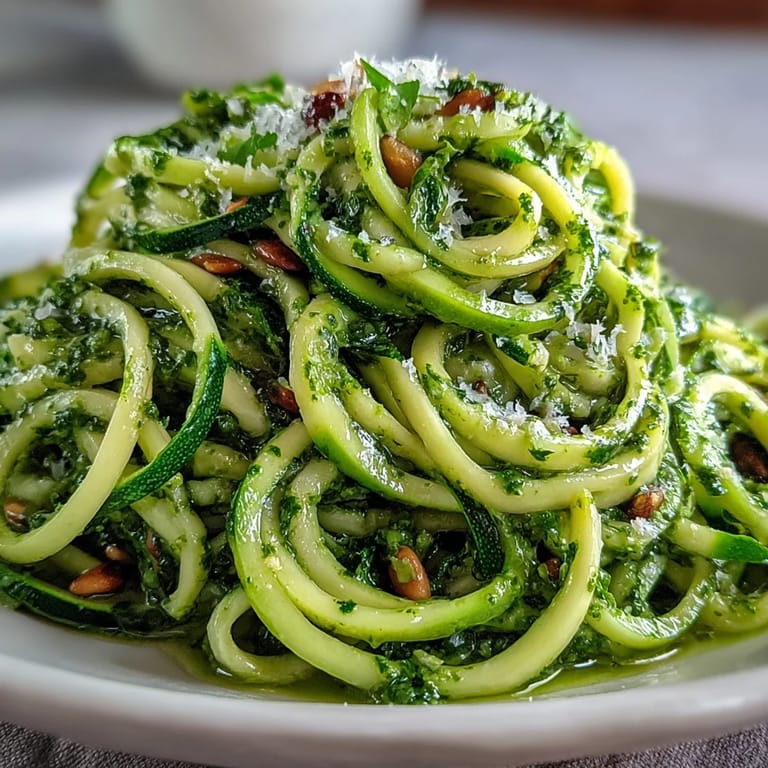
- Divide between plates, top with extra Parmesan, fresh basil, and a pinch of red pepper flakes if you like heat, and eat immediately while everything is still bright and fresh.
 Save
Save There was a moment last spring when my partner took one bite and said, "This tastes like summer," and I realized that's exactly what I'd been chasing—a way to eat something light that still felt indulgent and full of flavor. It's become what I make when I want to taste the season on a plate.
The Magic of Fresh Basil
If you grow basil or have access to it from a farmer's market, this is the recipe that will make you understand why people are so particular about it. The difference between supermarket basil and the kind you picked that morning is almost impossible to overstate—one tastes herbaceous and alive, the other tastes like green nothing. I learned this the hard way after making pesto with sad, plastic-wrapped basil from a regular grocery store and wondering why it tasted flat, then doing the same recipe three days later with fresh basil from a local grower and having an entirely different experience.
Why This Works as a Main Dish
The combination of good fat from the olive oil and nuts, protein from the cheese, and the volume from the zucchini noodles creates something that's satisfying without being heavy. It's not a side dish masquerading as dinner; it's genuinely complete and filling, which is why it stopped being a "light option I'm trying" and became something I just make because I want to eat it. The lemon juice adds a brightness that keeps it from feeling lazy, and the garlic gives it enough depth that you feel like you're eating something with real intention behind it.
Variations and Swaps
Once you understand the foundation, this recipe becomes endlessly flexible based on what you have and what you're in the mood for. I've made it with arugula instead of basil for a peppery version, added a handful of spinach to stretch it further, topped it with grilled chicken or shrimp when I needed more protein, and even tossed in cherry tomatoes that I char quickly in the same skillet before adding the zucchini noodles.
- For a vegan version, swap nutritional yeast for the Parmesan and it loses nothing in translation.
- Sunflower seeds or walnuts work just as well as pine nuts if you're looking to save money or have allergies.
- Make extra pesto and freeze it in ice cube trays so you have it ready for the next time you want this meal in 20 minutes.
 Save
Save This is the kind of recipe that proves healthy eating doesn't mean sacrifice—it means knowing how to let good ingredients speak for themselves. Make it once and you'll understand why it's become my go-to when I want to feel nourished and satisfied at the same time.
Recipe FAQs
- → How do I prevent zucchini noodles from becoming watery?
Sauté the noodles briefly over medium heat for just 2-3 minutes until tender-crisp. Avoid overcooking, and serve immediately to prevent water release.
- → Can I make the pesto ahead of time?
Yes, prepare the pesto up to 3 days in advance and store in an airtight container in the refrigerator. The flavors often develop and intensify overnight.
- → What can I use instead of pine nuts?
Walnuts work beautifully as a more budget-friendly alternative. For nut allergies, substitute sunflower seeds or pumpkin seeds for a similar creamy texture.
- → Is this dish vegan-friendly?
Simply replace the Parmesan cheese with nutritional yeast or a vegan Parmesan alternative to make this completely plant-based while maintaining that umami richness.
- → How should I store leftovers?
Store components separately for best results. Keep pesto refrigerated and any leftover cooked zucchini in a separate container, though it's best enjoyed freshly prepared.