 Save
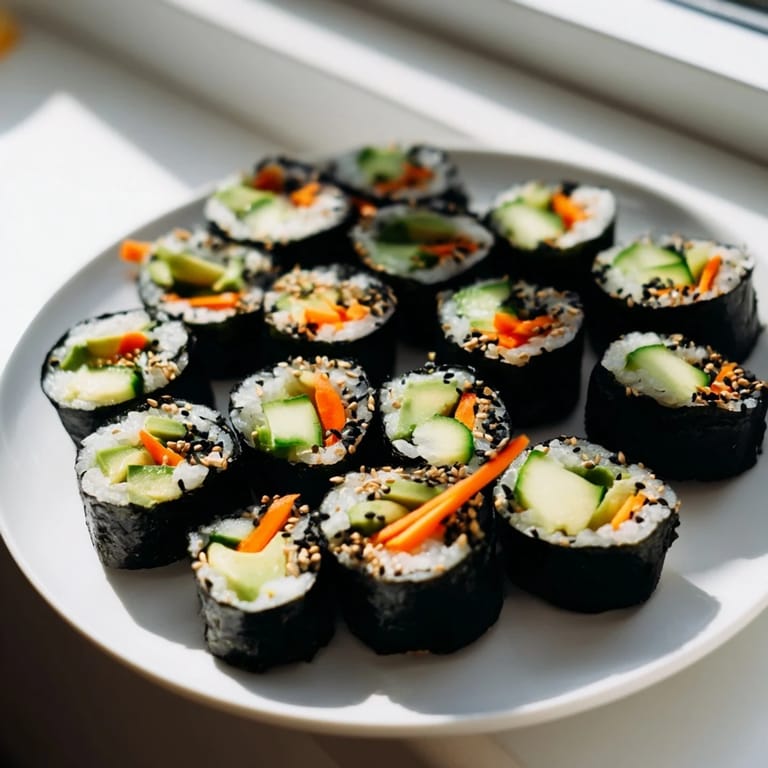
Save The first time I attempted homemade sushi, I was terrified. I had watched sushi chefs work with such fluid precision and assumed it required years of practice. But one rainy Sunday, craving something fresh and wanting to impress myself more than anyone else, I gathered the simplest ingredients I could find. The result was far from restaurant-perfect, but biting into that first messy roll, I realized something important: good sushi is about fresh ingredients and a little patience, not secret techniques.
Last summer, my neighbor Sarah popped over just as I was spreading rice onto nori sheets. She watched for a minute, then asked to try. We spent the next hour rolling sushi together, laughing at our uneven rolls, experimenting with fillings we found in the fridge, and eating more pieces than made it to the serving platter. Now whenever she sees bamboo mats at the store, she sends me a photo. Some recipes are meant to be shared.
Ingredients
- Sushi rice: Short-grain rice is essential here. Long-grain rice wont give you that sticky, clingy texture that holds everything together. Rinse it until the water runs clear. I learned this step the hard way when my rice turned into a gummy, cloudy mess.
- Rice vinegar mixture: This seasoned vinegar is what transforms plain cooked rice into sushi rice. Dont skip it. The acidity cuts through the richness and adds that characteristic tang.
- Nori sheets: Use toasted nori. It has a crisp, almost nutty flavor. Untoasted nori can be tough and rubbery. Keep what youre not using wrapped tightly. Nori absorbs moisture from the air and becomes disappointingly chewy.
- Avocado: Choose one that yields slightly to gentle pressure but isnt mushy. Too firm and it wont mash properly. Too ripe and it turns to brown paste. The Hass variety has the creamiest texture for sushi.
- Cucumber: English or Persian cucumbers work best. They have thinner skin, fewer seeds, and stay crunchier. Regular cucumbers can release water and make your sushi soggy.
- Carrot: The optional carrot adds a sweet crunch and beautiful orange contrast. Peel it well. The green skin can be bitter and tough in raw form.
Tired of Takeout? 🥡
Get 10 meals you can make faster than delivery arrives. Seriously.
One email. No spam. Unsubscribe anytime.
Instructions
- Cook the rice:
- Rinse the rice in a fine-mesh sieve under cold water, swirling with your hand, until the water runs clear. Combine rice and measured water in a saucepan. Bring to a boil, then cover tightly, reduce heat to low, and simmer gently. After 18 to 20 minutes, turn off the heat and let it steam, covered. Dont peek. The trapped steam finishes the rice.
- Season the rice:
- While rice cooks, stir rice vinegar, sugar, and salt in a small bowl until dissolved. Transfer hot rice to a wide, shallow bowl. Pour the vinegar mixture over the rice. Use a rice paddle or wide spatula to fold and slice through the rice, fanning it gently as you mix. This helps each grain absorb the seasoning and cool quickly. Stop when rice is room temperature and glossy.
- Prepare your station:
- Cut vegetables into thin, even strips. They should be slightly longer than the width of your nori. Wrap a bamboo mat in plastic wrap. This prevents rice from sticking and makes cleanup easier. Keep a small bowl of water nearby. Wet hands prevent rice from clinging to your fingers.
- Spread the rice:
- Place one nori sheet shiny side down on the wrapped mat. Dip hands in water and clap them once to remove excess. Grab a handful of rice and gently spread it over the nori, leaving the top inch bare. Cover completely but dont press too hard. Light, fluffy rice makes tender sushi.
- Fill and roll:
- Arrange avocado, cucumber, and carrot in a horizontal line across the bottom edge of the rice. Lift the mat edge closest to you and roll forward, using your fingers to hold fillings in place as you roll. Apply gentle, even pressure. When you reach the bare nori border, dampen it lightly and complete the seal.
- Slice and serve:
- Place the finished roll on a cutting board. Use your sharpest knife, wiping it clean and dampening it between cuts. Slice with one long, smooth motion rather than sawing back and forth. This keeps the shape intact and prevents rice from smearing. Arrange pieces on a platter and serve immediately.
 Save
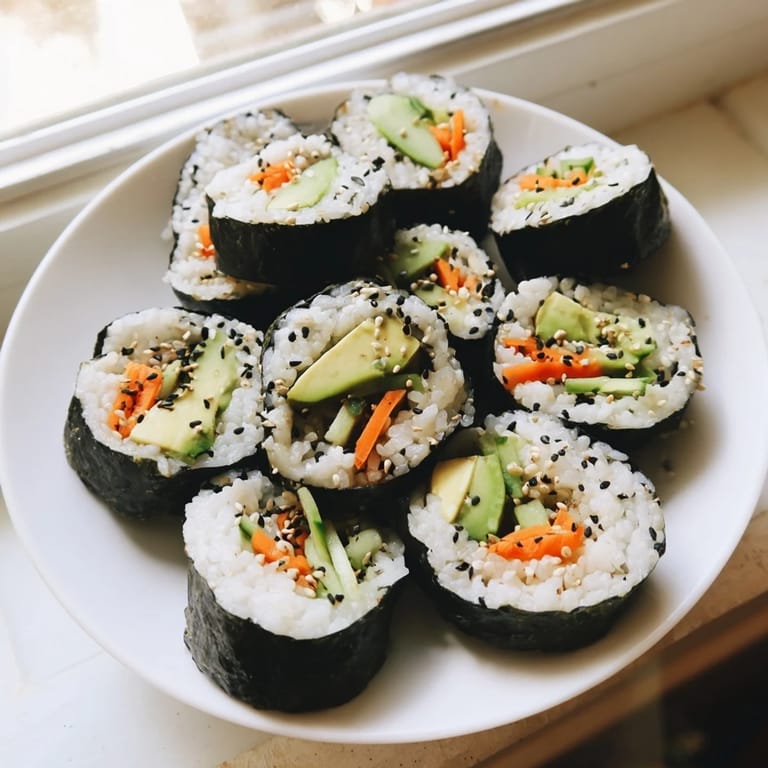
Save My daughter once asked why we bother making sushi at home when we can buy it. I handed her a nori sheet and showed her how to spread the rice. An hour later, sitting at the counter with sticky fingers and a plate of her own imperfect rolls, she understood. Some foods taste better simply because you made them yourself.
Mastering the Rice
The rice makes or breaks sushi. Undercooked grains feel hard. Overcooked rice becomes a sticky paste. The seasoning needs balance. Too much vinegar overpowers. Too little leaves the rice bland. After dozens of batches, I learned that the ratio of vinegar, sugar, and salt in this recipe hits that perfect sweet-tangy note. Trust it. Then focus on technique: fold gently to keep grains intact, fan to cool quickly, and stop mixing when each grain glistens.
Rolling Without Fear
Your first roll might be loose. Your second might be uneven. This is normal. The bamboo mat does most of the work for you. Apply even pressure as you roll forward, like youre rolling a sleeping bag. If the nori tears, press it back together. If the roll seems loose, wrap it in the mat and gently squeeze. Nothing is wasted. Even the ugliest roll tastes the same once sliced.
Make It Your Own
Once you master the basic technique, these rolls become a canvas. Try pickled vegetables for tang. Add fresh herbs like cilantro or shiso. Spread a thin layer of sriracha or vegan mayo inside before rolling. The combinations are endless and each variation teaches you something new about flavor and balance.
- Leftover rolls keep in the refrigerator for a few hours but are best eaten immediately. The nori loses its crisp texture over time.
- If making ahead, cover rolls loosely with plastic rather than wrapping tightly. This traps less moisture and keeps the nori from becoming tough.
- Room temperature sushi is safe to eat for several hours, making these perfect for packed lunches or picnics.
 Save
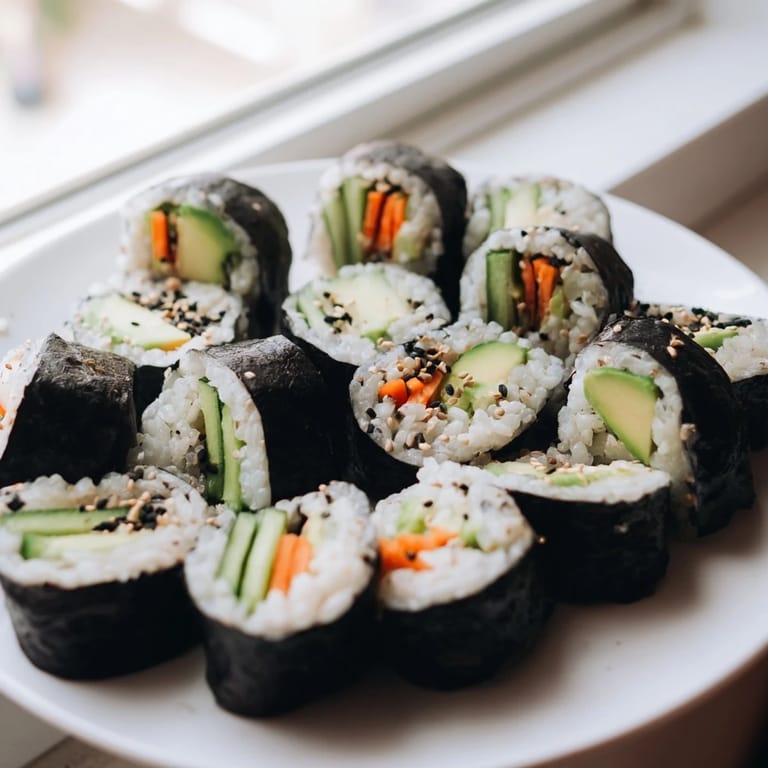
Save Some recipes teach you techniques. Others teach you patience. This one taught me both. Making sushi at home is quietly meditative. The repetition, the focus, the small improvements roll after roll. I hope these simple vegetable rolls bring you the same calm satisfaction theyve brought me.
Recipe FAQs
- → How do I prepare the sushi rice for these rolls?
Rinse sushi rice until water is clear, simmer with water until absorbed, then season with rice vinegar, sugar, and salt. Let it cool before assembly.
- → Can I add other vegetables to these rolls?
Yes, bell pepper, radish, or carrot can be included to add extra crunch and color.
- → What tools are needed to roll the sushi properly?
A bamboo rolling mat lined with plastic wrap helps shape the roll tightly. A sharp, damp knife ensures clean slicing.
- → Is there a gluten-free option for dipping?
Use tamari sauce instead of regular soy sauce to keep it gluten-free.
- → Can this dish be prepared vegan and dairy-free?
Yes, all ingredients are plant-based and free from dairy, making it suitable for vegan diets.