 Save
Save My neighbor Eleni brought this to a garden party one July evening, and I watched everyone circle back to the table at least three times. It wasn't sweet, it wasn't quite a dip, and the look on people's faces when they tasted it was pure confusion followed by delight. She laughed and said her aunt used to make it for name day celebrations in Thessaloniki, serving it in tiny wedges with cold white wine. I begged for the recipe that night, and it's been my secret weapon at gatherings ever since.
The first time I served this at a book club meeting, I didn't say what it was. I just set it on the table with some crackers and waited. The silence that followed the first bites made me nervous until someone finally said, this is genius, what is this? That's when I knew Eleni's aunt was onto something timeless. It became the thing people requested every time we met, and I started making two because one was never enough.
Ingredients
- Plain breadcrumbs: They create a sturdy, savory base that holds up under the creamy filling without getting soggy, and I've learned that panko works beautifully if you pulse it a few times.
- Unsalted butter: Melted and mixed into the crumbs, it binds everything together and adds a rich, toasty flavor once baked.
- Cream cheese: The backbone of the filling, it must be fully softened or you'll end up with lumps no amount of mixing can save.
- Ricotta cheese: This lightens the texture and adds a subtle sweetness that balances the salty olives perfectly.
- Parmesan cheese: Freshly grated is always better, it brings a nutty sharpness that makes the whole thing taste more sophisticated.
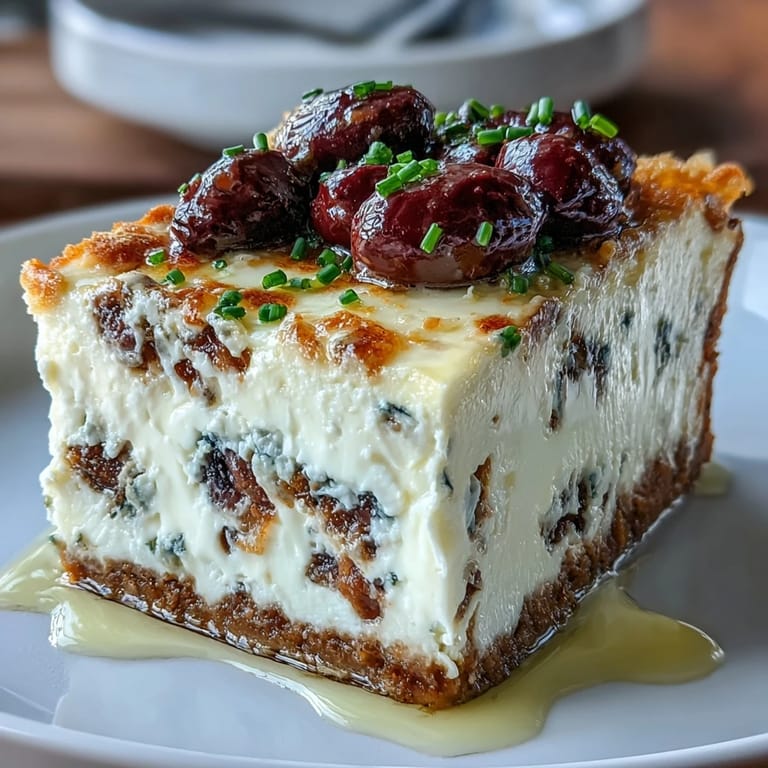
- Kalamata olives: Pitted and chopped, they deliver that briny punch and deep purple color that makes this cheesecake unmistakably Greek.
- Fresh chives: Finely chopped, they add a mild onion flavor and little green flecks that look lovely against the creamy filling.
- Lemon zest: Just half a teaspoon brightens everything and cuts through the richness without making it taste citrusy.
- Dried thyme and oregano: These herbs echo the flavors of the Mediterranean and make your kitchen smell like a taverna by the sea.
- Eggs: They set the filling into that perfect, sliceable texture, so make sure they're at room temperature for easier mixing.
Tired of Takeout? 🥡
Get 10 meals you can make faster than delivery arrives. Seriously.
One email. No spam. Unsubscribe anytime.
Instructions
- Prep the pan and preheat:
- Set your oven to 325°F and lightly grease a 9-inch springform pan, or line the bottom with parchment paper. This step prevents sticking and makes removing slices so much easier later.
- Make the crust:
- Combine breadcrumbs, melted butter, oregano, and pepper in a bowl, then press the mixture firmly into the bottom of your pan. Bake it for 8 minutes until it just starts to turn golden and smells toasty.
- Mix the filling:
- Beat the cream cheese, ricotta, and Parmesan together until completely smooth and creamy. Add the eggs one at a time, beating well after each so the mixture stays silky.
- Fold in the flavors:
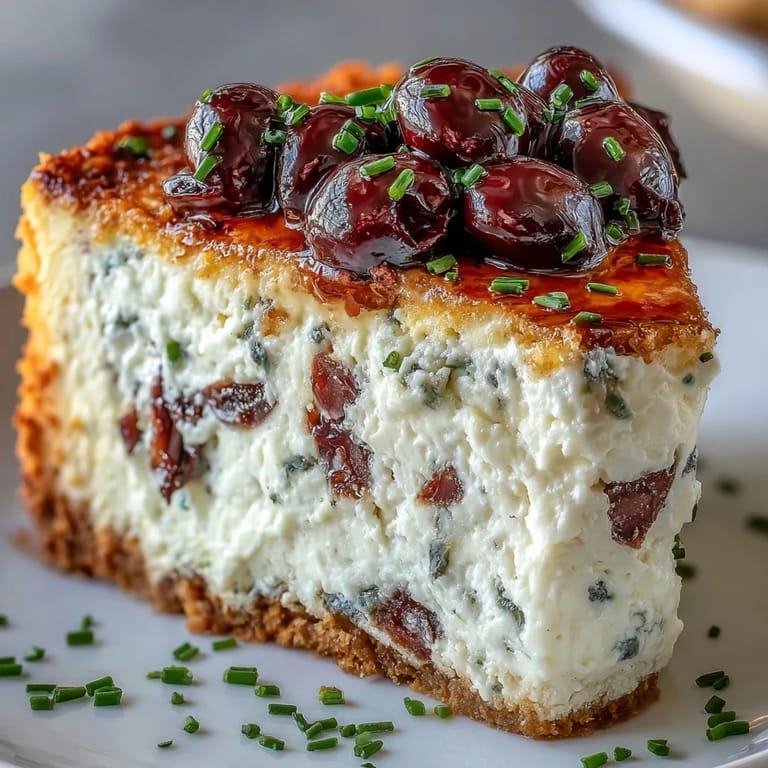
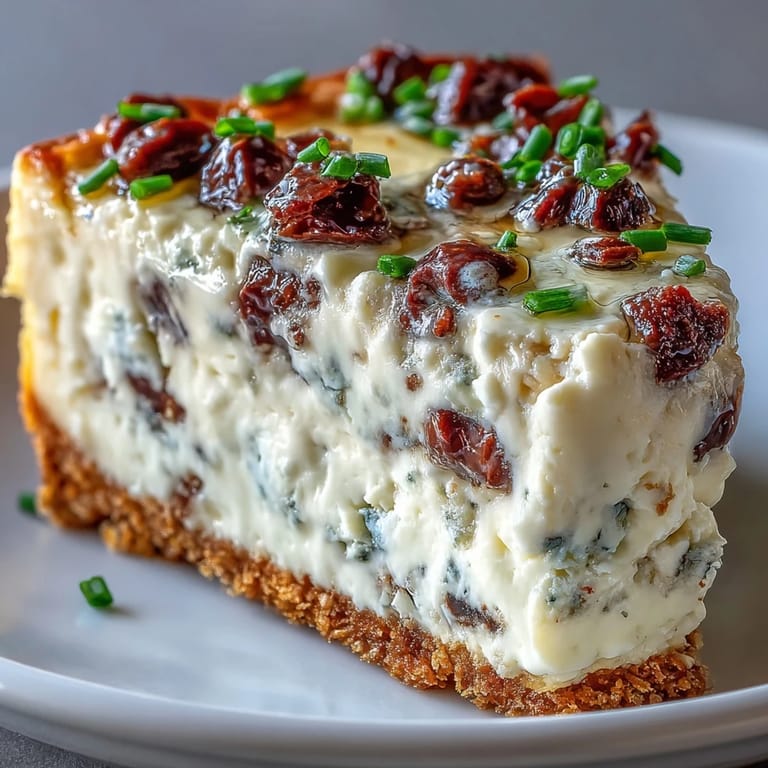
- Stir in thyme, lemon zest, milk, chopped olives, chives, salt, and pepper until everything is evenly distributed. The filling should look flecked with green and dark purple.
- Bake the cheesecake:
- Pour the filling over the cooled crust and smooth the top with a spatula. Bake for 25 to 28 minutes, the center should be set but still have a slight wobble when you gently shake the pan.
- Cool and chill:
- Let it cool completely at room temperature, then refrigerate for at least 2 hours. This firming time is essential for clean slices.
- Garnish and serve:
- Before serving, top with sliced olives, fresh parsley, and a drizzle of your best olive oil. Cut into small wedges or squares and watch them disappear.
 Save
Save One autumn evening, I brought this to a potluck where everything else was pumpkin-spiced or roasted root vegetables. It sat there looking mysterious and a little out of place until someone brave took the first bite. Within minutes, a small crowd formed around it, and I overheard someone say, finally, something that isn't sweet. That night it became clear that savory surprises have their own kind of magic at a table full of predictable comfort food.
Serving Suggestions
I love putting this out with a pile of crisp crackers, toasted baguette slices, or even cucumber rounds for a lighter option. It also pairs beautifully with a chilled white wine or a dry rosé, and I've served it alongside a simple arugula salad dressed with lemon and olive oil for a more complete appetizer spread. Once, I cut it into tiny squares and served it on cocktail picks at a standing reception, and it was gone before the main course even arrived.
Make-Ahead and Storage
This cheesecake actually tastes better the next day after the flavors have had time to settle and meld together in the fridge. You can make it up to two days ahead, just keep it covered tightly with plastic wrap or in an airtight container. I've also frozen individual slices wrapped in parchment and foil, then thawed them in the fridge overnight when unexpected guests showed up, and no one could tell the difference.
Flavor Variations and Swaps
If you want to change things up, try folding in chopped sun-dried tomatoes or roasted red peppers along with the olives for extra sweetness and color. I've also swapped the chives for fresh dill or basil depending on what's growing in my garden, and both were lovely. For a little heat, a pinch of red pepper flakes in the filling adds a subtle kick that surprises in the best way.
- Use gluten-free breadcrumbs if you need to keep it celiac-friendly.
- Try feta cheese in place of some of the ricotta for a tangier, more assertively Greek flavor.
- Add a handful of toasted pine nuts to the crust for extra crunch and richness.
 Save
Save This recipe taught me that not all cheesecakes need to be dessert, and that sometimes the most memorable dishes are the ones that break the rules a little. I hope it becomes your go-to for impressing friends without the stress.
Recipe FAQs
- → Can I make this appetizer ahead of time?
Yes, this dish is ideal for advance preparation. You can make it up to 2 days ahead and store it covered in the refrigerator. Add the garnish just before serving for the freshest presentation.
- → What can I serve alongside this appetizer?
Pair it with crisp crackers, crostini, pita chips, or fresh vegetable crudités. The creamy texture contrasts beautifully with crunchy accompaniments.
- → Can I substitute the Kalamata olives with other varieties?
While Kalamata olives provide a distinctive tangy flavor, you can use other Greek or Mediterranean olives. Avoid canned black olives as they lack the depth of flavor needed for this dish.
- → How do I prevent cracks in the cheesecake?
Avoid overmixing the filling and don't overbake. The center should still have a slight wobble when you remove it from the oven. Cooling gradually also helps prevent cracking.
- → Is this suitable for vegetarians?
Yes, this appetizer is completely vegetarian, containing only dairy products, eggs, olives, and herbs. Ensure your Parmesan cheese is vegetarian-friendly if needed.
- → How long will leftovers keep?
Store covered in the refrigerator for up to 4 days. The flavors often deepen after a day or two, making leftovers even more delicious.