 Save
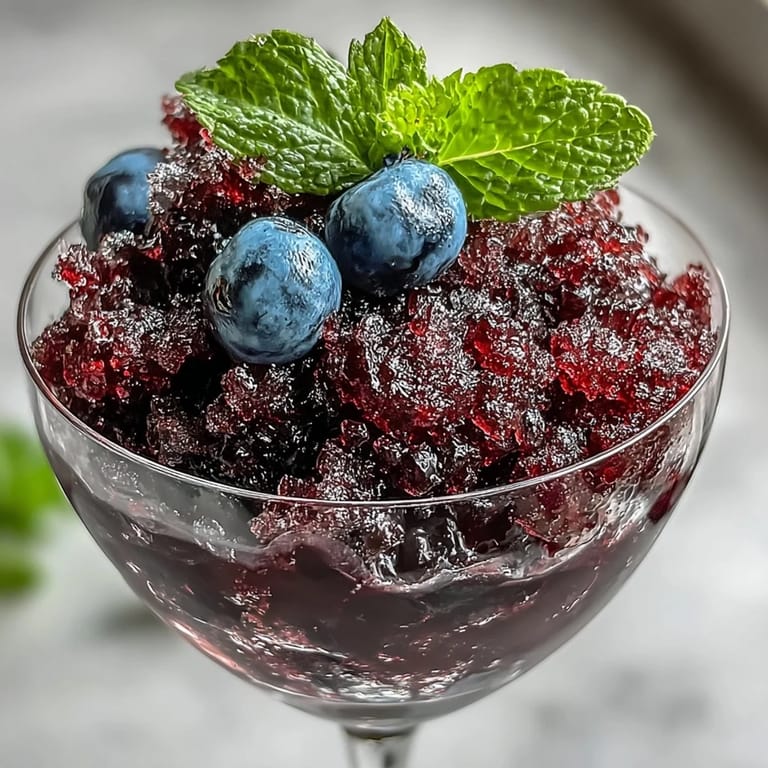
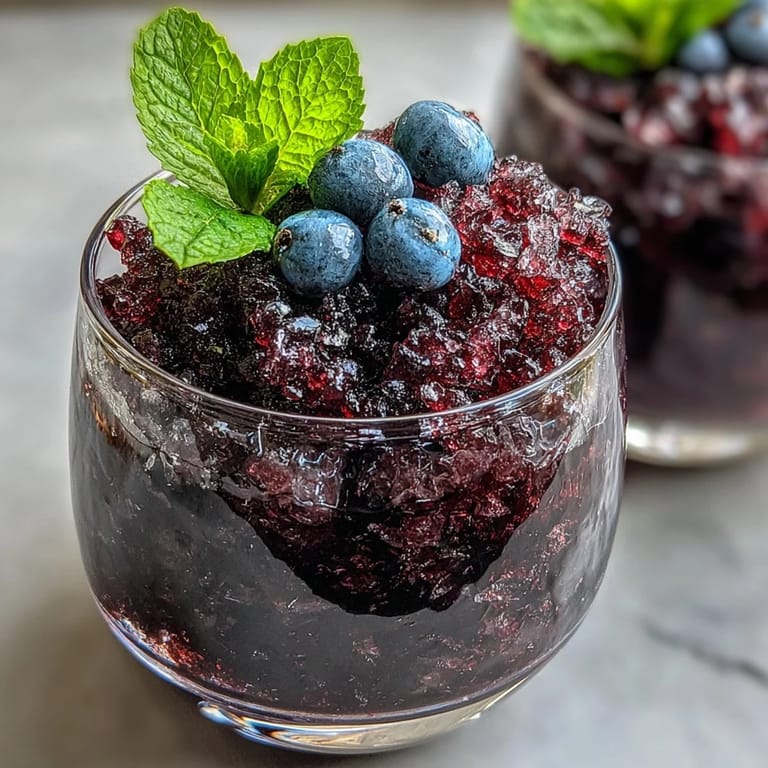
Save Black Currant Granita is a refreshing, crystalline frozen dessert bursting with the bold, tangy flavor of black currants. This vibrant purple treat is the perfect choice for sweltering summer days or as a sophisticated palate-cleansing finale to a multi-course meal.
Save Originating from Sicily, granita relies on a specific freezing technique to create its signature grainy, snow-like consistency. Unlike sorbet which is churned, this granita is manually fluffed to ensure every spoonful is light, airy, and intensely flavorful.
Ingredients
Tired of Takeout? 🥡
Get 10 meals you can make faster than delivery arrives. Seriously.
One email. No spam. Unsubscribe anytime.
- 500 g (about 3 cups) fresh or frozen black currants
- 150 g (3/4 cup) granulated sugar
- 400 ml (1 2/3 cups) water
- 1 tablespoon freshly squeezed lemon juice
Instructions
- Step 1
- Rinse the black currants thoroughly. If using fresh currants, remove stems.
- Step 2
- In a medium saucepan, combine the black currants, sugar, and water. Bring to a simmer over medium heat. Stir occasionally until the sugar dissolves and the currants burst, about 10 minutes.
- Step 3
- Remove from heat and let cool slightly.
- Step 4
- Puree the mixture using a blender or immersion blender until smooth.
- Step 5
- Strain the puree through a fine-mesh sieve into a large bowl, pressing to extract as much juice as possible. Discard seeds and skins.
- Step 6
- Stir in the lemon juice.
- Step 7
- Pour the strained mixture into a shallow metal baking dish.
- Step 8
- Place in the freezer. After 45 minutes, use a fork to scrape and break up any icy edges. Return to the freezer.
- Step 9
- Every 30–45 minutes, scrape and fluff the mixture with a fork until the granita is fully frozen and fluffy, about 4 hours total.
- Step 10
- Serve immediately in chilled glasses or bowls.
Zusatztipps für die Zubereitung
Using a shallow metal baking dish is essential as it conducts cold more efficiently, helping the mixture freeze faster and more evenly. Remember to set a timer for the scraping intervals; consistent agitation with the fork is what creates the fluffy, crystalline structure rather than a solid block of ice.
Varianten und Anpassungen
For an adult twist, you can stir in 2 tablespoons of crème de cassis or black currant liqueur before freezing. This not only enhances the berry flavor but the alcohol also slightly softens the ice crystals, creating a unique texture.
Serviervorschläge
To present this dessert beautifully, garnish each serving with a fresh mint sprig or a few whole black currants. Serving the granita in pre-chilled glasses helps prevent it from melting too quickly as you enjoy it.
 Save
Save With only 112 calories per serving, this Black Currant Granita is a guilt-free way to indulge in a bold, fruity dessert that is as beautiful to look at as it is delicious to eat.
Recipe FAQs
- → What makes granita different from sorbet or ice cream?
Granita has a coarser, crystalline texture achieved by scraping the freezing mixture periodically with a fork. Unlike ice cream, it contains no dairy, and unlike sorbet, it's not churned, giving it that signature flaky, snow-like consistency.
- → Can I use frozen black currants instead of fresh?
Absolutely. Frozen currants work just as well since they'll be cooked and pureed anyway. There's no need to thaw them first—simply add them directly to the saucepan with the sugar and water.
- → How long can I store homemade granita in the freezer?
You can make this up to 2 days in advance. Store it covered in the freezer, and give it a quick fluff with a fork before serving to restore the crystalline texture.
- → Why strain the mixture through a sieve?
Straining removes the skins and seeds from black currants, ensuring a smooth, silky texture. Press firmly against the sieve to extract all the flavorful juice and maximize yield.
- → What's the purpose of adding lemon juice?
Lemon juice enhances the natural tartness of black currants while brightening their deep flavor. It also helps balance the sweetness and adds a fresh, clean finish to each bite.
- → Can I substitute the granulated sugar with honey or maple syrup?
While possible, liquid sweeteners may affect the freezing texture. Granulated sugar creates the ideal crystalline structure. If substituting, you may need to adjust freezing times and expect slightly different results.