 Save
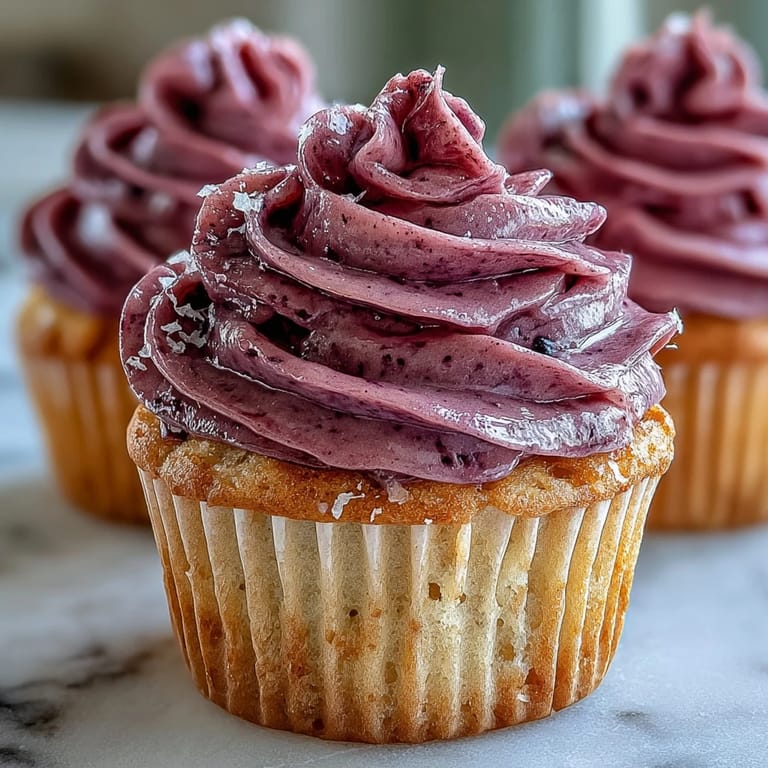
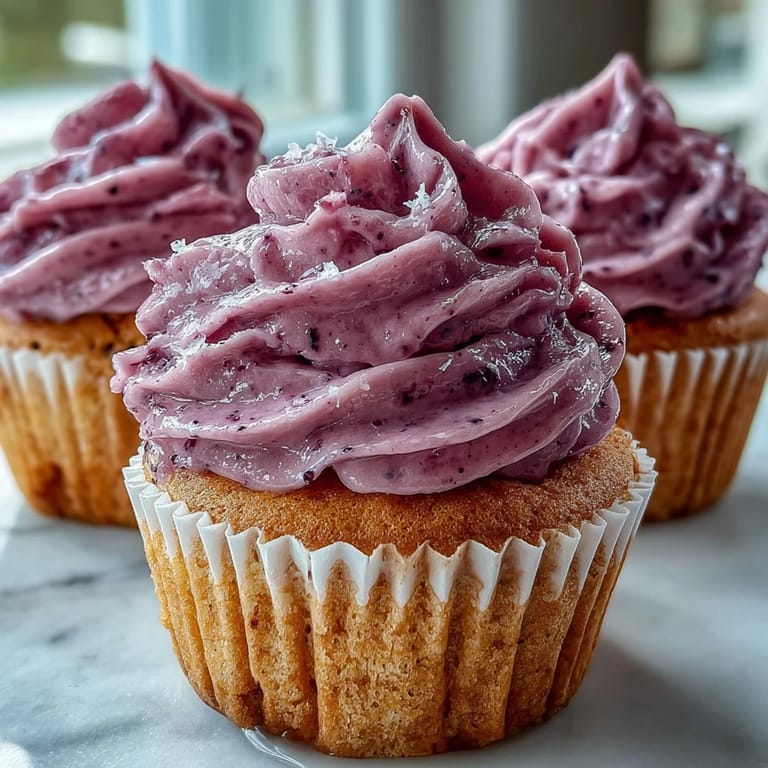
Save There was a moment at a friend's dinner party when someone mentioned they'd never had an olive oil dessert before, and I found myself defending this delicate category with maybe too much passion. That evening sparked a mission to create something that would change their mind—something sophisticated enough to serve at tea, yet approachable enough that people wouldn't feel like they were eating health food. These cupcakes arrived on the scene as my answer, with their tender crumb and that unexpected black currant frosting that tastes like autumn wrapped in cream cheese.
I made these for my partner's book club last spring, and watching the group go quiet mid-conversation to focus on eating told me everything I needed to know. Someone asked if they were from a fancy bakery, and I'll admit to feeling a small burst of pride before confessing the truth. That's when I knew this recipe had earned its place in regular rotation.
Ingredients
- All-purpose flour: This is your structural foundation, and weighing it makes a real difference in consistency—scooping straight from the bag compresses it and can throw off your ratios.
- Baking powder and baking soda: Together they create lift without heaviness, which is exactly what you want when olive oil is your fat base.
- Extra virgin olive oil: Use something you actually enjoy tasting, not the cheapest bottle on the shelf—this ingredient gets center stage, so choose accordingly.
- Eggs at room temperature: This matters more than you'd think because cold eggs won't emulsify smoothly with the oil, leaving you with a grainy batter.
- Whole milk: The fat content balances the olive oil's intensity and keeps the crumb tender without being dense.
- Lemon zest: Optional but genuinely worth it—those bright notes play beautifully against the earthiness of the olive oil and tartness of the currants.
- Black currant jam: The soul of the frosting; if you can't find it, blackberry works but currant has this sophisticated pucker that feels intentional.
- Cream cheese: Room temperature is non-negotiable here, or you'll end up with lumpy frosting and regret.
Tired of Takeout? 🥡
Get 10 meals you can make faster than delivery arrives. Seriously.
One email. No spam. Unsubscribe anytime.
Instructions
- Get your mise en place ready:
- Preheat to 350°F and line your muffin tin with paper liners—this is the moment to also bring your eggs and milk to room temperature if you haven't already. Having everything measured and within arm's reach makes the mixing process feel calm instead of frantic.
- Combine your dry ingredients:
- Whisk together the flour, baking powder, baking soda, and salt in a medium bowl, making sure to break up any lumps in the flour that might be hiding. This prevents dense pockets in your finished cupcakes.
- Create a pale and fluffy base:
- Beat the eggs with sugar until the mixture looks almost mousse-like and noticeably lighter in color—this takes about 2 minutes with an electric mixer. You're incorporating air here, which matters.
- Add the olive oil slowly:
- This step requires patience; drizzle the oil in gradually while whisking, which allows it to emulsify properly instead of creating an oily, separated batter. You'll see the mixture transform into something silky.
- Alternate the wet and dry:
- Add milk, vanilla, and zest first, then fold the dry ingredients in until just combined—overmixing develops gluten and makes cupcakes tough, which defeats the whole purpose here. Think of folding as a gentle suggestion, not aggressive stirring.
- Fill and bake:
- Divide batter evenly so all cupcakes bake at the same rate, filling each liner about two-thirds full, then bake for 16-18 minutes until a toothpick comes out clean. They'll feel delicate when warm but gain structure as they cool.
- Build the frosting:
- Beat softened butter and cream cheese until smooth, then add powdered sugar gradually so you don't create a powdered-sugar cloud in your kitchen. Once fluffy, fold in the black currant jam, lemon juice, and salt until the color is evenly distributed.
- Frost with confidence:
- Once cupcakes are completely cool, spread the frosting generously using an offset spatula or the back of a spoon. A garnish of fresh black currants or a light dusting of lemon zest makes them look intentional.
 Save
Save The most unexpected gift this recipe gave me was watching my skeptical brother take a second bite and actually say the words 'I can't believe this is olive oil'—that conversation alone justified every failed batch I'd made perfecting the formula. These cupcakes somehow made an ingredient he'd only ever drizzled on salads feel like it belonged in dessert.
The Olive Oil Advantage
Olive oil as a baking fat is less forgiving than butter, but that's actually what makes it interesting. It doesn't cream with sugar the way butter does, so your mixing method has to shift—you're emulsifying rather than aerating in the traditional sense. The payoff is a moist, tender crumb that stays soft for days without feeling greasy, and a subtle flavor complexity that makes people pause and actually taste what they're eating instead of just going through the motions.
Black Currant Magic
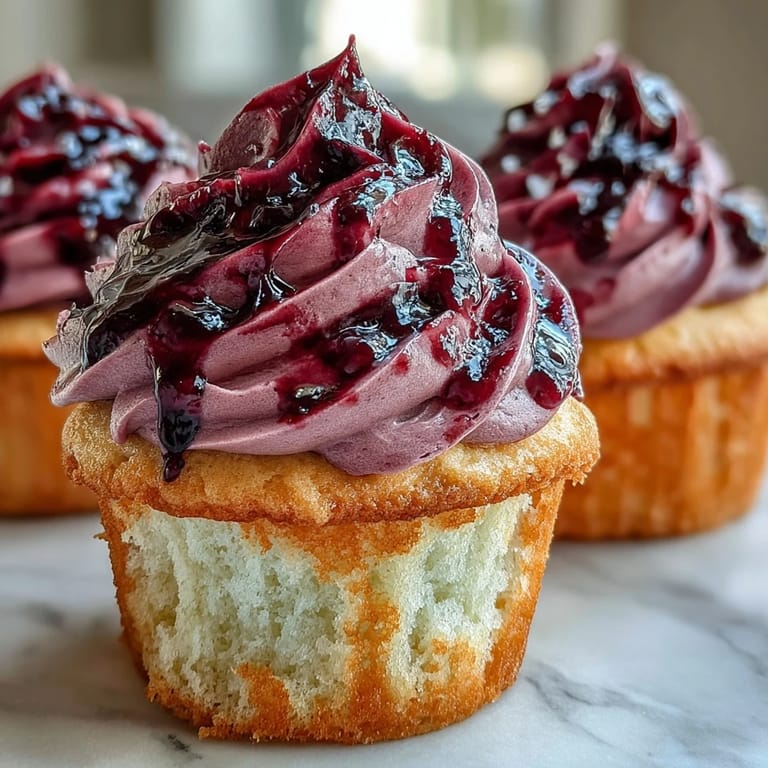
Black currant is one of those ingredients that feels European and slightly luxurious without being pretentious or impossible to find. If you've only ever seen blackberry jam at the grocery store, currant might feel exotic, but it's honestly worth the small hunt—it has this tart, slightly floral quality that brightens the richness of cream cheese frosting in a way other berries don't quite manage. The tartness also cuts through the sweetness of powdered sugar, creating a frosting that actually tastes sophisticated rather than like a sweet delivery system.
Serving and Storage Wisdom
These cupcakes taste best when served at room temperature, when the frosting has set slightly but the cake still feels tender. They keep beautifully in an airtight container for about three days, making them excellent for baking ahead before a gathering.
- Pair them with Earl Grey tea or an off-dry sparkling wine if you want to feel fancy on a regular Tuesday.
- If black currants aren't available locally, blackberry or raspberry jam works as a reliable substitute, though currant's tartness is genuinely worth seeking out.
- These freeze well unfrosted for up to a month, so you can bake and frost just before serving if that fits your schedule better.
 Save
Save These cupcakes proved that sometimes the most elegant recipes come from the simplest idea—combining an ingredient you love with a flavor pairing that makes sense. Bake them, watch people's faces light up, and enjoy being the person who brought something genuinely special to the table.
Recipe FAQs
- → What does olive oil add to cupcakes?
Extra virgin olive oil creates exceptionally moist cupcakes with a tender crumb that stays fresh longer than butter-based versions. It adds subtle fruity notes that complement the black currant frosting beautifully.
- → Can I substitute the black currant jam?
Yes—blackberry or raspberry jam work well as substitutes, though the flavor profile will shift slightly. Black currant offers a distinctive tart sophistication, but other dark berry jams provide similar color and fruity sweetness.
- → How should I store these cupcakes?
Store frosted cupcakes in an airtight container at room temperature for up to 2 days. For longer storage, refrigerate up to 5 days, though the olive oil keeps them remarkably moist. Bring to room temperature before serving for the best texture.
- → What type of olive oil works best?
Use a mild or light extra virgin olive oil for subtle flavor. Robust, peppery oils can overpower the delicate cupcake base. The oil should be fresh and high-quality, but not intensely flavored.
- → Can I make these as a full cake?
Absolutely—pour the batter into two 8-inch round cake pans and bake for 25-30 minutes. The frosting quantity works beautifully for layering between cakes and covering the exterior. Adjust baking time until a toothpick comes clean.
- → Why is room temperature important?
Room temperature eggs, milk, and softened butter emulsify properly, creating a smooth, uniform batter. Cold ingredients can cause the olive oil to seize or separate, affecting texture. Proper temperatures ensure the cupcakes rise evenly and achieve that signature moist crumb.