 Save
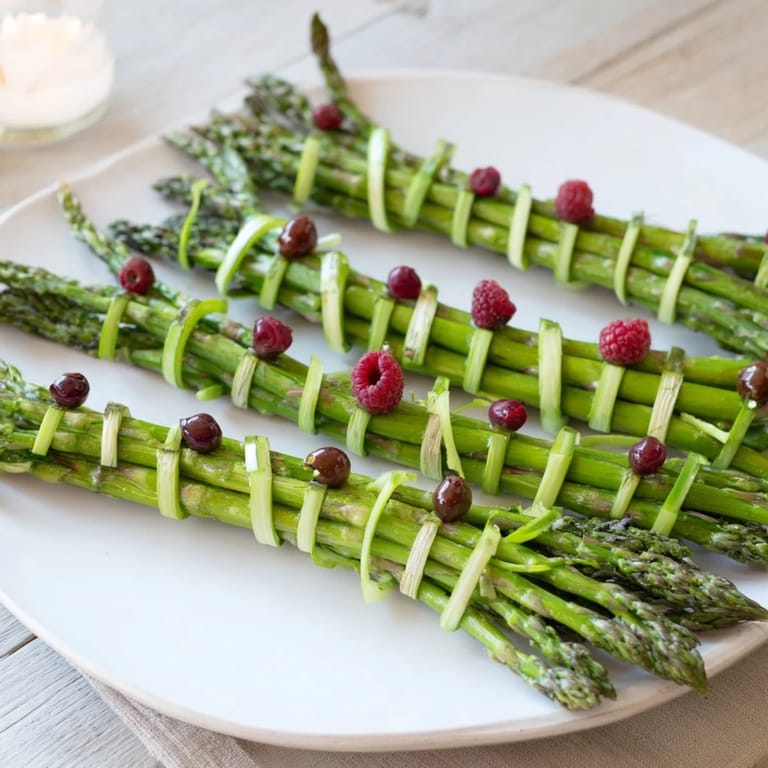
Save I discovered this dish by accident while staring at a farmers market haul on a Sunday morning, struck by how the asparagus and chives seemed to call out for something architectural. There's something about spring produce that makes you want to build with it rather than simply plate it. The moment I wove those first stalks together and nestled berries into the gaps, I knew I'd stumbled onto something that felt both playful and elegant—the kind of dish that makes people pause before they eat it.
I made this for my sister's spring garden party last year, and watching her face light up when she saw the finished platter—that mix of surprise and "how did you do that?"—made all the careful weaving worth it. The lattice caught the afternoon sunlight in a way that made it look almost stained glass, and someone actually asked if it was too pretty to eat. (It wasn't. It disappeared quickly.)
Ingredients
- Asparagus stalks (16 medium): Their slight natural curve is your friend here—it helps them hold the weave without fighting you, and blanching just enough to soften them makes the lattice forgiving rather than brittle.
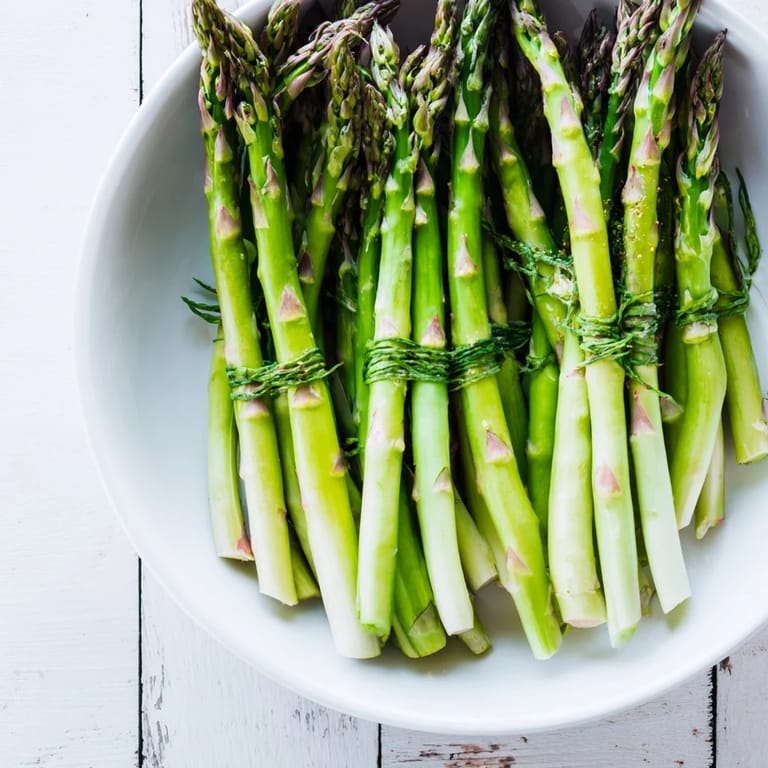
- Fresh chives (16 long stems): These are your edible grid tape, binding everything together with a gentle herbaceous note that whispers rather than shouts.
- Mixed berries (2 cups total: blueberries, raspberries, strawberries, golden berries): The tartness and sweetness balance the earthy asparagus, and their jewel tones against green create the visual magic.
- Extra virgin olive oil (1 tablespoon): A quality oil matters here because there's nowhere to hide—it's one of your few seasonings, so let it shine.
- Flaky sea salt and freshly ground black pepper: Applied just before serving, they punch through the delicate flavors without overwhelming them.
Tired of Takeout? 🥡
Get 10 meals you can make faster than delivery arrives. Seriously.
One email. No spam. Unsubscribe anytime.
Instructions
- Blanch the asparagus until bright and tender:
- Boil salted water, add asparagus for just 1-2 minutes—you're looking for that moment when they shift from raw green to vivid emerald and bend slightly without snapping. Ice bath immediately; it stops the cooking and keeps them crisp.
- Soften the chives with heat:
- A quick 5-second dip in hot water makes them pliable enough to tie without cracking, then ice water locks in their flexibility and color.
- Build your lattice foundation:
- Lay 8 asparagus stalks parallel on your platter, leaving even space between them—think of them as the warp on a loom. This grid needs room to breathe so berries can nestle properly.
- Weave the perpendicular layer:
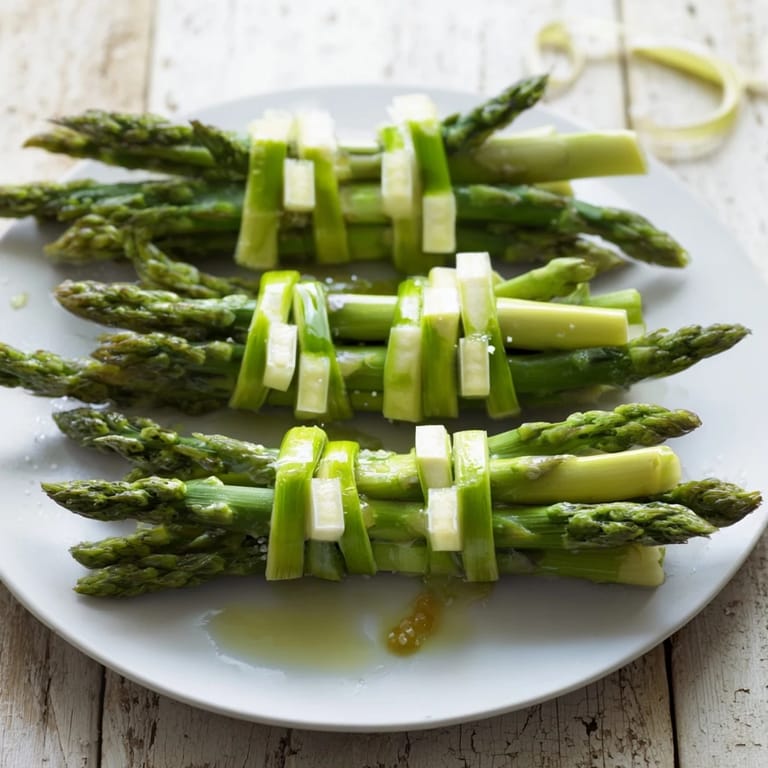
- Take your remaining 8 stalks and weave them perpendicularly, going over one stalk, under the next, like you're actually weaving fabric. The over-under pattern locks the grid together visually.
- Secure with chive ties:
- Gently wrap a chive stem around each intersection point where asparagus crosses, tying it just tight enough to hold without crushing the stalks underneath.
- Fill and finish:
- Distribute berries evenly across the lattice squares, mixing colors so no one fruit dominates—this is as much about visual balance as flavor. Drizzle with olive oil, dust with sea salt, crack black pepper over top just before serving so it doesn't absorb moisture.
 Save
Save What struck me most was how this dish became a meditation on patience and precision—the kind of cooking where small adjustments in timing and tension matter, but not in a way that feels stressful. It taught me that constraint can be creative; having only asparagus, chives, and berries to work with made the arrangement feel thoughtful rather than overwhelming.
Why This Works as an Appetizer
Spring appetizers need to feel light and forward-looking, and this lattice does exactly that—it's bright, it's vegetable-forward, and it doesn't weigh you down before the main course arrives. The structure also means your guests get a composed bite every time, rather than a random scatter of ingredients. There's something satisfying about eating something that's been intentionally built.
Adapting for Your Fruit Bowl
The beauty of this dish is that it adapts to whatever berries and stone fruits are at their peak when you make it. In early summer, cherries halved lengthwise are stunning and add a luxurious firmness. Blackberries work beautifully if raspberries aren't available, and pomegranate seeds add a jeweled look and a tart pop. The key is choosing fruits that are small and firm enough to sit stably in the lattice squares without rolling around.
Seasoning and Final Flourishes
I learned the hard way that seasoning happens at the very end, not while assembling—moisture from salt can make berries weep and turn the platter soggy looking. A whisper of good olive oil, flaky sea salt that you can actually taste rather than feel, and a grind of pepper make all the difference. If you want to push it further without overshadowing the delicate flavors, a tiny drizzle of aged balsamic or a scatter of fresh mint leaves adds another layer of intrigue.
- Always taste the olive oil first; if it's peppery or grassy, it'll announce itself, which might be exactly what you want.
- Use a pepper mill for freshly ground black pepper; pre-ground loses its bite and can taste stale.
- Serve this chilled or at room temperature, never warm—the asparagus texture is what makes this special.
 Save
Save This dish reminds me why I love cooking for people—it's a small act of architectural care that says "I thought about you," without requiring hours in the kitchen. Serve it with confidence, because the lattice is the message.
Recipe FAQs
- → How do I soften the chives for the lattice?
Dip the chive stems in hot water for about 5 seconds, then cool them quickly in an ice bath to make them pliable without losing freshness.
- → What is the best way to blanch asparagus for this dish?
Boil asparagus stalks for 1-2 minutes until bright green and just tender, then transfer immediately to an ice bath to stop cooking and preserve texture.
- → Can I substitute the listed fruits with others?
Yes, small firm fruits like blackberries, red currants, or pomegranate seeds work well as alternatives to create similar bursts of sweetness.
- → How do I keep the lattice stable and intact?
Gently tie chive stems around the intersections of the asparagus grid to secure the lattice without damaging the delicate vegetables.
- → What dressing complements the assembled lattice best?
A simple drizzle of extra virgin olive oil combined with flaky sea salt and freshly ground black pepper enhances the natural flavors without overpowering them.
- → Can this dish be prepared ahead of time?
It’s best assembled shortly before serving to maintain the crispness of the asparagus and freshness of the fruit, but blanching and prepping components ahead can save time.