 Save
Save There's something about October that makes me crave butternut squash soup. I was rummaging through my vegetable drawer one crisp afternoon, staring at this enormous golden squash a farmer's market vendor had practically insisted I take, when I realized I had no real plan for it. I chopped it up, roasted it with olive oil and salt, and the kitchen filled with this warm, honeyed smell that made the whole day feel intentional. That first spoonful—silky, nutty, with just a whisper of sage—reminded me why simple food done well stays with you.
I made this for my mom last November when she came to visit, and she sat at the kitchen counter with a bowl, just quietly eating. Halfway through she asked for the recipe, and I realized I'd been winging it—measuring nothing, tasting as I went. She made it the next week and called to tell me it was the first thing she'd cooked in months that made her feel settled. That's when I understood this recipe wasn't just about butternut squash.
Ingredients
- 1 large butternut squash (about 2.5 lbs), peeled, seeded, and cubed: This is the star. Choose one that feels heavy for its size—that means more flesh and less water. Roasting brings out its natural sweetness, so you don't need added sugar.
- 1 medium yellow onion, chopped: The base note that makes everything taste deeper and more rounded. Don't skip the sautéing step; it mellows the sharpness.
- 2 cloves garlic, minced: Just enough to add complexity without announcing itself. Fresh is always better here.
- 4 cups vegetable broth: This is your liquid canvas. Use good broth—it makes a noticeable difference in the final flavor.
- 2 tbsp olive oil: Split between roasting the squash and sautéing the aromatics. Good olive oil matters.
- 1 tsp sea salt, 1/4 tsp ground black pepper: Season in layers, not all at once. You'll taste and adjust at the end.
- 1/2 tsp ground nutmeg, 1 tsp dried sage: These spices are the soul of this soup. If you have fresh sage, use it—three times the amount, roughly chopped.
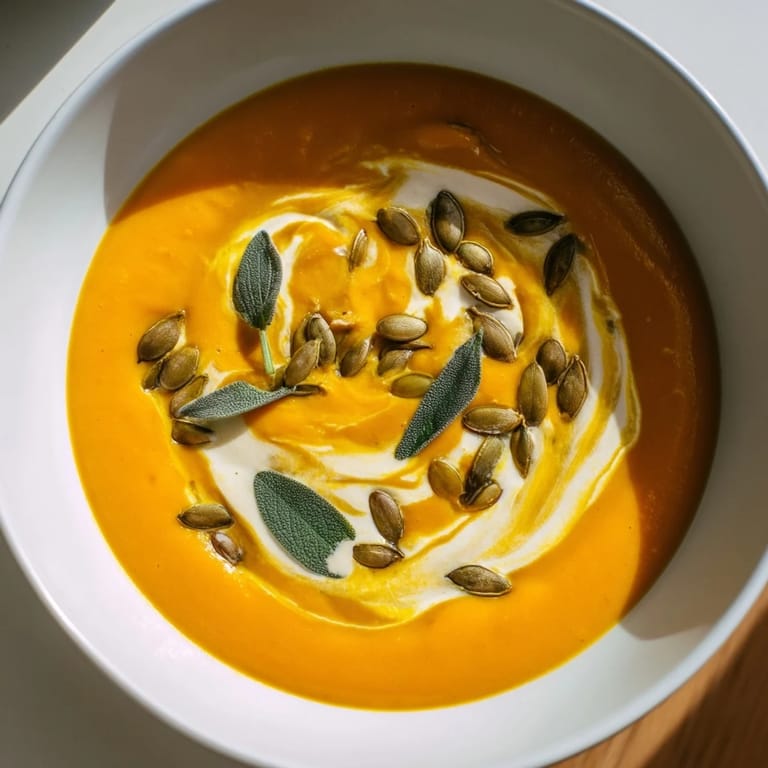
- 1/4 cup heavy cream or coconut milk, roasted pumpkin seeds, fresh sage leaves: For garnish. These finish the dish, but they're truly optional if you're in a hurry.
Tired of Takeout? 🥡
Get 10 meals you can make faster than delivery arrives. Seriously.
One email. No spam. Unsubscribe anytime.
Instructions
- Get your oven ready:
- Preheat to 400°F. This temperature is hot enough to caramelize the squash's edges without burning them.
- Roast the squash:
- Toss your cubed squash with 1 tbsp olive oil, 1/2 tsp salt, and a pinch of pepper. Spread it on a parchment-lined baking sheet in a single layer and roast for 30 to 35 minutes, stirring halfway through. You want the edges to turn golden and a little crispy—that's where the flavor deepens. It should smell incredible by the end.
- Start the aromatics:
- While the squash roasts, heat the remaining 1 tbsp olive oil in a large pot over medium heat. Add your chopped onion and cook for 4 to 5 minutes, stirring occasionally, until it turns translucent and soft. Then add the minced garlic and cook for just 1 minute more—garlic burns quickly, so don't walk away.
- Build the base:
- Pour the roasted squash into the pot with the onions and garlic. Add the sage and nutmeg—you'll notice the herbs wake up immediately, releasing their aroma. Pour in the vegetable broth, bring everything to a boil, then lower the heat and let it simmer gently for about 10 minutes. This gives the flavors time to get to know each other.
- Make it smooth:
- Remove from heat and blend until silky. If you have an immersion blender, use it right in the pot—less cleanup. If you're using a regular blender, work in batches and be careful with the hot soup. You want it completely smooth, no chunks.
- Taste and adjust:
- This is the step that separates good soup from great soup. Add a pinch more salt or pepper if it needs it. Sometimes I add just a touch more nutmeg if it feels like something's missing.
- Serve it:
- Ladle into bowls and swirl a little cream or coconut milk on top. Scatter some roasted pumpkin seeds over and lay a fresh sage leaf in the middle if you're feeling fancy. You don't have to—a bowl of this soup is beautiful on its own.
 Save
Save There was a night in late winter when I made this soup on a whim, and three neighbors stopped by unexpectedly. I served it with crusty bread, and we sat in my kitchen for hours talking about nothing important. That's when I realized this recipe is as much about what happens around the table as it is about what's in the pot.
The Secret of Roasting
Roasting is where all the magic happens in this soup. When you roast squash, the heat breaks down the cell walls and concentrates the natural sugars, creating those caramelized edges that taste almost sweet and nutty. Boiling it, by comparison, makes it waterlogged and one-dimensional. I learned this the hard way the first time I made squash soup—I tried to rush it by boiling everything, and the result was thin and forgettable. Roasting takes patience, but it's worth every minute.
Variations That Work
Once you understand this recipe's bones, you can play with it. Some mornings I add a pinch of cayenne pepper for heat. Other times I've stirred in crispy sage leaves or toasted breadcrumbs for texture. I've even made it with coconut milk and a touch of ginger when I wanted something with an Asian lean. The beauty of this soup is that it's a framework, not a rigid rule.
Pairing and Serving
This soup brings out the best in simple foods. A thick slice of crusty bread rubbed with garlic and toasted until it's golden is perfect alongside. If you're having wine, a crisp white like Sauvignon Blanc cuts through the richness beautifully. I've also made it the centerpiece of a quiet lunch with nothing but a green salad and good cheese. It's the kind of dish that makes whatever you serve with it taste better.
- Serve it hot, but not so hot that you burn your tongue—let it cool for just a minute.
- If you're making it ahead, refrigerate it in an airtight container for up to 5 days, and reheat gently on the stove.
- A swirl of good olive oil or a dollop of Greek yogurt works just as well as cream if that's what you have.
 Save
Save Butternut squash soup is comfort without pretense. It's the kind of recipe that asks very little of you but gives back warmth, softness, and the feeling that you've taken care of yourself or someone you love.
Recipe FAQs
- → What is the best way to roast butternut squash for depth of flavor?
Roast cubed squash tossed in olive oil, salt, and pepper at 400°F until tender and caramelized, about 30-35 minutes, turning halfway.
- → How can I achieve a smooth and creamy texture?
Use an immersion blender or countertop blender to puree the cooked ingredients until silky and uniform.
- → What herbs enhance the flavor in this dish?
Dried or fresh sage pairs beautifully with nutmeg to add warm, aromatic notes to the squash.
- → Can I substitute any ingredients for dietary preferences?
For a dairy-free option, use coconut milk instead of heavy cream when swirling at the end.
- → What garnishes complement this preparation?
Roasted pumpkin seeds and fresh sage leaves add texture and fresh herbal aromas to the final presentation.