 Save
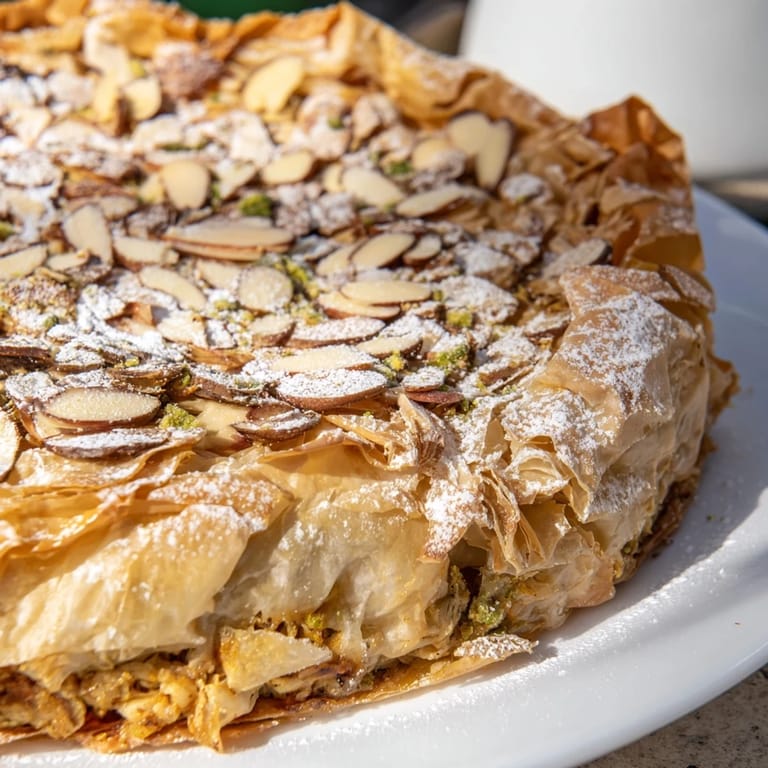
Save The first time I truly understood what made Moroccan pastilla special was watching my neighbor's grandmother fold the phyllo sheets with such confident grace that her hands barely seemed to move. She'd been making this pie for sixty years, and I was there with my notebook, trying to catch every step. The buttery layers gave way under her touch, and when it came out of the oven—golden, impossibly crisp—I realized this wasn't just dinner. It was a bridge between worlds, sweet and savory colliding in the most unexpected, perfect way.
I made this for a dinner party thinking I'd impress everyone with technique, but what really happened was my kitchen filled with the most intoxicating smell of ginger, saffron, and toasting almonds. My friend who grew up in Marrakech took one bite and went quiet—the kind of quiet that means something moved inside her. That's when I understood the real magic wasn't the fancy folding or the restaurant-worthy presentation. It was that I'd somehow managed to wrap up a piece of her home in phyllo dough.
Ingredients
- Bone-in chicken thighs: These hold flavor better than breast meat and stay impossibly tender through the braising; they're the foundation of everything that follows.
- Onions and garlic: Finely chopped so they dissolve into the sauce and become inseparable from the meat itself.
- Ginger, cinnamon, turmeric, and black pepper: This isn't just seasoning—it's the whole philosophy of the dish, warming and layered.
- Saffron threads: If you can find them, soak them in warm water first; they'll perfume the entire filling with gold.
- Chicken stock: Medium richness is key—you want something to hold the spices but not overpower them.
- Toasted almonds and fresh herbs: Toast the almonds yourself; pre-toasted ones taste like cardboard by comparison, and the parsley and cilantro are what make it taste alive.
- Phyllo pastry: Keep it in the fridge, not the freezer, and let it come to room temperature; cold phyllo tears, and rushed phyllo shatters unevenly.
- Powdered sugar and cinnamon finish: This seems counterintuitive at first, but it's the signature move that makes people pause and say, "Wait, what is this?"
Tired of Takeout? 🥡
Get 10 meals you can make faster than delivery arrives. Seriously.
One email. No spam. Unsubscribe anytime.
Instructions
- Build the spice base:
- Heat olive oil in your Dutch oven until it shimmers. Add the onions and garlic and let them become completely soft and golden—this takes patience, but it's where all the depth comes from. The kitchen should smell warm and inviting.
- Sear and season the chicken:
- Place the chicken thighs skin-side down directly into the aromatics. Now add every spice at once—ginger, cinnamon, turmeric, black pepper, nutmeg, saffron, and salt. Let them toast slightly before turning the chicken; this blooms the spices and prevents them from tasting harsh or powdery.
- Braise low and slow:
- Pour in the stock, cover, and let it bubble gently for 30 to 35 minutes. You're not rushing this. The chicken will give everything its moisture and richness, and the spices will deepen.
- Finish the meat filling:
- Once the chicken shreds easily, remove it from the pot and let the sauce reduce until it clings to a spoon. Fold in the shredded meat, then the almonds and herbs while still slightly warm. Taste it now—this is where you season further if you need to.
- Make silky scrambled eggs:
- In a separate pan, melt butter gently, beat your eggs with just a whisper of salt, and pour them in. Stir slowly and constantly until they're barely set but still soft and folded-looking—they'll continue cooking with the residual heat. This takes three to four minutes, tops.
- Fold in the eggs:
- Once the meat mixture has cooled slightly, fold in the scrambled eggs gently. You want ribbons of egg throughout, not an omelet texture.
- Build the pastry shell:
- Brush your round baking dish with melted butter—corners and bottom first. Layer five phyllo sheets, brushing butter between each one and letting them overhang the edges like they're meant to spill over.
- Fill and fold the top:
- Spread your filling evenly across the phyllo base. Fold the overhanging edges up and over it like they're tucking a baby in. Now layer four more phyllo sheets on top, brushing each with butter. The final sheet goes on unbrushed—it'll crisp up beautifully in the oven.
- Bake until golden:
- Into a 375°F oven for 35 to 40 minutes. You're looking for the phyllo to turn deep golden brown and sound papery when you tap it. Let it rest for ten minutes—this sets everything and makes it easier to cut.
- Dust and serve:
- Right before serving, dust the whole top generously with powdered sugar, then a heavy hand of cinnamon. The sweetness will surprise people, and that's exactly the point.
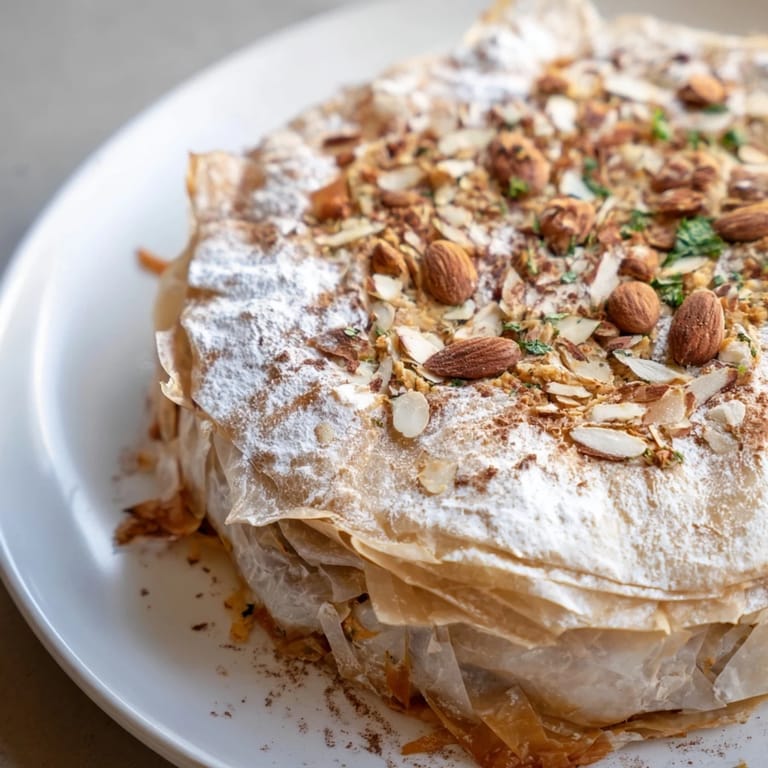 Save
Save There's a moment, right when you pull this out of the oven and the steam hits your face, that you realize you've made something that feels bigger than the sum of its parts. My daughter tasted it and asked why a pie tasted like dessert and dinner at the same time, and I didn't have words to explain the alchemy. That's the whole point of pastilla, I think—it's not trying to make sense. It's just trying to delight.
The Secret of the Sweet-Savory Balance
Pastilla works because nothing fights the others—the powdered sugar doesn't make it sickly, the cinnamon doesn't overpower the chicken, the eggs create this velvety layer that holds everything together. The first time I made this without the final dusting of sugar, it was good. But the moment I added it, something clicked. The spices became rounder, warmer, less aggressive. That finishing touch teaches you something important: sometimes the unexpected ingredient is the one that makes everything else sing.
Why This Pie Changed How I Cook
Before pastilla, I thought of sweet and savory as separate lanes. This pie demolished that thinking for me. It showed me that complexity isn't about adding more things—it's about understanding how flavors can be generous with each other. The phyllo taught me patience too. Rushing the pastry, even by thirty seconds, changes everything. Now whenever I'm working with delicate layers or building something that requires attention, I think of those crispy sheets and how they needed my respect.
Serving and Pairing Ideas
Serve this with something crisp and fresh alongside it—a simple Moroccan salad with pomegranate and mint will cut through the richness beautifully. Mint tea after, of course, because it's the only thing that makes sense. Some people add dried apricots or dates to the filling for extra sweetness; I've done it both ways, and both are right.
- A sharp, cooling salad with lemon and olive oil is the perfect companion to the warm spices.
- Mint tea afterward isn't just tradition—it settles your stomach and extends the meal gracefully.
- If you're feeling adventurous, a spoonful of harissa on the side gives people the option to add heat.
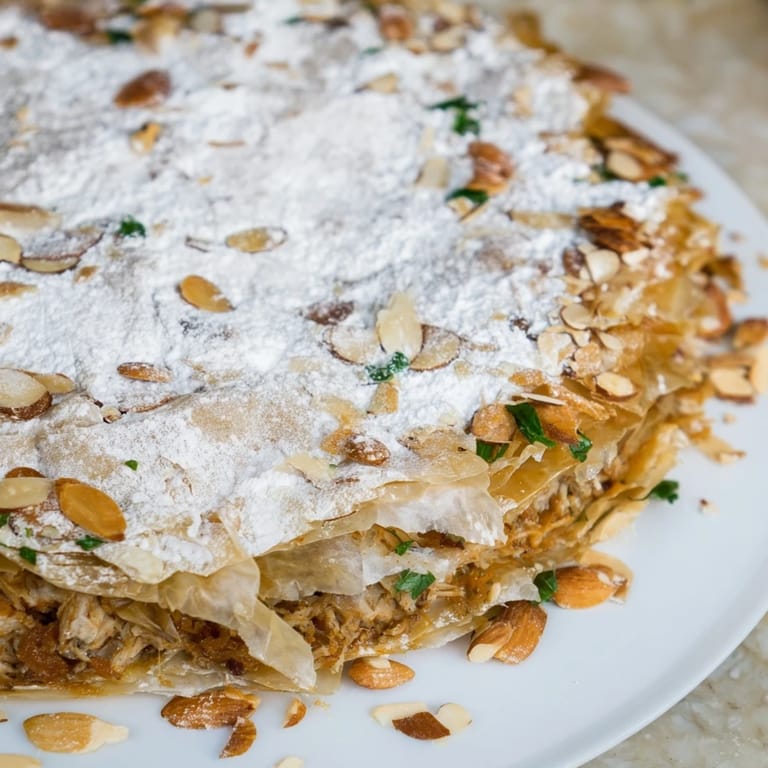 Save
Save This is the kind of recipe that rewards you for trying. Make it once, and you'll understand why it's been passed down through generations of Moroccan tables. The second time, it'll feel like home.
Recipe FAQs
- → What type of meat is used?
Bone-in chicken thighs are traditional, but squab or Cornish hen can be substituted for authentic flavor.
- → How is the filling prepared?
Meat is simmered with spices and aromatics, shredded, then combined with toasted almonds, herbs, and softly scrambled eggs for a rich texture.
- → What makes the crust crispy?
Multiple layers of phyllo pastry brushed with melted butter create a light, crisp crust when baked to golden perfection.
- → How is the sweet-savory balance achieved?
The filling's savory spices are complemented by a final dusting of powdered sugar and ground cinnamon atop the baked pastry.
- → Can additional dried fruits be included?
Chopped dried apricots or dates can be added to the filling for extra sweetness and texture variety.