 Save
Save The first time I made clam chowder properly, I was standing in my kitchen on a cold October morning, and the fishmonger had just sold me these perfect littleneck clams that felt heavy and alive in my hands. My grandmother used to say the best chowders start with respecting the clam, listening to the sound it makes when it opens, watching for that exact moment when you know it's ready. I'd watched her make this soup countless times, but I never really understood it until I had a pot of my own and realized how the simple act of steaming clams could fill an entire room with the smell of the ocean.
I made this soup for my dad one winter when he came to visit, and he sat at the kitchen counter for nearly twenty minutes before eating anything, just breathing in the steam and asking me questions about each ingredient. By the time he tasted it, his eyes were already a little wet, though he blamed it on the heat from the bowl. That's when I understood this wasn't just food—it was a conversation between us, written in cream and clams.
Ingredients
- Fresh littleneck clams (2 lbs): These are the sweet spot for chowder—big enough to have real meat, small enough that they cook evenly and stay tender instead of turning rubbery.
- Clam juice (1 cup bottled, plus reserved cooking liquid): The bottled stuff is your safety net, but the liquid from steaming your clams is liquid gold—never throw it away.
- Russet potatoes (2 medium): They break down slightly at the edges, thickening the soup naturally while staying just firm enough to feel substantial.
- Yellow onion, celery, and carrot (the holy trinity): Together they create an invisible flavor base that makes people ask what your secret ingredient is.
- Garlic (2 cloves): Just enough to whisper in the background, not shout.
- Heavy cream and whole milk (1½ cups and 1 cup): The cream is the luxury; the milk keeps it from becoming a glue paste.
- Unsalted butter (2 tbsp): This is where the bacon fat hangs out and becomes something better than itself.
- All-purpose flour (2 tbsp): Combine it with butter first, and it becomes your thickening agent—the roux that holds everything together.
- Bacon (2 slices): Render it carefully until the edges are crackling, because that's where the flavor lives.
- Bay leaf and dried thyme: Bay leaves season the liquid while it simmers; thyme adds an almost herbal note that makes you close your eyes.
- Salt, pepper, and fresh parsley: Season as you go, not all at once, and save the parsley for that final green moment on top.
Tired of Takeout? 🥡
Get 10 meals you can make faster than delivery arrives. Seriously.
One email. No spam. Unsubscribe anytime.
Instructions
- Prepare the clams:
- Rinse them under cold water, scrubbing each shell until your fingers recognize the texture of the ocean. Place them in a large pot with 2 cups of water, bring it to a rolling boil, cover it, and listen—within 5 to 7 minutes you'll hear them opening, a small clicking and popping that tells you it's time. Discard any that stubbornly refuse to open; they're not worth the worry.
- Remove and chop:
- Once they're cool enough to handle, pry the meat from the shells with a small knife, chop it into pieces that aren't too small (you want to see them in your spoon), and set them aside. Strain your cooking liquid through a fine sieve if there's any sand—trust me on this one.
- Crisp the bacon:
- In a Dutch oven over medium heat, let the bacon render slowly until the edges curl and darken, about 5 minutes. Remove it with a slotted spoon and crumble it onto a paper towel; leave the fat behind like a gift for everything that comes next.
- Build the base:
- Add butter to the bacon fat and let it melt into something silky, then add your onion, celery, carrot, and garlic. Stir often and watch the onion turn translucent—this takes about 5 minutes, and it's worth not rushing.
- Make the roux:
- Sprinkle flour over the softened vegetables and stir constantly for about a minute, until everything looks cohesive and slightly paste-like. This is your thickening agent coming to life.
- Deglaze and build the broth:
- Pour in your reserved clam cooking liquid and bottled clam juice, stirring and scraping the bottom of the pot to loosen every browned bit—that's where the flavor concentrated. The soup will bubble and thicken slightly as you stir.
- Cook the potatoes:
- Add the diced potatoes along with the bay leaf and thyme, bring it to a simmer, and let it cook undisturbed for 10 to 12 minutes until the potatoes are tender enough to break with the side of a spoon. This is the moment the kitchen fills with steam and smells like dinner.
- Finish with cream and clams:
- Reduce the heat to low—this is important—and stir in the chopped clams, crispy bacon pieces, cream, and milk. Simmer gently for another 5 to 10 minutes, stirring occasionally, until everything is warm and married together. Never let it boil or the cream will break and become grainy.
- Season and serve:
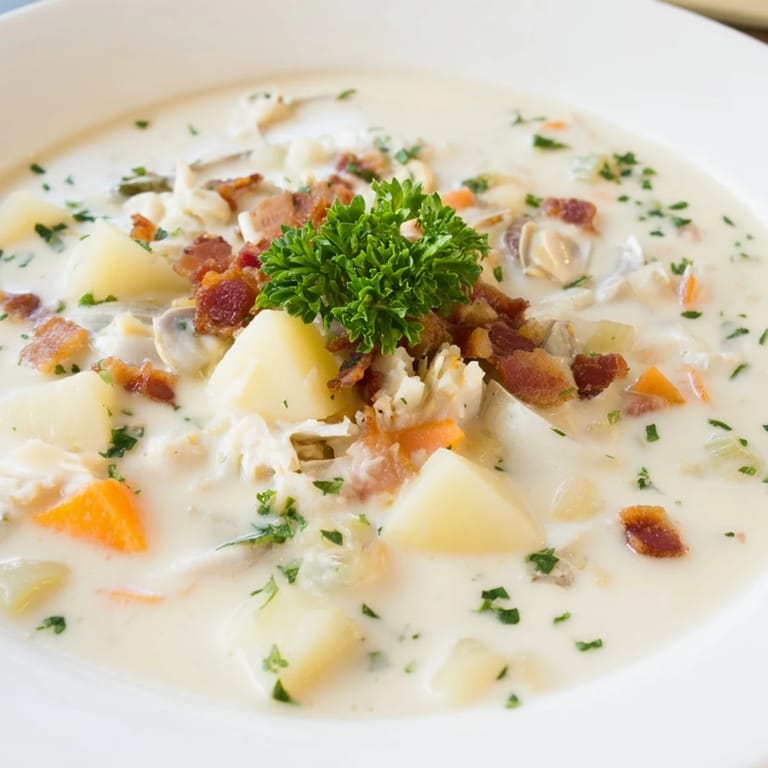
- Taste a spoonful, adjust salt and pepper until it tastes like the ocean but in a good way, then remove the bay leaf. Ladle into bowls, scatter parsley across the top, and serve with oyster crackers on the side or crumbled in—it's your choice.
 Save
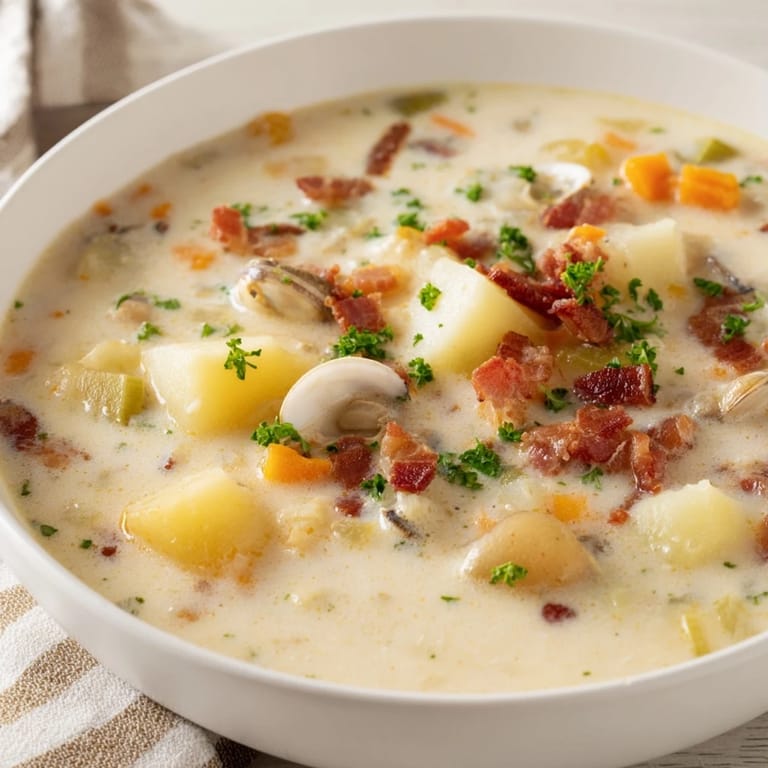
Save I served this soup to a table of people I'd just met, and somewhere between the second and third bowl, the conversation shifted from polite small talk to real stories. The soup had opened something up. That's the power of a good chowder—it makes people lean in and remember why they're sitting at a table together.
Why Littleneck Clams Matter
There's a reason New England chowder has such a specific identity, and it starts with the clams themselves. Littlenecks are prized here because their meat stays tender even when you cook them, and they have this inherent sweetness that doesn't need help. I once tried making this with whatever clams were on sale, and the difference was so stark that I went back to the source and never looked back. The clams are the conversation starter; everything else is just listening.
The Roux Moment
The moment when flour meets fat is alchemical—if you rush it, the flour stays grainy and the soup tastes slightly off. If you give it time, around a minute of constant stirring, something shifts and it becomes smooth and ready to thicken the broth without lumps. I learned this the hard way by making a batch that tasted fine until you really paid attention, and then you noticed the slightly chalky texture underneath. Now I stir that roux like it's the most important minute of my day, because in that moment, it actually is.
Making It Your Own
This is a classic, but it's also a template that invites small changes. Some cooks mash a few potatoes into the broth before adding the cream to thicken it naturally, which is brilliant if you like a thicker chowder. Others add a dash of hot sauce or smoked paprika at the end for a subtle kick. The soup can lean lighter if you substitute half-and-half for the cream and milk, and it pairs beautifully with a crisp white wine like Sauvignon Blanc if you want to pour a glass while you cook.
- If you prefer a thicker chowder, mash a few cooked potatoes against the side of the pot just before adding the cream.
- A tiny pinch of smoked paprika or a dash of hot sauce adds complexity without changing the soul of the soup.
- Don't skip the parsley garnish—that pop of green color makes people actually want to eat what you're serving.
 Save
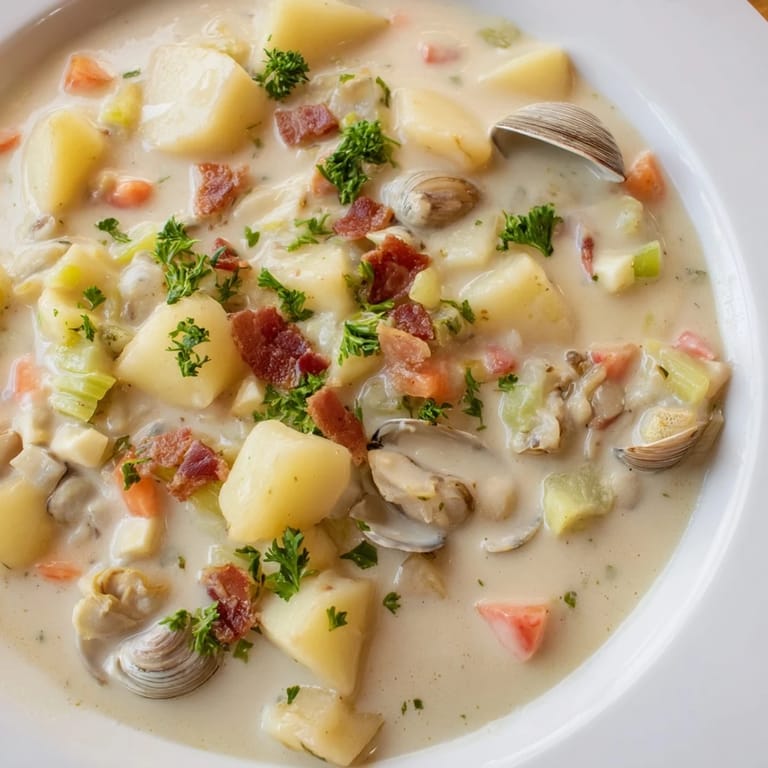
Save This chowder is the kind of dish that stays with you long after the bowl is empty, warming you from the inside and making you think about sitting at a table with people you love. Make it for someone, and you're not just feeding them—you're telling them they matter enough for you to spend an hour in the kitchen with clams and cream.
Recipe FAQs
- → How should littleneck clams be prepared before cooking?
Scrub clams under cold water to remove grit, then steam them until they open. Discard any unopened clams before removing the meat.
- → What gives the chowder its creamy texture?
Butter, heavy cream, and whole milk combine to create a rich, velvety texture, enhanced by a roux made from flour and sautéed vegetables.
- → Can I substitute the bacon in this dish?
Yes, smoked turkey or a smoky plant-based alternative can be used to maintain savory depth without pork.
- → What is the purpose of the bay leaf and thyme?
Bay leaf and thyme provide aromatic herbal notes that subtly enhance the broth’s complexity during simmering.
- → How do I thicken the chowder if desired?
Mashing some of the cooked potatoes into the broth before adding cream helps to naturally thicken and enrich the texture.