 Save
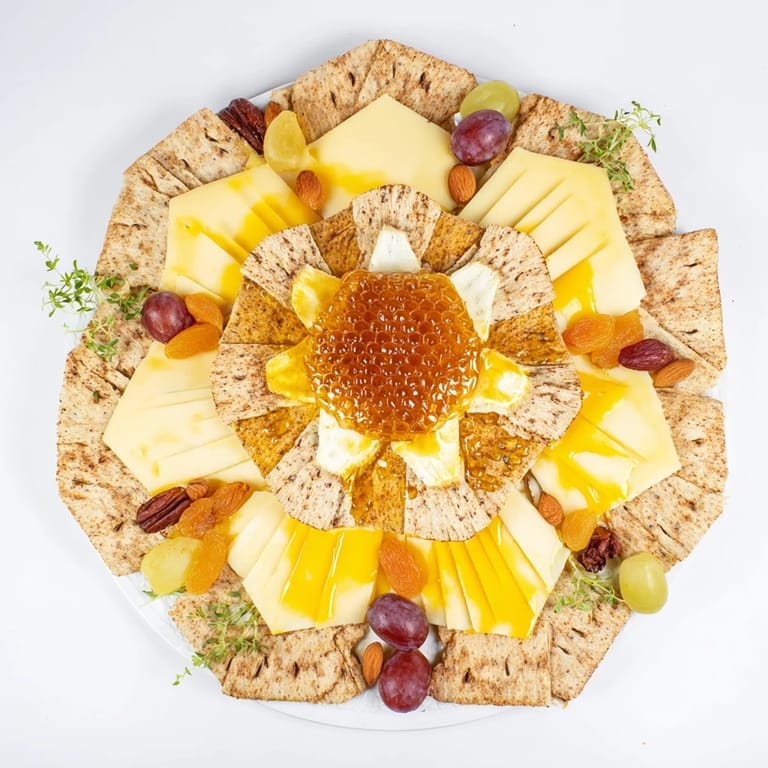
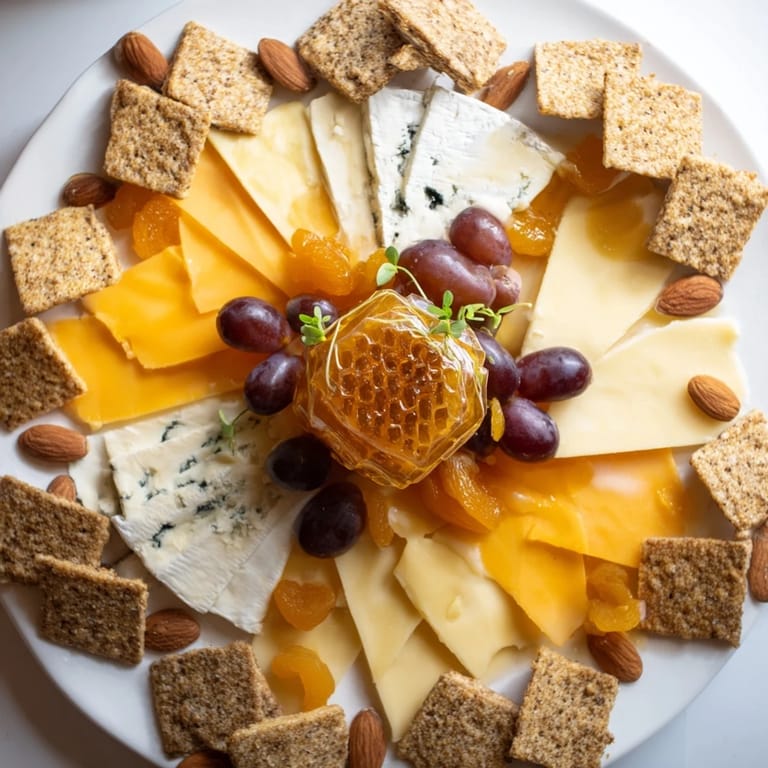
Save I'll never forget the moment my friend Sarah walked into my kitchen and gasped at a cheese board I'd casually arranged for a dinner party—she literally said, 'This looks like something from a gallery.' That night, I became obsessed with the idea of turning a simple cheese board into edible art, and after sketching hexagons on napkins for weeks, The Gilded Hive was born. It started as a playful challenge to myself: what if every single element, from the Manchego to the seeded crackers, spoke the same geometric language? The result wasn't just beautiful—it tasted like intention, like someone had actually thought about every angle.
I made this for my sister's engagement party, and watching people actually hesitate before breaking into it because it looked too perfect was worth every minute of hexagon-cutting. She kept saying it belonged in a magazine, and honestly, that's when I knew I'd cracked something special—a board so visually striking that eating it felt like a small act of rebellion.
Ingredients
- Manchego cheese: This Spanish stunner holds its shape beautifully when cut and brings a buttery, slightly nutty note that anchors the board.
- Aged cheddar: Look for a deep orange color and firm texture—it slices cleanly and adds a sharp, familiar comfort to the mix.
- Gruyère: The one cheese that feels a little fancy without trying too hard, with a creamy sweetness that melts on the tongue.
- Brie: Chill it well before cutting or you'll end up with a frustrating slide instead of clean edges; the reward is silky, luxurious bites.
- Blue cheese: Use a pungent one if you're bold, but remember it's an accent, not the lead—a little goes a long way.
- Goat cheese log: Buy it fresh and firm; I learned the hard way that room-temperature goat cheese turns into a slippery nightmare mid-cut.
- Whole wheat crackers: Choose large, sturdy ones that won't shatter when you press the cutter down—they're the canvas for this edible mosaic.
- Seeded crackers: These add texture and visual contrast; the seeds create tiny shadows that make the pattern even more dynamic.
- Edible honeycomb: This is your centerpiece hero—order from a specialty store a few days ahead so you're not scrambling last minute.
- Runny honey: Drizzle it just before serving so it catches the light and looks liquid gold on the board.
- Marcona almonds: They're buttery and almost sweet, which feels more generous than regular almonds for a board this elegant.
- Dried apricots: They add pops of color and a chewy contrast to all the crunch and creaminess.
- Fresh grapes: Use a mix of red and green if you can find them—they roll into gaps and add a jewel-like quality to the whole arrangement.
- Edible flowers or microgreens: Optional but they're what elevates this from impressive to 'where did you even find these?'
Tired of Takeout? 🥡
Get 10 meals you can make faster than delivery arrives. Seriously.
One email. No spam. Unsubscribe anytime.
Instructions
- Chill your soft cheeses first:
- Pop the Brie and goat cheese log in the fridge for 20 minutes before you start cutting—cold cheese cuts clean, warm cheese cuts like butter sliding off a knife. You want those hexagons to have crisp edges, not ragged tears.
- Cut your template cheese:
- Use a sharp metal hexagon cutter (2 to 3 inches is the sweet spot) to cut all six cheeses into neat shapes. Wipe the cutter clean between cuts so soft cheese doesn't drag and ruin your edges.
- Tackle the crackers:
- This is the meditative part—same hexagon cutter, same careful pressure. Some crackers will crumble, and that's fine; just set the perfect ones aside and save the broken bits for snacking.
- Honeycomb at center stage:
- Place that beautiful honeycomb piece right in the middle of your board, slightly elevated if your board has any natural texture. This is your focal point, your reason for the whole geometric story.
- Build your rings:
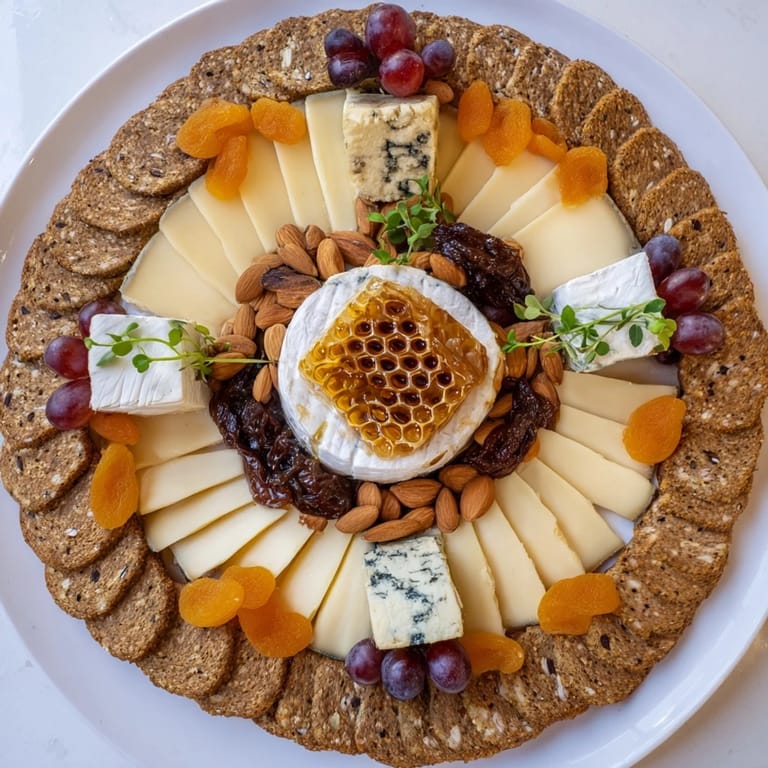
- Arrange cheese hexagons in a perfect circle around the honeycomb, rotating colors and types as you go so every cheese type appears equally around the board. Then create concentric circles of crackers, alternating between whole wheat and seeded for visual rhythm.
- Fill the spaces with joy:
- Scatter Marcona almonds, dried apricots, and grapes into any gaps, thinking of them as finishing touches that add dimension and color without overwhelming the pattern.
- Honey drizzle finale:
- Just before serving, drizzle honey in thin lines around the honeycomb and between some of the cheese hexagons—it catches the light and ties the whole 'golden hive' concept together.
- Garnish if you're feeling it:
- A few edible flowers or microgreens scattered on top make people lean in and look closer, which is the whole point of something this beautiful.
 Save
Save The real magic happened when my dinner guests stopped talking and just stared at the board for a full ten seconds before anyone dared to take the first bite. It turned out that food this visually intentional changes how people eat—they slowed down, they actually paired things thoughtfully, and the board became more than dinner. It became a moment.
The Geometry of Flavor
There's something about arranging food in repeating patterns that makes you think differently about balance and proportion. Each cheese type appears in exactly the same quantity around the board, which means no one flavor or texture dominates—you get a complete story in every bite. The hexagons aren't just pretty; they're a framework that forces you to think about variety, contrast, and intentionality.
Cheese Selection Strategy
The six cheeses work as a team because they cover the entire flavor spectrum: you've got sharp (cheddar), funky (blue), creamy (Brie and goat), nutty (Manchego and Gruyère), and they're all firm enough to hold a hexagon shape. I learned through trial and error that mixing texture types matters as much as flavor—when someone tastes that contrast between the crumbly blue cheese and the silk of Brie in consecutive bites, that's when the board really sings. Spring for good cheese; this board is only as good as its components.
Serving and Timing
Timing is everything with this one—arrange it within 30 minutes of serving and you'll have a board where the cheeses stay at that perfect texture, not sweating or hardening. Pair it with a crisp white wine like Sauvignon Blanc or a light sparkling wine, and watch how the acidity cuts through all that richness. Have cheese knives or small spreaders handy so people can serve themselves without destroying your careful arrangement.
- Keep a small knife nearby to break apart crackers that don't make it through the cutting process.
- If you're serving this in warm weather, set the board on top of a shallow bowl of ice to keep the cheeses from melting.
- You can prep all the hexagons hours ahead—just store them separately and assemble right before your guests arrive.
 Save
Save This board isn't just about cheese—it's about the moment you've created where food becomes conversation, where beauty matters, and where someone remembers this meal long after the last crumb is gone. That's the real recipe.
Recipe FAQs
- → What is the best cutter size for hexagon shapes?
A 2–3 inch wide hexagon-shaped cutter works well to create uniform cheese and cracker pieces for optimal presentation.
- → How do I prevent soft cheeses from sticking when cutting?
Chilling softer cheeses like Brie and goat cheese briefly before cutting helps achieve clean, precise edges.
- → Can I substitute different cheeses in this layout?
Yes, selecting cheeses with varied textures and flavors ensures balance; just maintain the hexagon shaping for consistency.
- → How should I arrange the components for the best visual effect?
Start with the honeycomb centerpiece, then arrange alternating cheese hexagons in circular patterns, followed by concentric cracker rings and colorful gaps filled with nuts and fruit.
- → What drinks pair well with this cheese and cracker display?
Crisp white wines like Sauvignon Blanc or light sparkling wines complement the flavors and textures beautifully.
- → Are gluten-free crackers suitable for this arrangement?
Absolutely, gluten-free crackers can be shaped and arranged similarly, accommodating dietary needs without sacrificing style.