 Save
Save I discovered this dish on a Tuesday night when my roommate came home with a jar of gochujang and absolutely no idea what to do with it. We had half a block of tofu in the fridge and some honey on the shelf, and I thought, why not? Twenty minutes later, the kitchen smelled incredible—sticky-sweet with a sharp chili heat—and we were fighting over the last piece. Now it's the first thing I make when I want something that feels both comforting and a little bit daring.
The first time I served this to people who claimed they didn't like tofu, I watched their skepticism turn into surprise with each bite. Something about the way the sauce clings to those golden cubes makes even the most hesitant eater reach for seconds. That's when I realized this wasn't just a quick weeknight dinner—it was a conversation starter.
Ingredients
- Firm tofu: 400 g (14 oz), pressed and cubed—pressing removes the water that prevents crisping, so don't skip this step even though it feels tedious.
- Cornstarch: 2 tbsp—the secret to getting that golden, crispy exterior that makes people take notice.
- Salt: 1/2 tsp—seasons the tofu from within before it hits the pan.
- Neutral oil: 2 tbsp (canola or sunflower)—anything with a high smoke point will do the job.
- Gochujang: 2 tbsp—this Korean chili paste is umami-rich and worth seeking out; the depth it brings is irreplaceable.
- Honey: 2 tbsp—balances the heat and creates that glossy, sticky finish.
- Soy sauce: 1 tbsp—adds savory saltiness that ties everything together.
- Rice vinegar: 1 tbsp—a small amount of brightness that lifts the whole sauce.
- Sesame oil: 1 tbsp—this is non-negotiable; it's what makes it taste authentically Korean-inspired.
- Garlic and ginger: 2 cloves minced garlic and 1 tsp grated fresh ginger—fresh is better than bottled; the flavor difference is real.
- Water: 2 tbsp—helps the sauce coat and stick without burning.
- Toasted sesame seeds: 1 tbsp—the final flourish that adds nutty crunch.
- Green onions: 2, thinly sliced—a sharp, fresh finish that cuts through the richness.
Tired of Takeout? 🥡
Get 10 meals you can make faster than delivery arrives. Seriously.
One email. No spam. Unsubscribe anytime.
Instructions
- Press your tofu with patience:
- Wrap the block in a clean kitchen towel and weight it down with something heavy—a cast iron pan, some books, whatever you have. At least 10 minutes, though 15 is better. The drier it is, the crispier it becomes.
- Coat and season:
- Toss those cubes with cornstarch and salt until they're all dressed up and ready to go. It feels like you're preparing them for something important, because you are.
- Get that golden crust:
- Heat the oil until it shimmers, then add the tofu cubes in a single layer. Don't crowd them or move them around too much; let them sit and develop that golden-brown exterior over 8–10 minutes, turning occasionally. You'll hear them sizzle and smell the toastiness—that's how you know it's working.
- Make the sauce:
- While the tofu cooks, whisk together gochujang, honey, soy sauce, rice vinegar, sesame oil, garlic, ginger, and water in a small bowl. The mixture should smell warm and spicy, almost alive.
- Simmer and thicken:
- Pour the sauce into the same skillet over medium heat and let it bubble gently for 2–3 minutes. It'll start to look glossy and thicken slightly, losing its raw edge.
- Bring it all together:
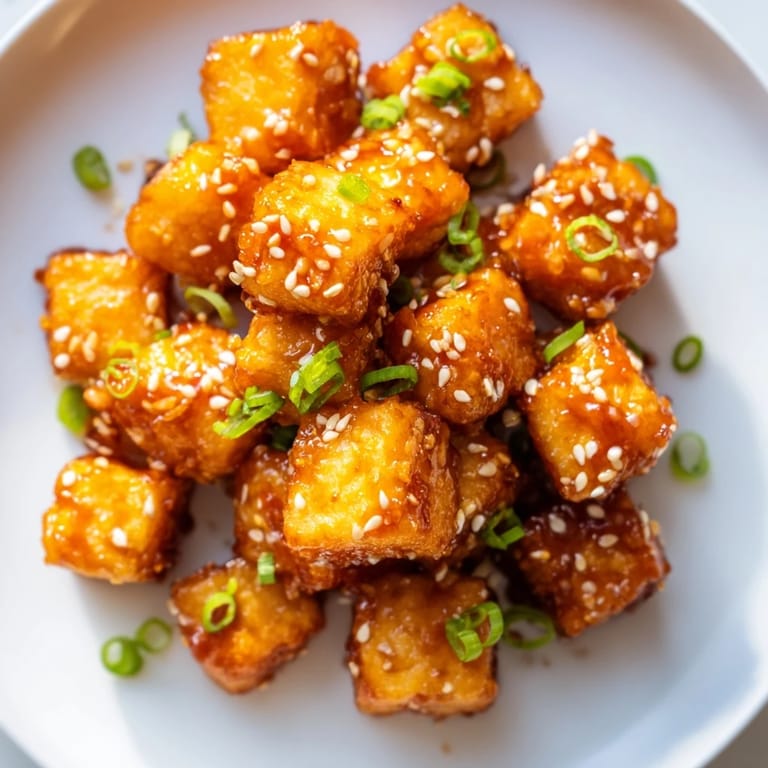
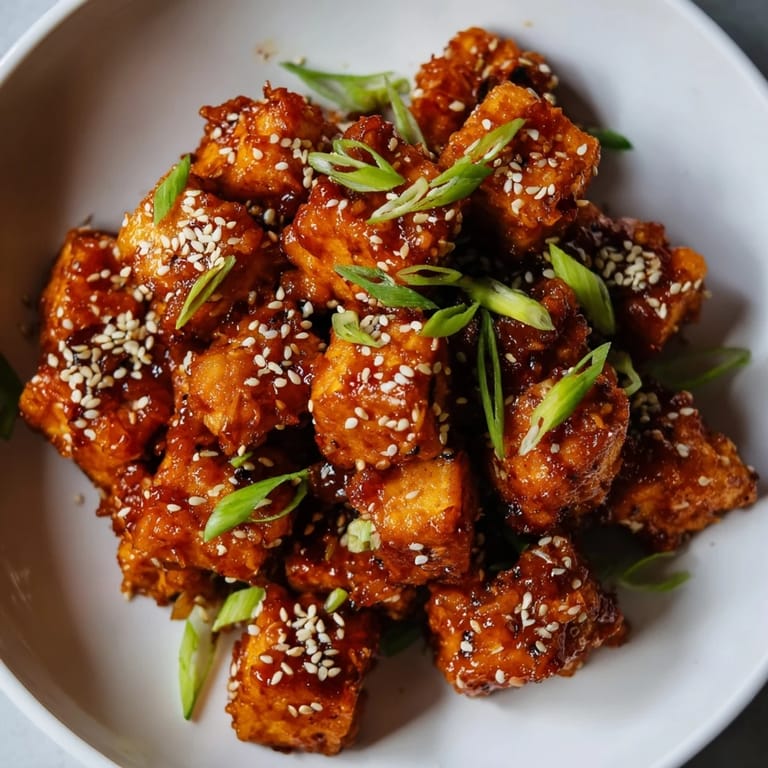
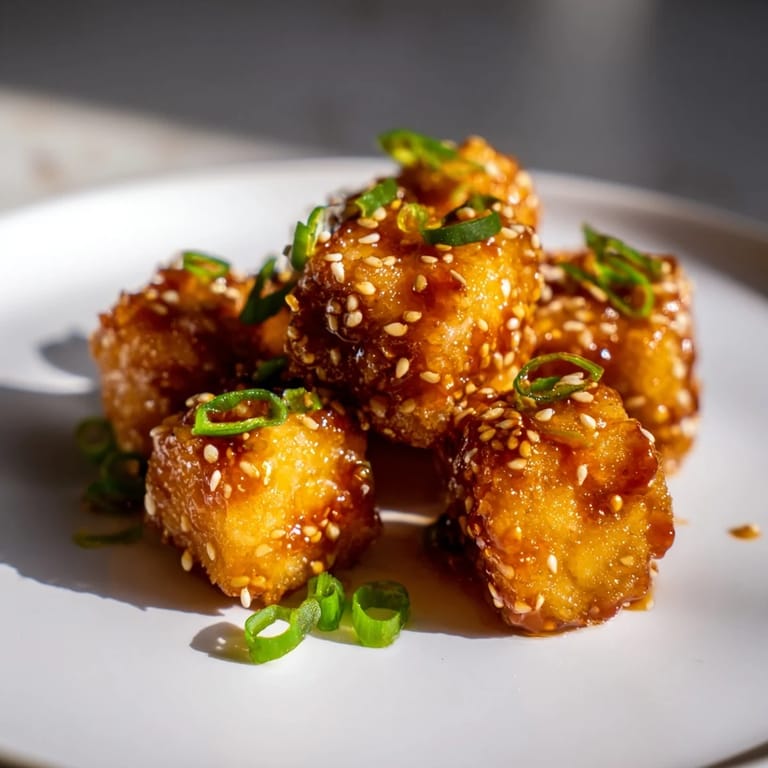
- Return the crispy tofu to the pan and toss constantly for about 2 minutes. Watch as each cube gets coated in that sticky, gorgeous glaze—it's the moment everything clicks into place.
- Plate and garnish:
- Transfer to a serving plate and sprinkle with sesame seeds and sliced green onions while everything is still warm. Serve immediately, alone as an appetizer or poured over steamed rice for a full meal.
 Save
Save Last month I made this for someone who grew up eating his grandmother's Korean food, and he said it reminded him of dishes from his childhood. That compliment—a small nod of recognition from someone who knows the real thing—meant more than I expected. Food has this quiet way of bridging distances.
Choosing and Using Gochujang
Gochujang is the heart of this dish, and getting it right makes all the difference. It's a fermented chili paste that tastes complex—simultaneously sweet, salty, spicy, and umami-forward. Some brands are sweeter than others, and some pack serious heat, so taste-test a tiny bit before committing. You can find it in any well-stocked grocery store now, usually in the Asian section, though online ordering is just as reliable. Once you open a jar, keep it sealed in the fridge; it keeps for months and becomes your secret weapon for quick flavor.
Customizing the Heat and Sweetness
This recipe walks a middle path between spicy and sweet, but your kitchen is your kingdom. Prefer more heat? Add an extra tablespoon of gochujang or a pinch of red chili flakes. Want it gentler? Cut back on the gochujang and add a touch more honey. The beauty of this sauce is that it's forgiving—you can adjust and taste as you go, making it exactly what your palate wants. I've made versions that lean toward honey-sweetness for friends who don't handle heat well, and versions that make my eyes water for those seeking a proper kick.
Serving and Storage Ideas
Serve this hot, while the glaze is still glossy and the sesame seeds are fragrant. Over rice is classic, but don't stop there—it works beautifully in lettuce wraps, over quinoa, or with steamed broccoli and bell peppers stirred in for a vegetable-forward meal. Leftovers keep in an airtight container in the fridge for up to three days, though I'll be honest, they rarely last that long.
- For meal prep, cook the tofu and sauce separately, then combine just before serving to keep the coating crispy.
- If you're cooking for vegans, swap the honey for maple syrup or agave nectar and you're all set.
- Double the batch when you make it once—it's the kind of dish people ask for again and again.
 Save
Save This dish has become my go-to when I want to prove that plant-based cooking doesn't mean sacrificing flavor or drama. Every time I make it, I'm reminded that the best meals are often the simplest ones—just a few good ingredients, a hot pan, and the willingness to let something shine.
Recipe FAQs
- → What type of tofu works best for this dish?
Firm tofu is ideal as it holds its shape well during frying and absorbs the glaze effectively.
- → Can I adjust the spice level?
Yes, modify the amount of gochujang to suit your preferred heat, or substitute with a milder chili paste.
- → How can I make this dish vegan?
Replace honey with maple syrup or agave nectar to keep the glaze plant-based without losing sweetness.
- → What are some good serving suggestions?
Serve over steamed rice, quinoa, or as a filling in lettuce wraps for a balanced meal.
- → How do I get the tofu crispy?
After pressing and cubing, coat tofu evenly with cornstarch and pan-fry in neutral oil over medium-high heat until golden on all sides.