 Save
Save My first encounter with proper falafel happened at a small market in Beirut, where an older woman was frying batch after batch in a blackened pot, the oil snapping and hissing with each golden ball that hit it. I'd eaten falafel before, but never like this—the outside was impossibly crispy, almost shattering between my teeth, while the inside stayed fluffy and herb-forward. She refused payment but handed me a warm ball wrapped in newspaper, and it changed everything about how I understood the dish. Years later, when I finally committed to making them at home, I realized the secret wasn't technique or fancy equipment—it was respecting the simplicity of dried chickpeas, fresh herbs, and the patience to let them soak overnight. Now, whenever I fry a batch, I think of that woman's weathered hands and the casual mastery she held in that one gesture.
I made these for a dinner party once without realizing I was nervous until my hands were already shaping the mixture, and I watched my friend dip her falafel into tahini sauce with that small smile people get when they taste something that confirms a good memory. That's when I understood these weren't just snacks—they were edible nostalgia for people who'd grown up eating them, and a doorway into something warm and generous for everyone else.
Ingredients
- Dried chickpeas: Use whole dried ones, never canned—they have a better structure and will hold together without turning into paste when you pulse them.
- Fresh parsley and cilantro: These aren't garnish here; they're the green heart of the falafel, so use the good stuff and don't be shy with the quantity.
- Onion and garlic: Roughly chop them and let the food processor do the work—they'll become part of the texture rather than distinct pieces.
- Ground cumin and coriander: These warm spices are what make falafel taste like itself; don't skip them or substitute with pre-made "falafel spice" blends.
- Cayenne pepper: Optional but recommended—even a half teaspoon adds a whisper of heat that keeps people reaching for more.
- Baking powder: This is the magic ingredient that keeps them fluffy inside while the oil does the crisping work on the outside.
- All-purpose flour: Just enough to help them hold together; too much and they become dense and heavy.
- Vegetable oil: Use something neutral that can handle high heat—peanut or canola work beautifully.
Tired of Takeout? 🥡
Get 10 meals you can make faster than delivery arrives. Seriously.
One email. No spam. Unsubscribe anytime.
Instructions
- Soak the chickpeas:
- Rinse your dried chickpeas and cover them with plenty of cold water, then leave them overnight or up to twelve hours. This isn't just about softening them—it's about setting up the whole texture foundation of what comes next. When you come back to them the next morning, they'll have nearly doubled in size and absorbed enough water that they're tender but still hold their shape.
- Pulse into texture:
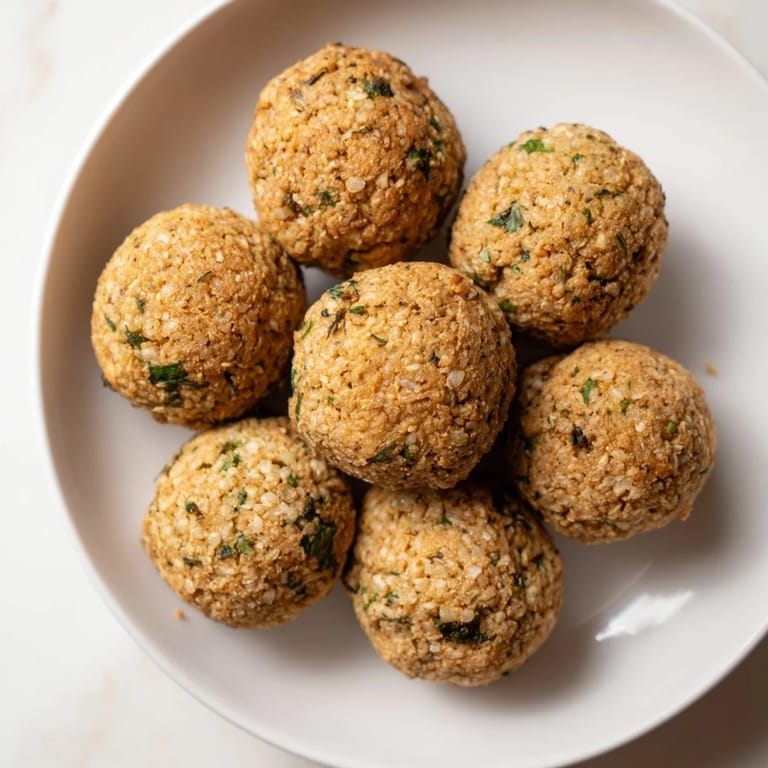
- In a food processor, combine the drained chickpeas with your roughly chopped onion, garlic, parsley, and cilantro. Pulse—don't blend—until the mixture looks coarse and holds together when you squeeze it in your palm. You want it to feel like chunky wet sand, not a smooth paste, which is where most homemade falafel goes wrong.
- Season and bind:
- Add your cumin, coriander, cayenne, baking powder, salt, pepper, and flour, then pulse briefly until everything is evenly combined. Give the bowl a quick scrape and stir by hand to make sure no flour pockets are hiding at the bottom.
- Shape with damp hands:
- Using hands dampened under cold water (the moisture helps prevent sticking), form the mixture into small balls about the size of a walnut, roughly an inch and a half in diameter. Place them on a tray lined with parchment, and if the mixture feels too loose and won't hold its shape, add another tablespoon of flour and mix again.
- Get the oil ready:
- Pour about two inches of vegetable oil into a deep pot and let it heat to 350°F (175°C). A thermometer is your friend here—too cool and the falafel will absorb oil and feel greasy; too hot and the outside will burn before the inside cooks through.
- Fry until golden:
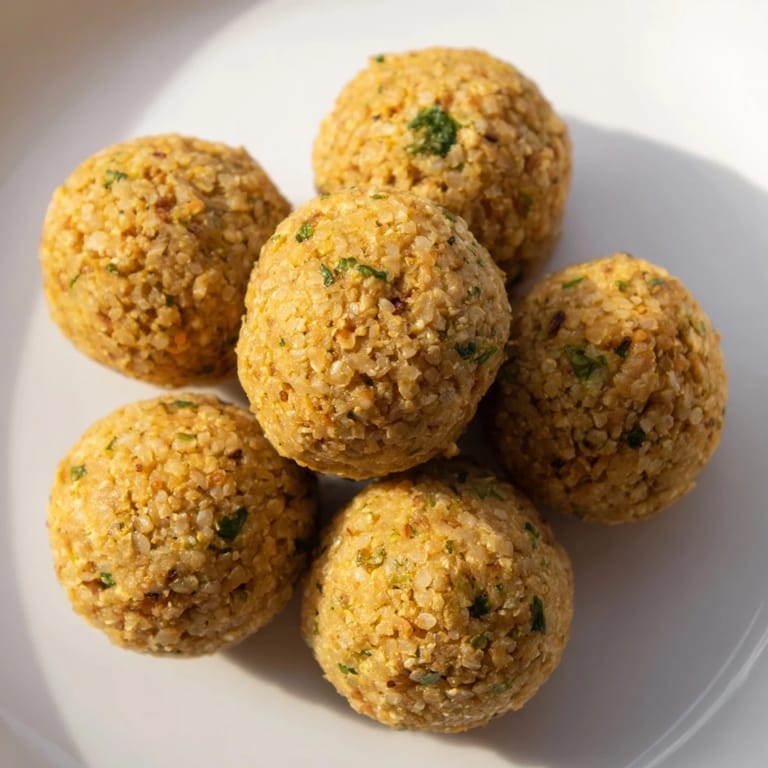
- Working in batches so you don't crowd the pot, gently lower the falafel balls into the oil and let them fry for about three to four minutes, turning them over halfway through. You're looking for a deep golden-brown color that's almost mahogany in places. A slotted spoon is invaluable here for keeping them from sticking to the bottom.
- Drain and serve warm:
- Transfer the finished falafel to a plate lined with paper towels, where they'll continue to crisp up as they cool. Serve them warm in pita bread with tahini sauce, crisp salad, and pickles—the whole package is where they really shine.
 Save
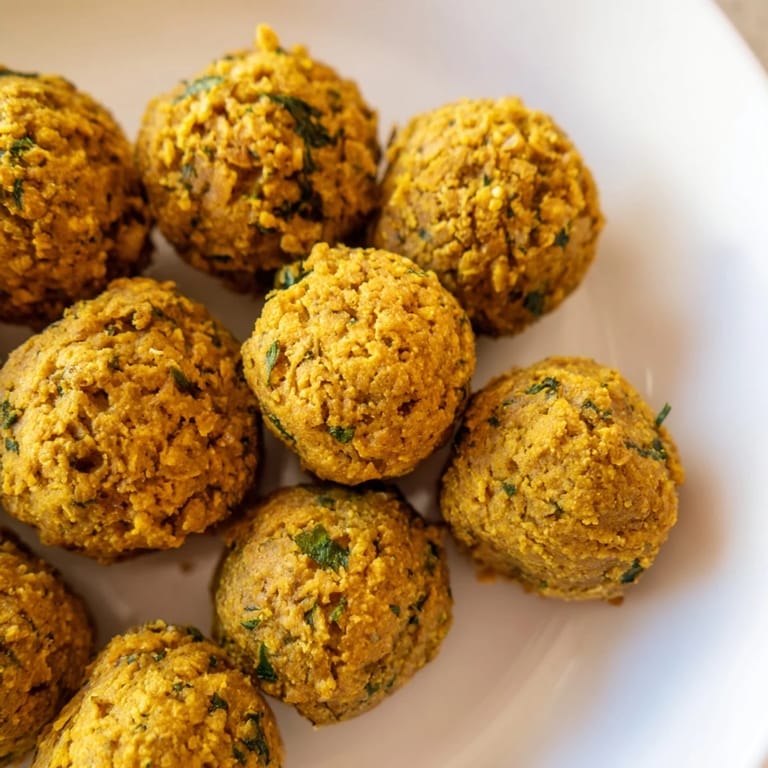
Save The moment I understood what made these special was when my nephew bit into one and his eyes went wide, and he actually said it tasted "green." That's when I realized these aren't just fried chickpeas—they're fresh herbs that happen to be held together by chickpeas, and everything changes when you think about it that way.
The Soaking Step Is Non-Negotiable
I know it's tempting to skip ahead and use canned chickpeas or to soak them for just a few hours, but the overnight soak is where the whole magic lives. Dried chickpeas have a different structure than canned ones—they're firmer and hold together better when pulsed, which means you get that crispy-outside-fluffy-inside texture that makes people stop mid-bite and ask what you did differently. The water they absorb overnight is part of their structure, not just their size, and you'll feel the difference the moment you pulse them.
Oil Temperature Is Everything
I learned this the hard way after making a batch that tasted more like greasy pillows than falafel. A thermometer costs almost nothing and saves everything—at 350°F (175°C), the outside crisps while the inside stays fluffy, and there's a brief golden window where they're perfect. Below that and they drink oil; above that and they brown too fast on the outside while staying raw-ish in the middle. If you're frying without a thermometer, test the temperature by dropping a tiny pinch of the mixture in—if it sizzles immediately and rises to the surface within a few seconds, you're in the zone.
Variations and Serving Ideas
Once you've made the base recipe a few times, you can start playing with additions that feel right to you. I've added half a teaspoon of ground cardamom before, which gives them a subtle warmth that reminds people of the spice markets of Istanbul, and I've sprinkled sumac over the finished batch, which adds a bright, almost citrusy note that makes them taste fresher. The beauty of falafel is that it can be a casual snack straight from the oil with just salt and a squeeze of lemon, or it can be the centerpiece of a mezze platter with hummus, tabbouleh, fresh vegetables, and warm pita.
- Try adding half a teaspoon of sumac or ground cardamom to the mixture for subtle flavor layers that feel authentic without overwhelming the original taste.
- For a baked version, brush the shaped balls with oil and bake at 400°F (200°C) for twenty to twenty-five minutes, turning halfway—they won't be quite as crispy but are still entirely delicious.
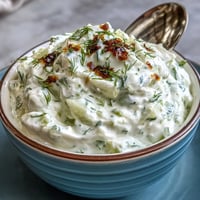
- Serve them alongside a yogurt-tahini sauce instead of just tahini, which adds a cool creaminess that plays beautifully against the warm, crispy exterior.
 Save
Save These falafel balls have a way of becoming the food you make when you want people to feel welcome at your table. Serve them warm, with all the fixings, and watch how quickly they disappear.
Recipe FAQs
- → How long should chickpeas be soaked?
Chickpeas should be soaked for 8 to 12 hours in plenty of cold water to ensure they soften properly for blending.
- → Can these falafel balls be baked instead of fried?
Yes, you can brush the balls with oil and bake them at 400°F (200°C) for 20–25 minutes, turning halfway for even crispness.
- → What herbs are used to flavor the falafel?
Fresh parsley and cilantro are blended into the mixture to provide bright, herbaceous notes.
- → Are these falafel balls vegan and gluten-free?
They are vegan by default. For gluten-free, substitute all-purpose flour with chickpea flour.
- → What spices give the falafel their distinctive taste?
Ground cumin, coriander, and optional cayenne pepper create a warm, fragrant spice profile.
- → How do you achieve the perfect falafel texture?
Pulse chickpeas and herbs until coarse but not puréed, then add flour and spices to bind without overmixing.