 Save
Save The first time I tasted authentic hummus was at a small restaurant in Beirut, where an older woman was making it by hand in the kitchen. I watched her transform a handful of chickpeas into something impossibly silky, and I became obsessed with recreating that exact texture at home. Years later, I finally figured out the secret—it's all about patience, cold water, and not being afraid to let the food processor do the heavy lifting. Now this creamy, luxurious dip is my go-to when I want to feel like I'm feeding people something genuinely special, even on a Tuesday night.
I made this for my neighbor last spring when she mentioned offhandedly that she missed the hummus from her childhood in Damascus. Watching her close her eyes after that first spoonful and then immediately ask for the recipe felt like the highest compliment I've ever received in my kitchen. She's made it every week since, and now her kids ask for it by name.
Ingredients
- Chickpeas: Use canned if you're short on time, but cook your own dried ones if you want control over the texture—they'll blend into something almost impossibly smooth.
- Tahini: This is your foundation, so buy the good stuff and taste it before you start; stale or bitter tahini will ruin the whole thing.
- Lemon juice: Squeeze it fresh every single time—bottled will never give you that bright, sharp edge that makes hummus sing.
- Garlic clove: One small clove is plenty; I learned this the hard way after making a batch that cleared the room.
- Cold water: This is the secret weapon that nobody talks about; it keeps the hummus light and airy instead of dense and heavy.
- Cumin: Just a whisper of it, enough to make people ask what the mystery flavor is.
- Sea salt: Don't skimp here—salt is what brings everything into focus.
- Olive oil: Use your best bottle for the drizzle on top; it's the final flourish that matters.
- Paprika or sumac: Either one works beautifully; sumac gives you a subtle tanginess that feels a little more elegant.
- Fresh parsley: The green on top isn't just decoration—it adds a fresh, slightly peppery note that keeps the dish from feeling heavy.
Tired of Takeout? 🥡
Get 10 meals you can make faster than delivery arrives. Seriously.
One email. No spam. Unsubscribe anytime.
Instructions
- Gather everything in the food processor:
- Put your chickpeas, tahini, lemon juice, minced garlic, cold water, cumin, and salt all into the bowl at once. This is the moment where it still looks like a mess, but trust the process.
- Blend until impossibly smooth:
- Start the food processor and let it run for a full minute or two while you listen to the texture change—you'll hear when it shifts from grainy to silky. Stop and scrape down the sides halfway through so nothing hides from the blades.
- Add water strategically:
- If it's too thick and pasty, add cold water one tablespoon at a time, blending between each addition until you reach that perfect creamy consistency that holds a slight peak but still flows.
- Taste and adjust with intention:
- A pinch more salt can transform it, and an extra squeeze of lemon brings everything into sharp relief. This is where you make it yours.
- Create a beautiful presentation:
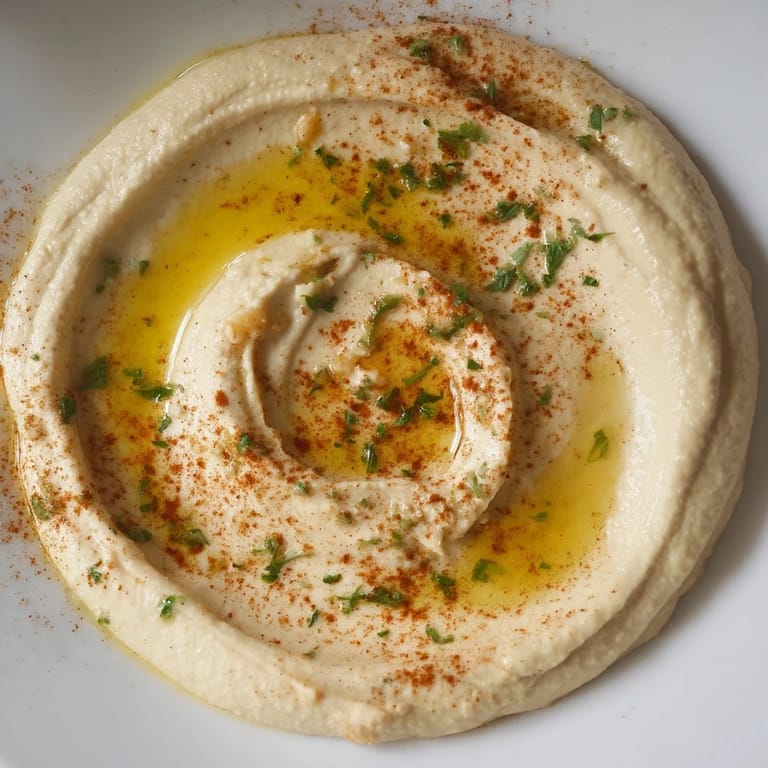
- Scoop the hummus into a shallow serving bowl and use the back of a spoon to make a gentle swirl in the center—this isn't just for looks, it's where the olive oil pools.
- Finish with the flourishes:
- Drizzle your best olive oil in that center swirl, dust with paprika or sumac, and scatter the fresh parsley over the top like you mean it. Serve while it's still cool from the food processor.
 Save
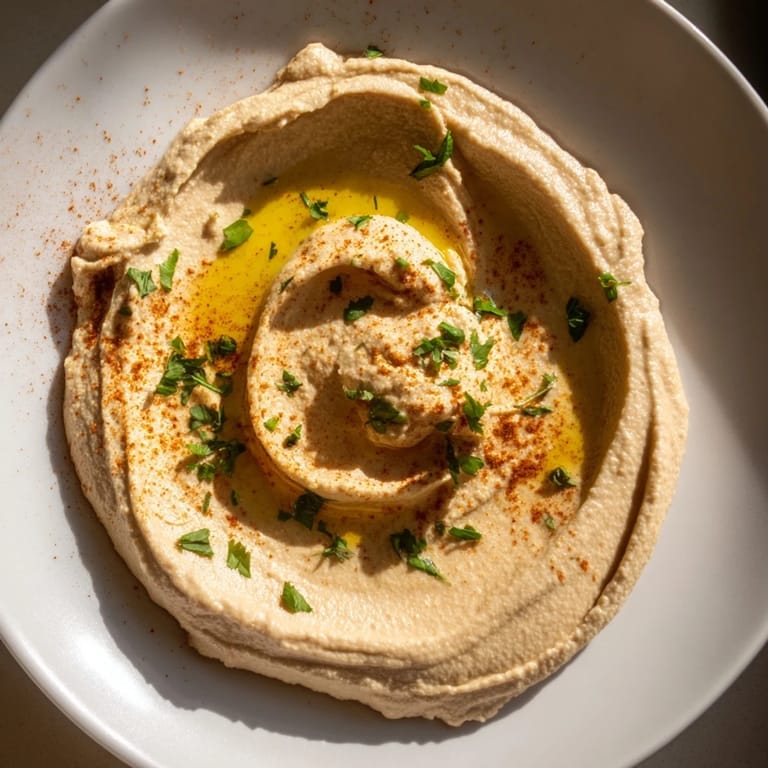
Save My daughter brought her girlfriend home from university, and I wanted to impress without trying too hard, so I made this. They sat at the kitchen table for three hours just talking and eating hummus with vegetables, and when they left, the bowl was completely empty. Sometimes the best meals aren't complicated—they're just made with attention and served without fuss.
The Right Chickpea Question
Everyone asks me whether to use canned or dried, and honestly, both work—but they work differently. Canned chickpeas are convenient and reliable, but if you have the time, cooking dried ones overnight and then simmering them gently until they're falling apart gives you a hummus that tastes somehow more alive. The skins slip off more easily too, which means you can get that restaurant-quality silkiness without fighting for it. Start with canned if you're in a hurry, then graduate to dried chickpeas when you have an afternoon to play around.
Understanding Tahini
Tahini is temperamental, and I didn't understand why until I started tasting different brands side by side. Some are nutty and sweet, some are almost bitter, and a few taste like they've been sitting in someone's garage for three years. The best tahini for hummus is one you'd actually eat straight from the jar—if it tastes sharp or off, your hummus will too. Buy from places with high turnover, store it in a cool cabinet, and always give it a stir before measuring because the oil separates over time.
Serving and Storage
Hummus is at its best served at room temperature or slightly chilled, with everything waiting nearby—warm pita bread wrapped in a kitchen towel, crisp vegetables, maybe some olives or roasted peppers if you're feeling generous. It keeps for up to four days in an airtight container in the refrigerator, though I've never had any last that long. You can even freeze it successfully if you find yourself with extra, though it's so quick to make that there's rarely a reason to.
- Warm your pita in a dry skillet for 30 seconds per side so it's soft and pliable instead of cold and rigid.
- Set out the hummus at least 15 minutes before serving so it's not straight from the refrigerator—cold dulls the flavors.
- Make extra because people always come back for more, even if they said they weren't that hungry.
 Save
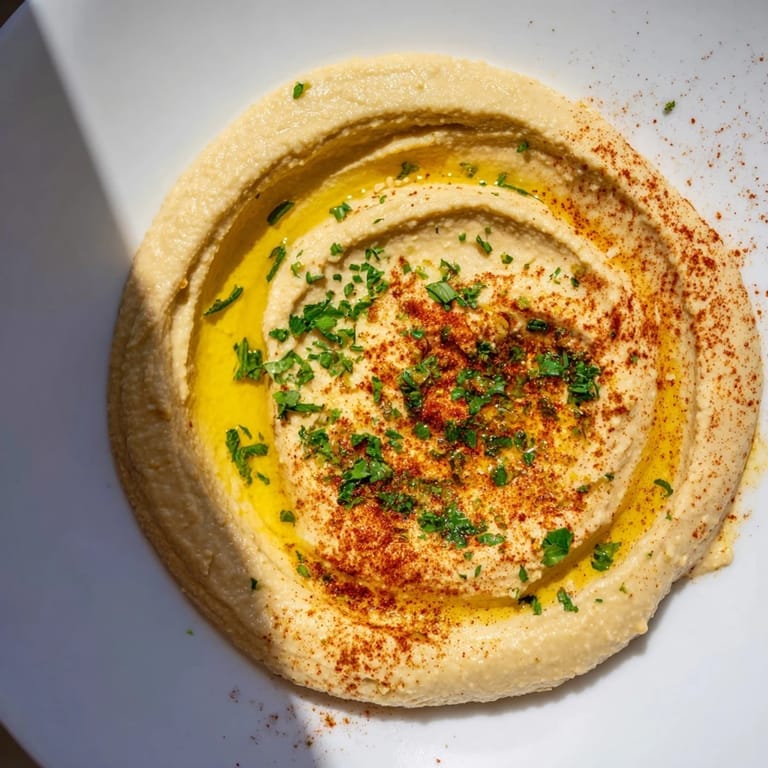
Save There's something magical about a simple plate of hummus that brings people together without any fuss. Make it once and you'll understand why it's been a cornerstone of Levantine tables for generations.
Recipe FAQs
- → What gives the spread its creamy texture?
The creaminess comes from blending cooked chickpeas with tahini and olive oil, creating a smooth and silky consistency.
- → Can this dish be made ahead of time?
Yes, it can be refrigerated in an airtight container for up to four days, preserving its fresh flavors.
- → How can I adjust the thickness?
Adding cold water tablespoon by tablespoon while blending allows you to achieve the desired smoothness and texture.
- → What garnishes enhance the flavor?
Drizzling extra virgin olive oil and sprinkling paprika or sumac, along with fresh parsley, brighten and complement the flavors.
- → What sides pair well with this spread?
It’s delicious served with warm pita bread, cucumber slices, carrot sticks, or as part of a mezze selection.