 Save
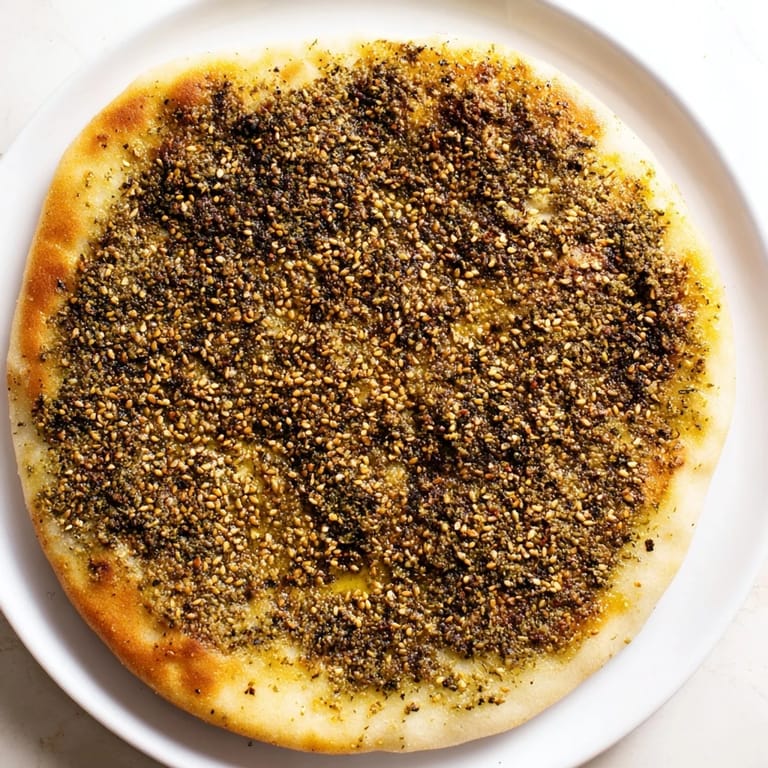
Save I burned my first batch because I didn't watch the oven closely enough, too busy texting my cousin about what to serve it with. The kitchen smelled like toasted sesame and regret. But the second round came out perfect, golden and fragrant, and I've been making it ever since. There's something about the scent of zaatar baking that makes the whole house feel warmer, like you've opened a door to a Levantine marketplace. It's become my go-to whenever I need something fast, impressive, and utterly comforting.
I made this for a small dinner party once, and people tore into it before the main course even hit the table. One friend folded hers around a chunk of labneh and declared it better than any appetizer she'd had all year. I felt like I'd won something, even though all I did was mix, roll, and bake. It's that kind of recipe, the kind that makes you look more skilled than you are.
Ingredients
- All-purpose flour: The backbone of the dough, it gives you a tender crumb without being too delicate, and it's forgiving if you overwork it a little.
- Instant dry yeast: No need to bloom it, just toss it in with the dry ingredients and let it do its quiet work during the rise.
- Sugar: A small amount feeds the yeast and adds a whisper of sweetness that balances the savory zaatar.
- Salt: Essential for flavor, it also strengthens the gluten so your dough doesn't tear when you roll it out.
- Olive oil (for dough): Keeps the dough soft and adds a subtle richness that complements the topping beautifully.
- Warm water: Not too hot or you'll kill the yeast, just warm enough to feel comfortable on your wrist, like bathwater.
- Zaatar spice blend: The star of the show, earthy and herbal with a hint of tang from sumac, it's what makes this bread unforgettable.
- Toasted sesame seeds: They add crunch and a nutty depth that plays perfectly with the zaatar.
- Extra virgin olive oil (for topping): Use a good one here, it carries the spices and turns golden in the oven, creating little pools of flavor.
Tired of Takeout? 🥡
Get 10 meals you can make faster than delivery arrives. Seriously.
One email. No spam. Unsubscribe anytime.
Instructions
- Mix the Dough:
- Combine flour, yeast, sugar, and salt in a large bowl, then drizzle in the olive oil and warm water. Stir until it clumps together into a shaggy mass, adding a splash more water if it feels too dry.
- Knead Until Smooth:
- Turn the dough onto a floured surface and knead for 5 to 7 minutes, pressing and folding until it's smooth, elastic, and springs back when you poke it. Your hands might get a little sticky, but that's normal.
- Let It Rise:
- Place the dough in a lightly oiled bowl, cover it with a damp towel, and set it somewhere warm for about an hour. It should double in size and feel airy when you press it gently.
- Preheat and Prep:
- Heat your oven to 220°C (425°F) and line two baking sheets with parchment paper. This prevents sticking and makes cleanup almost effortless.
- Shape the Rounds:
- Divide the risen dough into four equal pieces, roll each into a ball, then flatten and stretch into circles about 6 to 7 inches across. They don't need to be perfect, rustic is part of the charm.
- Make the Zaatar Paste:
- In a small bowl, stir together zaatar, sesame seeds, and olive oil until it forms a thick, fragrant paste. It should be spreadable but not runny.
- Top the Dough:
- Spread the zaatar mixture evenly over each round, leaving a thin border at the edges so it doesn't burn. Use the back of a spoon to smooth it out.
- Bake Until Golden:
- Slide the sheets into the oven and bake for 12 to 15 minutes, until the edges are crisp and the tops are golden with little darker spots. The smell will tell you when it's ready.
- Serve Warm:
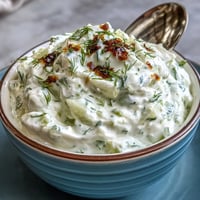
- Let the breads cool for a minute or two, then serve them warm or at room temperature with labneh, olives, or fresh vegetables. They're also excellent torn and dipped into hummus.
 Save
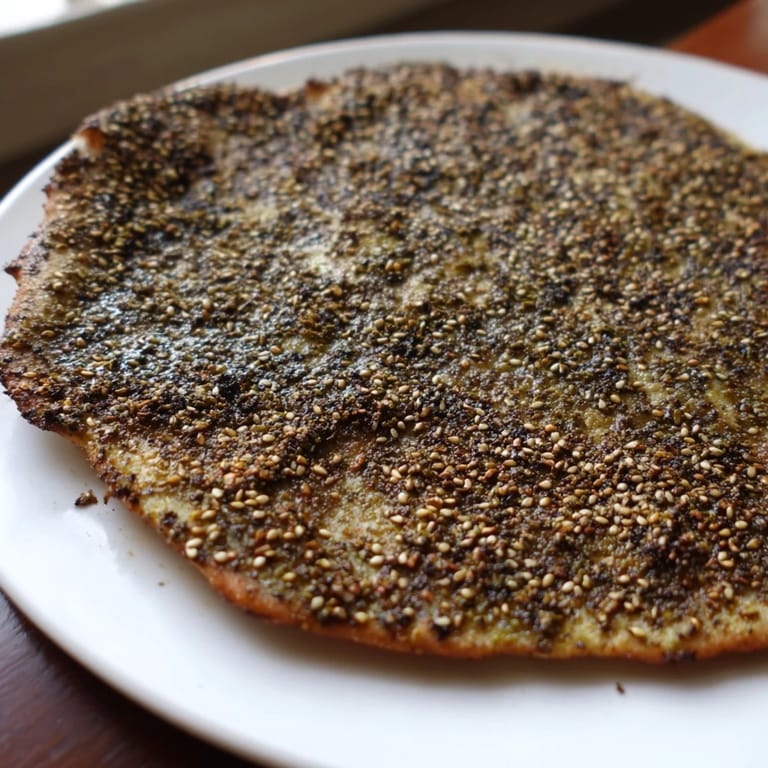
Save There was an afternoon when I made this and ate two rounds myself, standing at the counter with the window open, listening to the neighborhood kids play outside. It wasn't fancy or planned, just me and warm bread and the kind of quiet happiness that comes from making something with your own hands. That's when I realized this recipe wasn't just about feeding people, it was about creating small, delicious pauses in the day.
Storing and Reheating
These flatbreads are best enjoyed fresh, but you can store leftovers in an airtight container at room temperature for up to two days. To bring them back to life, pop them in a 180°C (350°F) oven for 5 minutes, or toast them in a dry skillet until they crisp up again. I've also frozen them between sheets of parchment, then reheated them straight from the freezer with great results.
Flavor Variations
If you want to play around, try adding a pinch of chili flakes to the zaatar paste for a gentle kick, or drizzle a little honey over the hot bread for a sweet-savory contrast. I've also brushed the dough with garlic-infused olive oil before topping it, which adds another layer of flavor without much extra effort. Some people like to scatter crumbled feta or halloumi on top halfway through baking, and honestly, it's hard to argue with melted cheese.
Serving Suggestions
This bread shines alongside mezze spreads, hummus, baba ganoush, tabbouleh, or a simple tomato and cucumber salad. It's also lovely torn and used to scoop up stews or dips, or served with labneh and a drizzle of olive oil for breakfast. I've even cut it into wedges and served it as an appetizer at parties, and it always disappears first.
- Pair it with creamy labneh and a handful of fresh mint leaves for a light, refreshing bite.
- Serve it warm with a bowl of lentil soup or a hearty shakshuka for a filling meal.
- Cut it into strips and use it to dip into roasted red pepper dip or muhammara for a snack that feels special.
 Save
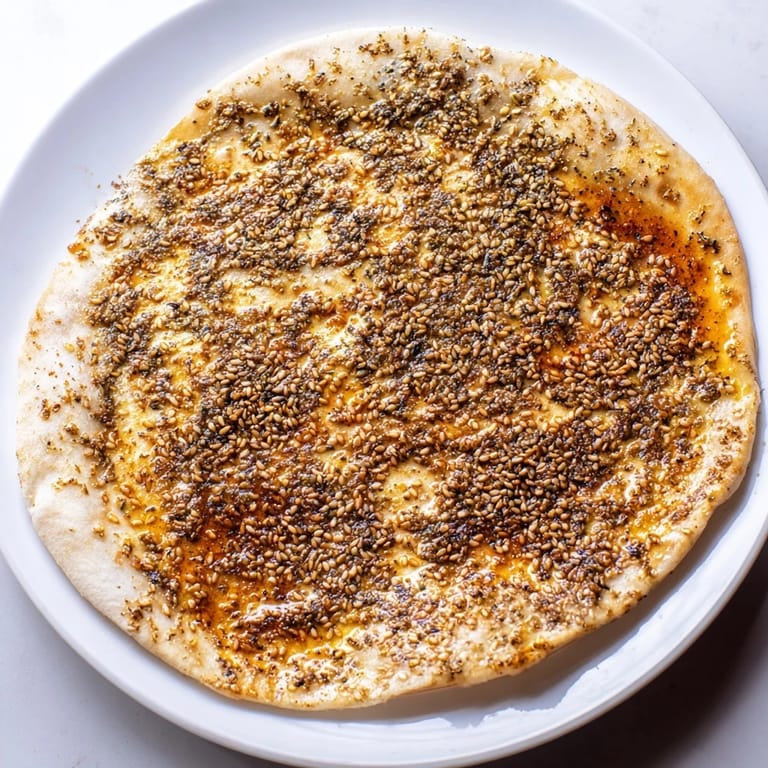
Save Every time I pull these from the oven, I'm reminded that some of the best food is the simplest, just flour, spices, and a little heat. I hope this becomes a favorite in your kitchen too.
Recipe FAQs
- → What is the purpose of letting the dough rise?
Allowing the dough to rise ensures it becomes soft and airy by activating the yeast, which creates small air pockets for better texture.
- → Can I add extra spices to the zaatar topping?
Yes, adding a pinch of chili flakes or sumac can enhance the flavor and add a gentle heat or tang to the topping.
- → What type of flour works best for this bread?
All-purpose flour provides a balanced texture, but bread flour can be used for a chewier consistency.
- → How should the flatbreads be stored after baking?
Store cooled flatbreads in an airtight container at room temperature for up to two days or freeze for longer preservation.
- → What are suitable accompaniments for this flatbread?
It pairs well with labneh, olives, fresh vegetables, hummus, or baba ganoush for a complete Middle Eastern-inspired spread.