 Save
Save The first time I held a real porcelain teacup at an estate sale, I knew it had to become part of something playful. Years of cooking brought structure and technique, but that afternoon wandering through those delicate pieces sparked something different—a way to blur the line between dinner party theater and genuine hospitality. When I stumbled on the idea of folding salami into roses, everything clicked. It felt like rediscovering why I cook: to create moments that make people smile before they even taste anything.
I made these for my aunt's garden party on a Saturday in June, and watching her carefully lift a teacup from the board while balancing a plate felt like watching someone open a gift. The combination of textures—the silky give of the cured meat against the cool ceramic—transformed a simple appetizer into something she talked about for months. That's when I realized this recipe works because it respects both tradition and surprise.
Ingredients
- Salami, large thin slices: The foundation of your roses; buy pre-sliced from the deli counter to ensure they're thin enough to fold without tearing, and ask them to slice a bit thinner than usual.
- Pepperoni, large thin slices: The sharper sibling to salami, these add visual contrast and a different flavor note; the slight spice keeps everything from feeling too mild.
- Small porcelain teacups: Hunt for these at thrift stores or antique markets—mismatched sets are actually more charming and tell a story of their own.
- Fresh basil or baby arugula: A quiet green base that keeps the meat from sliding around and adds a whisper of herbaceousness.
- Edible flowers: Pansies and violets feel authentic to the Victorian theme, but honestly, any edible flower your garden or market offers will work.
- Crackers, mild cheeses, and grapes: The supporting cast that rounds out the board and gives guests choices without overcomplicating the moment.
Tired of Takeout? 🥡
Get 10 meals you can make faster than delivery arrives. Seriously.
One email. No spam. Unsubscribe anytime.
Instructions
- Lay your foundation:
- Arrange six salami slices in a slightly overlapping line on your work surface, each one covering about a third of the previous slice. Think of it like a hand of cards fanned out—you want them positioned to spiral naturally when you roll.
- Roll the rose:
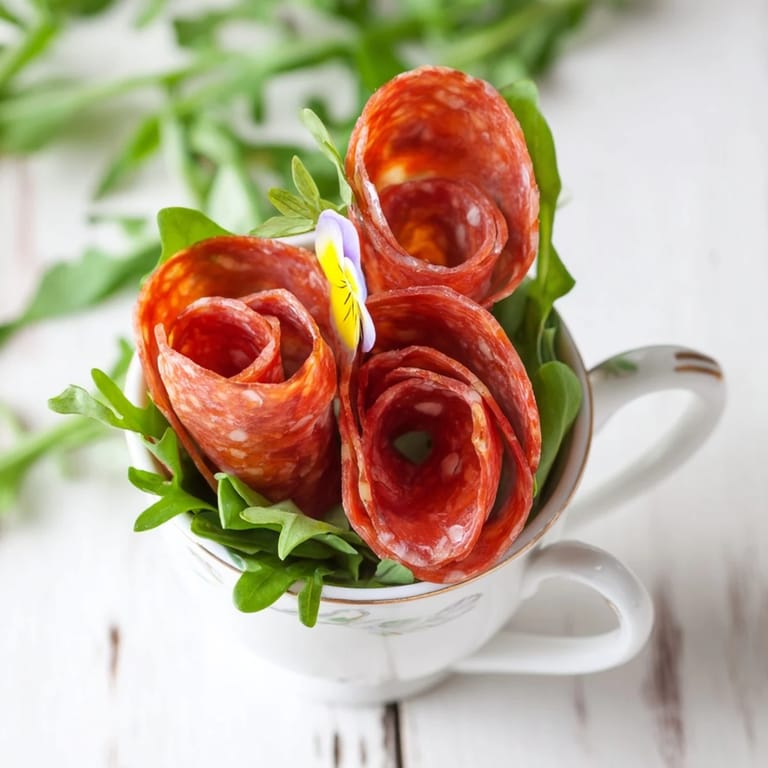
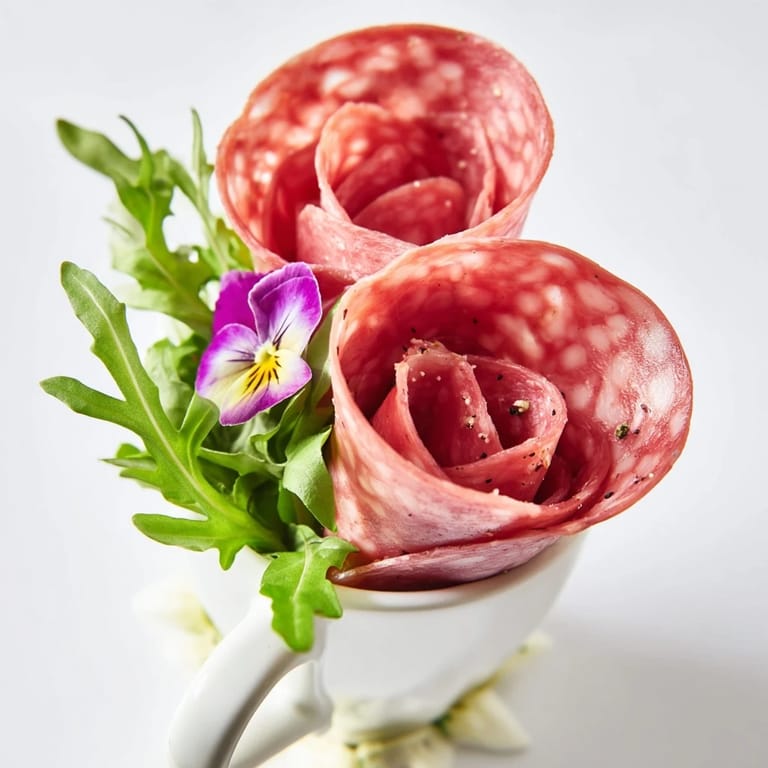
- Starting at one end, roll the entire line gently toward the other end, keeping tension even so the spiral stays tight but not crushed. Once rolled, stand it upright and carefully coax the outer petals away from the center, loosening them just enough to look full and open.
- Repeat the pattern:
- Make another salami rose with the remaining six slices, then do the same process with your pepperoni. You should now have two salami roses and one pepperoni rose; make a second pepperoni rose for balance.
- Prepare your cups:
- If using greens, place a small basil leaf or a few arugula strands at the bottom of each teacup to act as a cushion. This keeps the roses from sliding and adds a fresh color contrast.
- Nestle and adjust:
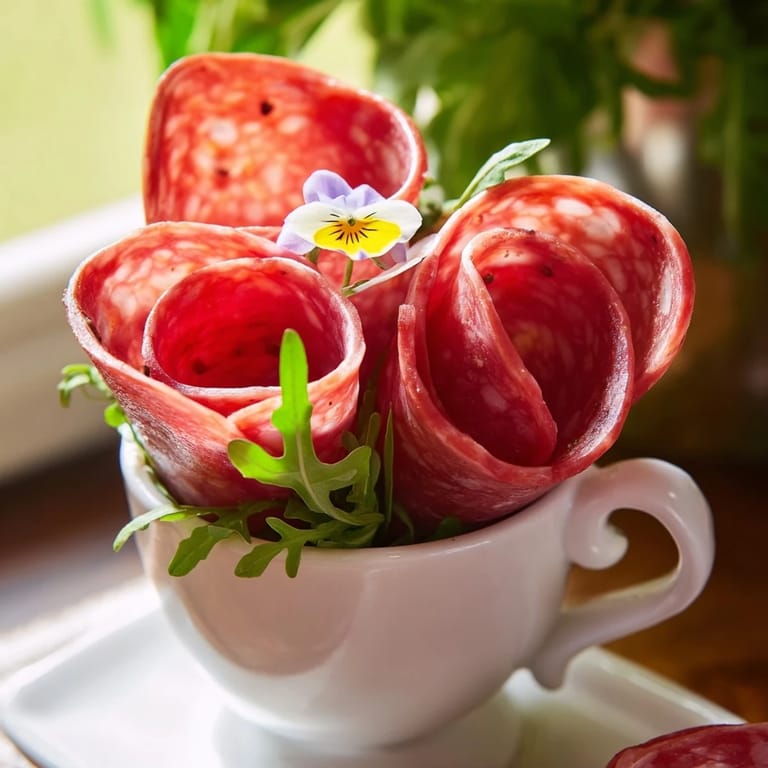
- Carefully place each rose into its assigned cup, taking a moment to arrange the petals so they cascade naturally. Some will turn inward, some outward—let them find their own shape rather than forcing perfection.
- Add the final flourish:
- If you have edible flowers, tuck one gently into the side of each rose where it looks most natural. A single flower is enough; the rose itself is already the statement.
- Arrange and serve:
- Set the teacups on your serving board in a gentle cluster, leaving space between them so each one feels like its own little artwork. Arrange crackers, cheese, and grapes around them in a way that feels inviting rather than crowded.
 Save
Save I remember standing in my kitchen with my hands stained from the meat and feeling genuinely proud of something so small and so strange. There's something almost meditative about the repetition of rolling and adjusting, and by the time I'd made all six roses, I understood why people decorate cakes and arrange flowers as a craft. Food became sculpture, and hospitality became art in a way I hadn't expected.
The Beauty of Cured Meat as Canvas
Salami and pepperoni are already beautiful—the marbling, the color, the way light moves across the surface—so folding them into roses just leans into what they already are. Unlike fresh herbs that wilt or vegetables that oxidize, cured meat stays stable and gorgeous for hours, which means your board can sit out and still look stunning. The texture contrast between the silky meat and the brittle edges of each petal creates something tactile and interesting, even before anyone tastes it.
Making This Feel Like Your Own
The Victorian teacup structure is charming, but the recipe thrives on personalization. Different cured meats—prosciutto, coppa, soppressata—each bring their own flavor and color story, and mixing them in different teacups creates visual variety without extra work. Your serving board can lean elegant or rustic depending on what dishes you use and how you arrange the accompaniments, so the same recipe can feel right for a formal dinner or a casual afternoon gathering. The edible flowers are optional, but if you skip them, lean into other garnishes like microgreens or a light dusting of fresh cracked pepper that feels true to your style.
Timing and Storage Wisdom
The magic of this recipe is that it's entirely make-ahead friendly, which means you can build it in the morning and refrigerate until your guests arrive. The roses actually look more defined after a few hours in the cold, as the meat firms up and the petals hold their shape more dramatically. For the best presentation, pull the board out of the fridge about ten minutes before serving so the meat isn't too rigid, but cold enough to still feel fresh and appealing.
- A light brush of good olive oil mixed with cracked black pepper before rolling adds richness without overwhelming the delicate structure.
- If you're serving these at a larger gathering, you can make the roses the day before and simply slip them into cups on serving day.
- Keep the assembled board in the coldest part of your fridge and cover loosely with plastic wrap so the presentation stays pristine.
 Save
Save These roses have a way of making people slow down before they eat, which is the real gift of cooking something beautiful. Serve them and watch what happens—the moment of recognition, the delight, the careful way someone picks up that teacup.
Recipe FAQs
- → How do you make salami roses stand upright?
Roll overlapping slices of salami tightly into spirals, then gently loosen the edges to form petals. Stand the rose upright carefully to maintain its shape.
- → Can other meats be used instead of salami and pepperoni?
Yes, cured meats like prosciutto or coppa work well for creating similar rose shapes, offering flavor variety.
- → What is the purpose of lining teacups with basil or arugula?
Lining with fresh herbs adds a vibrant green base, enhances presentation, and infuses subtle herbal aroma to the arrangement.
- → Are edible flowers necessary for this presentation?
Edible flowers like pansies or violets are optional but add a colorful, decorative accent enhancing the Victorian-inspired aesthetic.
- → How far in advance can these appetizers be prepared?
They can be assembled up to 2 hours ahead and refrigerated to maintain freshness before serving.